Gaza’s healthcare system buckles under surge in parasitic infections as aid restrictions persist
With the Gaza Ministry of Health recording over 17,000 ectoparasitic infections in 2026, clinicians warn that root causes of poor sanitation and malnutrition remain unaddressed despite the October ceasefire.
Overcrowded displacement camps across the Gaza Strip are experiencing a critical surge in skin diseases, with children identified as the most vulnerable demographic. Medical Aid for Palestinians (MAP) reports that more than 62 per cent of skin disease cases screened in April were children, driven by a combination of poor sanitation, contaminated water, malnutrition, and severe restrictions on humanitarian aid entry.
The crisis is compounded by a near-total absence of essential medicines, including permethrin, a primary treatment for scabies. Despite an October ceasefire that was intended to ramp up aid deliveries, severe restrictions on the entry of humanitarian supplies persist, leaving healthcare facilities unable to treat the growing number of infections.
Data from Gaza’s Ministry of Health indicates that more than 17,000 ectoparasitic infections were recorded in 2026 alone. In April, MAP screened 7,017 people across six primary healthcare centres, diagnosing 1,325 with skin diseases. The breakdown of paediatric cases included 168 children under the age of two, 259 aged three to five, and 245 aged six to 12.
At MAP’s Solidarity Polyclinic in Deir el-Balah, scabies accounted for nearly a third of all infectious disease cases in April. Dr Rana Abu Jalal, who works at the clinic, described a sharp rise in cases progressing into severe infections and painful abscesses. She attributed the spread to overcrowded tents, unsafe water, poor ventilation, and the lack of hygiene supplies, noting that these conditions are beyond the control of displaced families.
In Khan Younis, Dr Alaa Ouda treats between 70 and 80 patients daily at a MAP-supported clinic serving six displacement camps. He reports cases of scabies, flea infestations, infected insect bites, and fungal infections. Dr Ouda also identified an unknown insect whose bites resemble spider bites and develop into open sores, further complicating diagnosis and treatment in an environment where medicines are virtually unavailable.
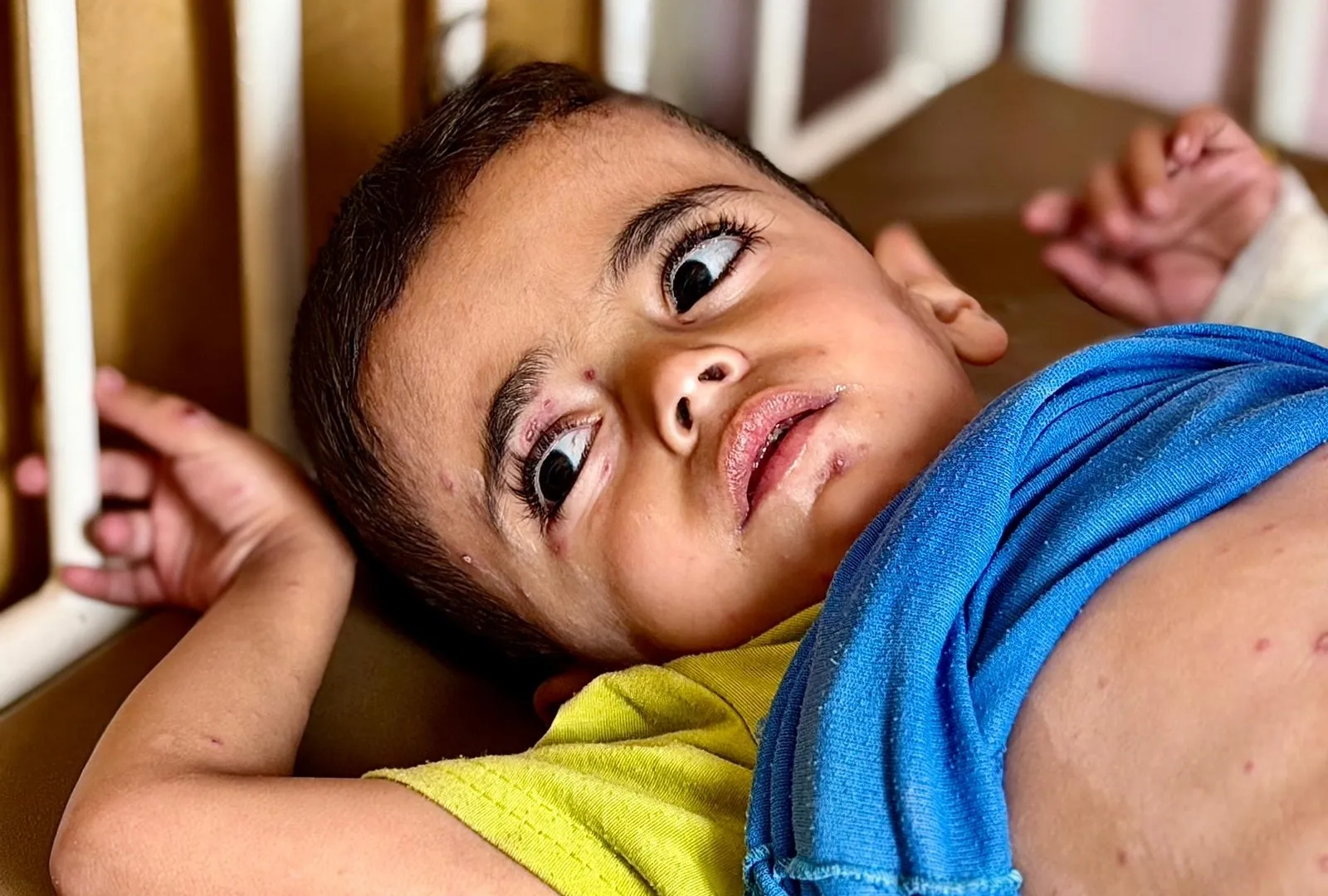
The human toll is evident in the stories of families like Iman Abu Jame and her six-year-old son, Yasser, at Nasser Hospital. Yasser suffers from unexplained burn-like rashes and frailty due to hunger, conditions his mother links to months of severe food shortages and living in a cramped tent in al-Mawasi. With no work and an inability to afford basic meals or medicine, Yasser’s case reflects a broader pattern of illness spreading rapidly among children weakened by malnutrition.
Community health worker Mohammed Fathi noted that many families have stopped seeking treatment due to the unavailability of medicines and the persistence of root causes. He stated that even if temporary treatment were available, the conditions that make children sick remain unchanged, leading to a loss of hope among displaced populations.