FT analysis links Musk, SpaceX to Soviet space legacy
Financial Times article suggests modern tech leaders are intellectual heirs to the Soviet space programme, as US markets rise ahead of Trump-Xi summit.
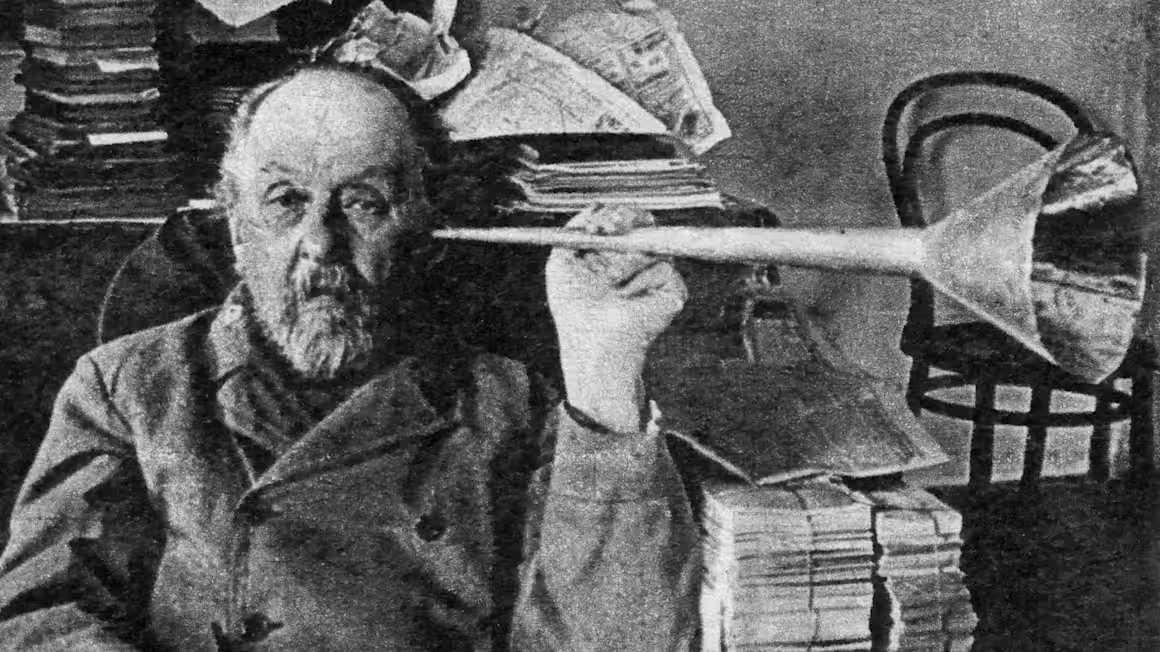
A Financial Times article titled "Musk, SpaceX and Muscovite fever dreams" has drawn a thematic parallel between contemporary technology leaders and the historical Soviet space programme. The publication posits that modern tech titans are the intellectual heirs to the Soviet effort, a perspective categorised under markets analysis.
The piece identifies Elon Musk and his company, SpaceX, as key figures in this comparison. The article suggests that the ambitions and operational styles of these modern private sector leaders echo the drive and scale of the former Soviet Union’s space initiatives.
This analytical piece was published on Thursday, coinciding with a significant shift in global trade dynamics. US stock markets rose as President Donald Trump and Chinese President Xi Jinping commenced a two-day summit in Beijing. The Dow Jones Industrial Average gained 0.8 per cent, the S&P 500 rose 0.3 per cent, and the Nasdaq Composite climbed 0.2 per cent.
Investor sentiment was further buoyed by developments in the semiconductor sector. Nvidia shares surged more than 2 per cent following news that the US approved H200 chip sales to Chinese firms. The approval marks a notable development in the ongoing negotiations between the two economic powers.
Elon Musk attended the Beijing summit alongside other prominent US technology executives, including Tim Cook and Jensen Huang. The summit agenda covers trade, artificial intelligence, and tensions in the Strait of Hormuz. This marks the first visit by an American president to China since 2017.
The Financial Times article serves as a counterpoint to the immediate market movements and diplomatic activities. While the summit focuses on immediate trade and geopolitical concerns, the FT’s analysis looks at the broader historical and ideological lineage of the technology sector’s expansion into space and high-tech infrastructure.
The juxtaposition of the summit’s diplomatic focus and the FT’s historical analysis highlights the dual nature of the current market environment. Investors are weighing immediate policy outcomes against the long-term structural shifts driven by major technology firms.