France rejects asylum for former Wagner insider despite presidential intervention claims
The abrupt denial of protection for a key witness in the Wagner disinformation network case highlights tensions between national security protocols and the obligations of liberal democracies to protect those exposing covert influence operations.
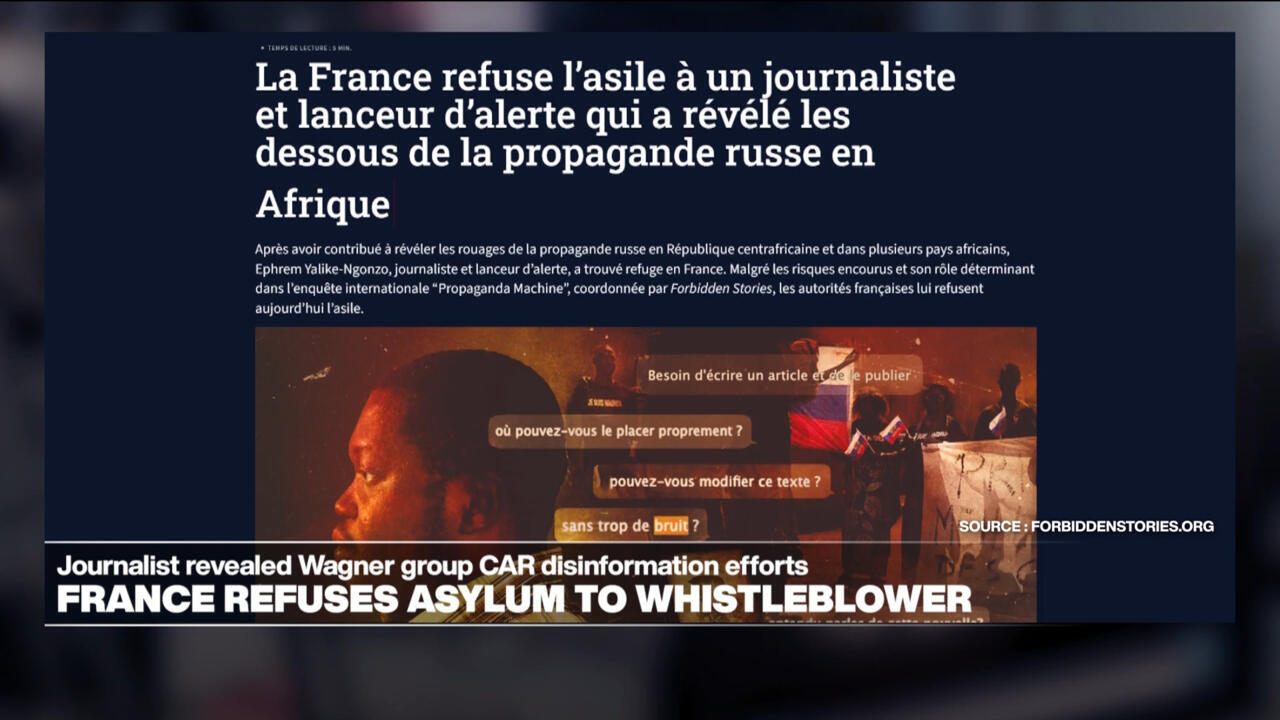
French authorities have rejected the asylum application of Ephrem Yalike-Ngonzo, a former participant in Russia’s disinformation campaign in the Central African Republic who subsequently became a whistleblower. The decision marks a significant reversal from earlier reports indicating that the French presidency supported an intervention to evacuate Yalike-Ngonzo and his family from imminent danger.
Yalike-Ngonzo provided crucial testimony that helped uncover the operations of a Wagner-linked disinformation network across Africa. His evidence contributed to investigations of significant public interest and corroborated subsequent international sanctions against the group. Despite the strategic value of his insights, French authorities abruptly changed course on his asylum request, leaving the specific legal or administrative reasoning for the denial opaque.
Journalist Lea Perruchon of Forbidden Stories has highlighted the case as a collision of competing interests involving journalism, France's national security, and its complex asylum policy. She frames the outcome not merely as an individual immigration dispute, but as a broader test of democratic states' willingness to protect those who expose covert authoritarian influence operations.
The incident raises fundamental questions about how liberal democracies reconcile security concerns with legal consistency and the strategic importance of encouraging future whistleblowers. The same testimony that aided international investigations now appears entangled in an asylum process where the justification for rejection remains unclear.
Perruchon notes that the case underscores an unresolved contradiction: the protection of individuals exposing state-aligned disinformation networks is increasingly difficult to separate from broader geopolitical and security calculations. The opaque nature of the decision leaves open the question of whether such protections will be afforded to future witnesses in similar contexts.
The rejection of Yalike-Ngonzo’s application stands in stark contrast to the reported initial support for his evacuation, suggesting a shift in how French institutions view the intersection of national security and asylum obligations. This shift has drawn attention to the potential risks faced by insiders who cooperate with investigative journalism and international bodies.
As the details of the asylum denial remain unexplained, the case serves as a focal point for debate regarding the consistency of France’s approach to protecting whistleblowers. The outcome may influence how other liberal democracies handle similar cases involving individuals who expose covert influence operations linked to adversarial states.