Focused Energy secures $240 million Series A to advance laser fusion technology
The capital injection brings the firm’s total private funding to $300 million as it prepares to construct its first demonstration reactor at a decommissioned nuclear site.
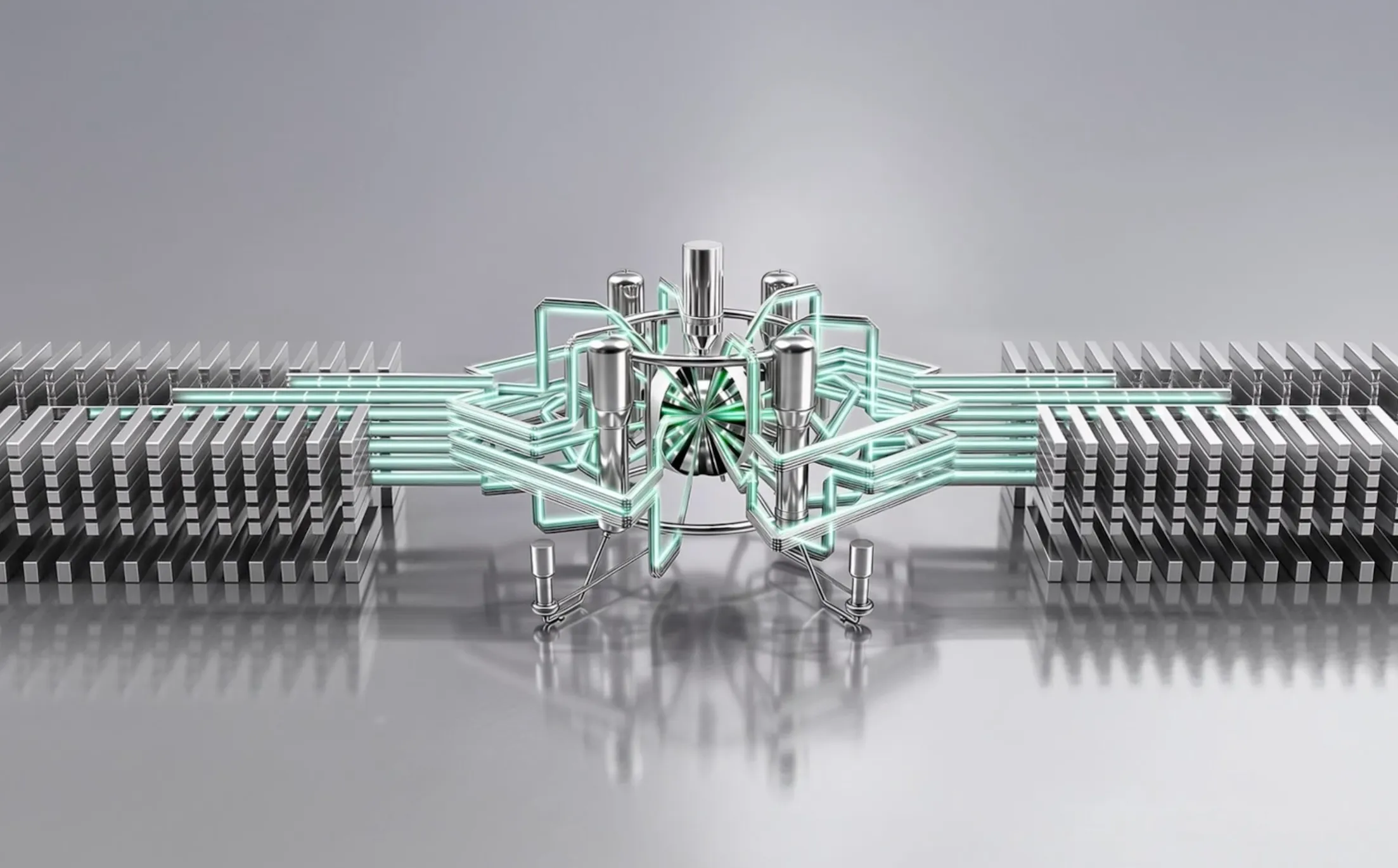
German fusion startup Focused Energy has closed an oversubscribed $240 million Series A funding round, marking one of the largest early-stage investments for a fusion power company. The announcement, made last week, brings the firm’s total private capital raised to $300 million. When combined with $200 million in grants, the company has secured a level of backing that places it among the most heavily funded startups in the sector.
RWE led the Series A investment, with participation from the German Federal Agency for Breakthrough Innovation (SPRIND), Prime Movers Lab, and the European Innovation Council Fund. The utility giant also provided the site for the company’s next major milestone. Focused Energy plans to construct its first demonstration system, named Lighthouse, at a decommissioned nuclear fission power plant in Germany previously operated by RWE.
The company is developing a reactor that uses lasers to compress fusion fuel through inertial confinement. Its design is based on experiments conducted at the National Ignition Facility (NIF) at Lawrence Livermore National Laboratory in California. The NIF remains the only facility to date to achieve a controlled nuclear fusion reaction that released more energy than was used to ignite it.
To make the technology commercially viable, Focused Energy is transitioning from the NIF’s indirect drive method to a direct drive approach. This involves removing the gold hohlraum used to convert laser energy into X-rays, allowing lasers to directly compress the fuel pellet. Debbie Callahan, who helped design the fuel target at the NIF, joined the company in December as chief strategy officer to oversee this simplification.
The shift aims to drastically increase the firing rate from the NIF’s approximately 400 shots per year to 10 shots per second, or roughly 864,000 shots daily. This acceleration is critical for achieving the efficiency required to produce net power. The funding comes amid a surge in capital for the fusion industry, with peers such as Thea Energy, Inertia Enterprises, and Type One Energy raising significant sums earlier this year.
