Financial Times profiles Trump aide as the ‘human printer’ of the White House
A new profile highlights the role of executive aide Natalie Harp, whose close working relationship with Donald Trump is cited as evidence of a broader culture of sycophancy within the administration.
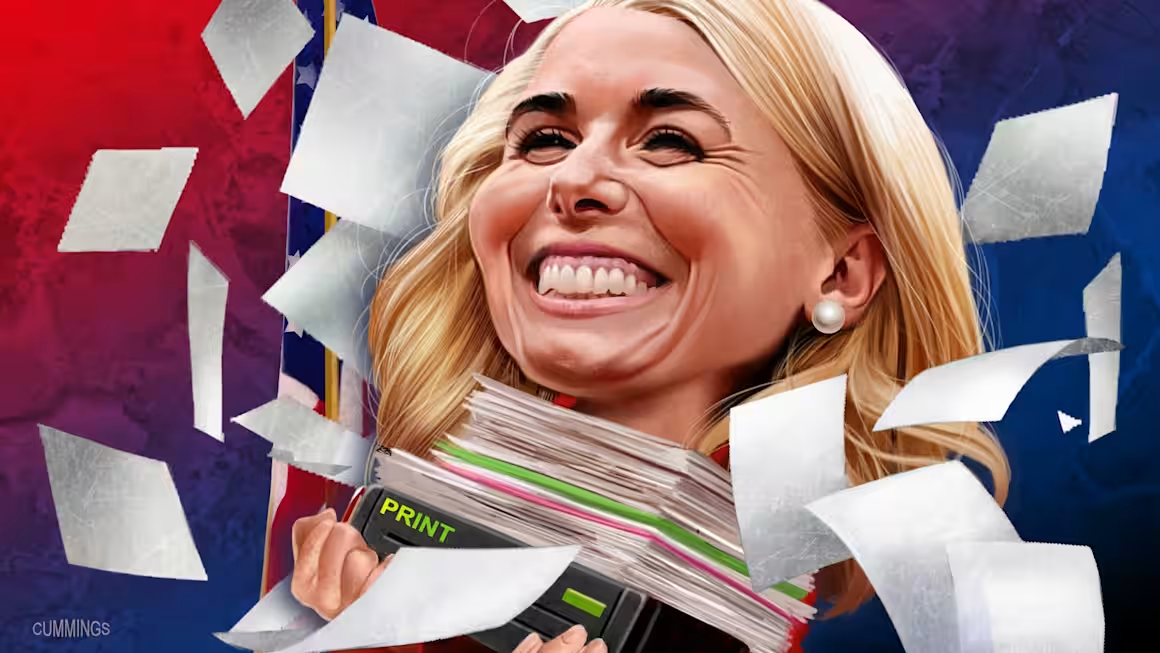
Natalie Harp, an executive aide to US President Donald Trump, has been described by the Financial Times as a devoted ‘human printer’ within the president’s entourage. The profile, published on 21 August 2026, focuses on Harp’s specific duties and her proximity to the head of state.
The report suggests that Harp’s relationship with Trump is not merely a functional arrangement but serves as a symbol of a wider dynamic. According to the Financial Times, her role exemplifies a broader culture of sycophancy surrounding the president and his inner circle.
This characterisation positions Harp as a key figure in understanding the operational style of the current administration. The term ‘human printer’ is used as a descriptive label to highlight the nature of her support, rather than as an official job title.
The profile emerges against a backdrop of active diplomatic engagement by the US government. On 20 August 2026, President Trump stated his intention to meet North Korean leader Kim Jong Un later in the year to revive their relationship.
Trump described Kim as possessing 57 “very powerful” nuclear weapons, emphasising the need for a strong bilateral relationship. This diplomatic push coincides with a decision to scale back joint US-South Korean military drills, adding another layer to the administration’s foreign policy posture.
While the Financial Times’ focus is on the internal culture of the White House, the simultaneous diplomatic moves underscore the high-stakes environment in which aides like Harp operate. The report provides a glimpse into the personal dynamics that underpin the administration’s public-facing actions.