Financial Advisor Urges Direct Roth Conversion to Avoid RMD Pitfalls
Direct conversion to a Roth IRA, funded by outside savings, eliminates future required minimum distributions and protects against Medicare premium surcharges.
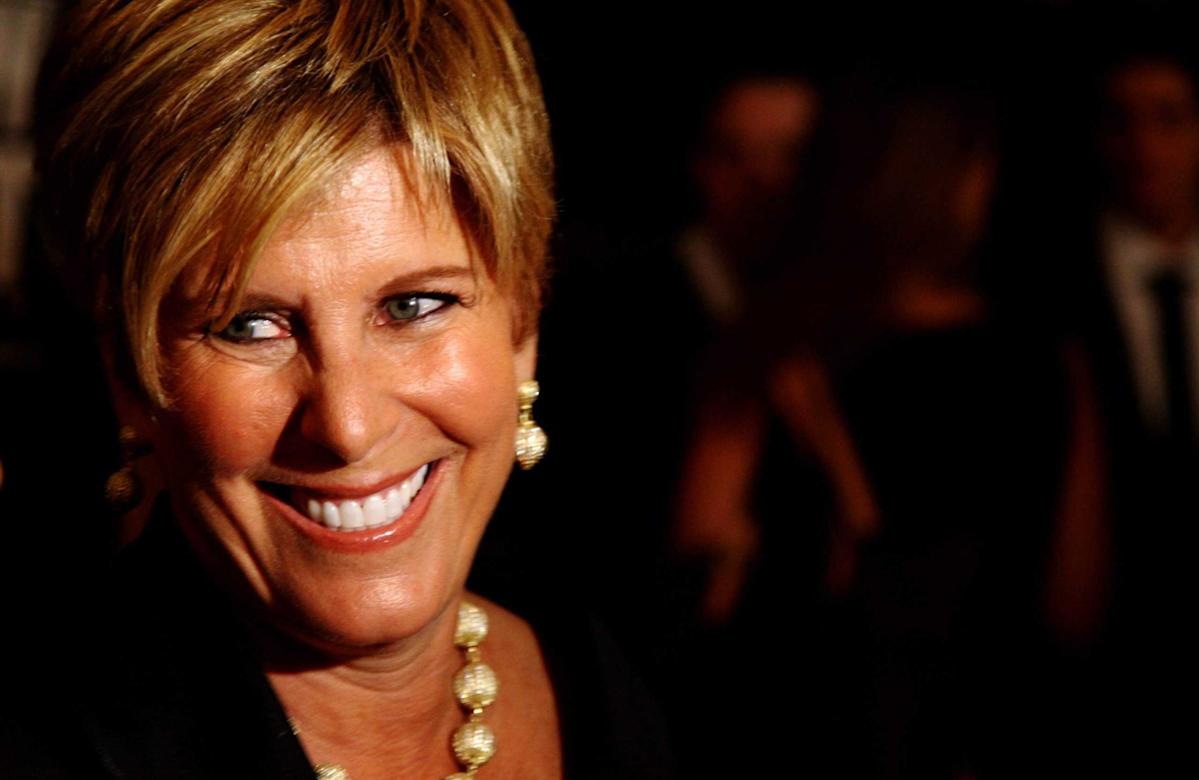
Financial advisor Suze Orman has advised a podcast caller with a $1.6 million pre-tax 401(k) balance to execute a direct Roth conversion, dismissing a complex three-step workaround proposed by her employer’s benefits team. Orman, speaking on her podcast, characterised the suggested in-plan rollover strategy as unnecessary and potentially detrimental, recommending instead that the caller withdraw funds directly to a Roth IRA and pay the resulting taxes from outside savings.
The caller, identified as Gina, aged 56, sought to convert her pre-tax balance over a 10-year period without depleting her liquid savings to cover the tax liability. Her company’s benefits team had proposed an in-plan rollover from the pre-tax 401(k) to a Roth 401(k), followed by a transfer to a Roth IRA, alongside a separate withdrawal with 100 per cent tax withholding. Orman rejected this approach, noting that an in-plan Roth rollover is itself a taxable event that triggers ordinary income tax regardless of the destination account, while layering additional rollovers introduces separate five-year clocks for earnings withdrawals without reducing the tax burden.
Orman’s recommended strategy involves converting approximately $160,000 annually for 10 years, pulling the entire pre-tax balance into a Roth IRA where there are no required minimum distributions (RMDs) during the account holder’s lifetime. This approach aims to eliminate the RMD base by age 73, when mandatory withdrawals typically commence. The IRS Uniform Lifetime Table uses a divisor of roughly 26.5 at age 73, meaning a $1.6 million balance could generate a first-year RMD of around $60,000, with withdrawals increasing as the balance compounds and the divisor shrinks.
The primary financial rationale for this conversion is to avoid the compounding effects of large RMDs on income tax liability and Medicare premiums. Large RMDs can push retirees into higher income brackets, triggering the Income-Related Monthly Adjustment Amount (IRMAA) surcharges on Medicare Part B and Part D premiums. By converting in the late 50s and 60s, while income is more controllable, retirees can stay below these thresholds in their 70s. Furthermore, preserving the balance in a Roth IRA allows for tax-free growth for the account holder, their spouse, and heirs, subject to the 10-year drawdown rule for non-spouse beneficiaries.
Crucially, Orman emphasised that the strategy’s viability depends on having non-retirement cash to pay the conversion tax. Withholding taxes from the conversion itself would shrink the Roth balance and potentially incur a 10 per cent early withdrawal penalty on funds under $100,000 if the account holder is under 59½. She advised readers to map their current marginal tax bracket against IRMAA thresholds to determine annual conversion amounts, open a direct conversion path at their custodian, and earmark outside cash for tax payments to avoid underpayment penalties.