FIFA referee policy shields England from penalty review in World Cup stalemate with Ghana
BBC pundits and former officials argue Ezri Konsa’s challenge on Prince Adu warranted a spot-kick, but VAR inaction aligns with Pierluigi Collina’s directive for higher intervention thresholds.
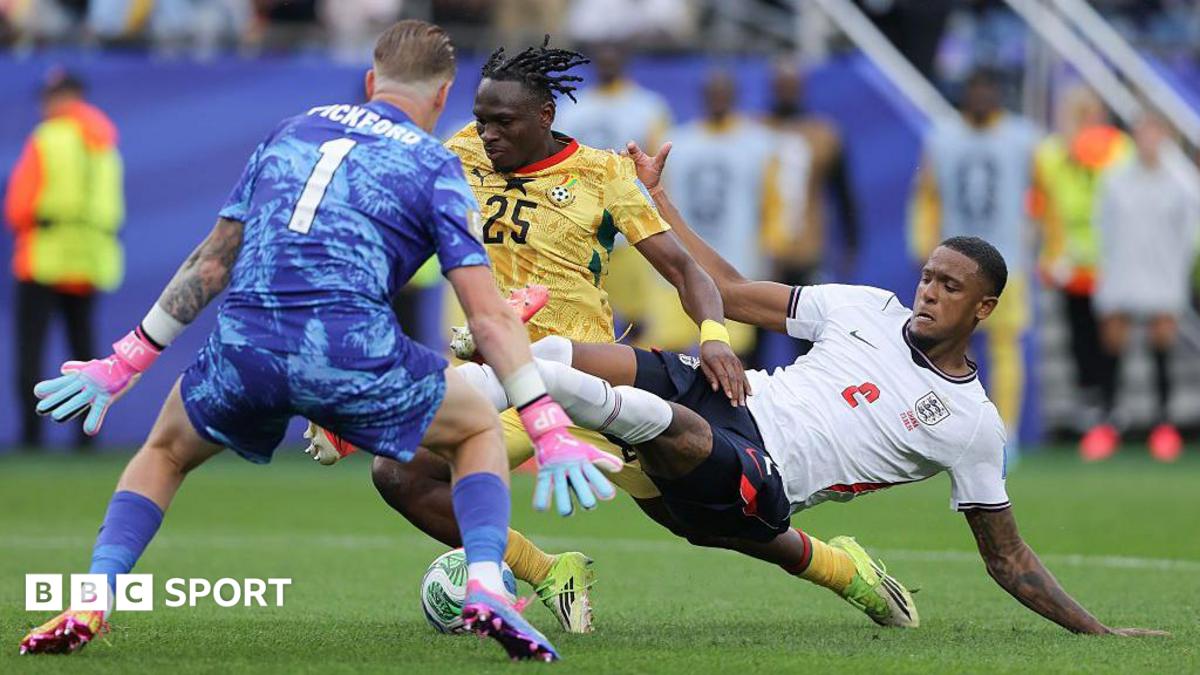
England and Ghana concluded their 2026 FIFA World Cup Group L encounter in a goalless draw, a result that has sparked significant debate regarding officiating standards. The match, played in the United States, ended without a winner despite England manager Thomas Tuchel introducing attacking substitutions including Bukayo Saka, Eberechi Eze, and Marcus Rashford in the second half. Ghana’s defence held firm, with goalkeeper Benjamin Asare making a crucial save against Saka and Nico O’Reilly’s header striking the crossbar.
The primary point of contention arose with approximately 10 minutes remaining, when England defender Ezri Konsa tackled Ghana midfielder Prince Adu. Replays indicated that Konsa caught Adu on the knee without making contact with the ball, an incident that the on-field referee did not penalise. The decision not to award a penalty was not reviewed by the Video Assistant Referee (VAR), a deviation from standard Premier League protocol that has drawn criticism from football analysts.
BBC pundits Wayne Rooney and Micah Richards argued that the incident should have resulted in a penalty. Rooney described Konsa’s challenge as a huge risk, noting the defender was airborne and uncontrolled when he made contact with the attacker. Richards added that while England were chasing the game, they still required protection behind them, suggesting that on another day, the challenge would have been punished.
Former assistant referee Darren Cann, who officiated the 2010 World Cup final, agreed that the incident warranted a VAR review. Although he expressed relief as an England fan that the penalty was not given, Cann stated that Konsa was out of control and made no contact with the ball, asserting that the correct decision should have been a penalty kick.
The lack of VAR intervention appears consistent with the current policies implemented by Pierluigi Collina, FIFA’s head of referees. Collina has established a higher threshold for on-field challenges to ensure consistency in decision-making, which inherently results in fewer VAR interventions compared to domestic league protocols. This approach prioritises the flow of the game by allowing more tackles to stand unless they meet a stricter criteria for review.
The result leaves Group L open, with England and Ghana sharing points in a tactical stalemate. The match took place against a backdrop of relatively low public awareness of the World Cup in the United States, with many fans focusing on the concurrent NBA Finals where the New York Knicks lead the San Antonio Spurs 3-1. This is the first World Cup hosted in the United States since 1994, a tournament that previously boosted football popularity and led to the creation of Major League Soccer.
The long-term implications of this officiating approach on England’s campaign remain to be seen, as the team continues to navigate Group L. The decision to withhold a VAR review underscores the institutional shift in how FIFA manages match control, prioritising referee autonomy over post-hoc technological correction in borderline cases.