Fifa Congress in Vancouver marked by refusal to bridge Palestinian and Israeli football delegations
Gianni Infantino's attempt to unite the factions on stage is rebuffed by Jibril Rajoub, who cites the political implications of Israeli clubs operating in occupied territories.
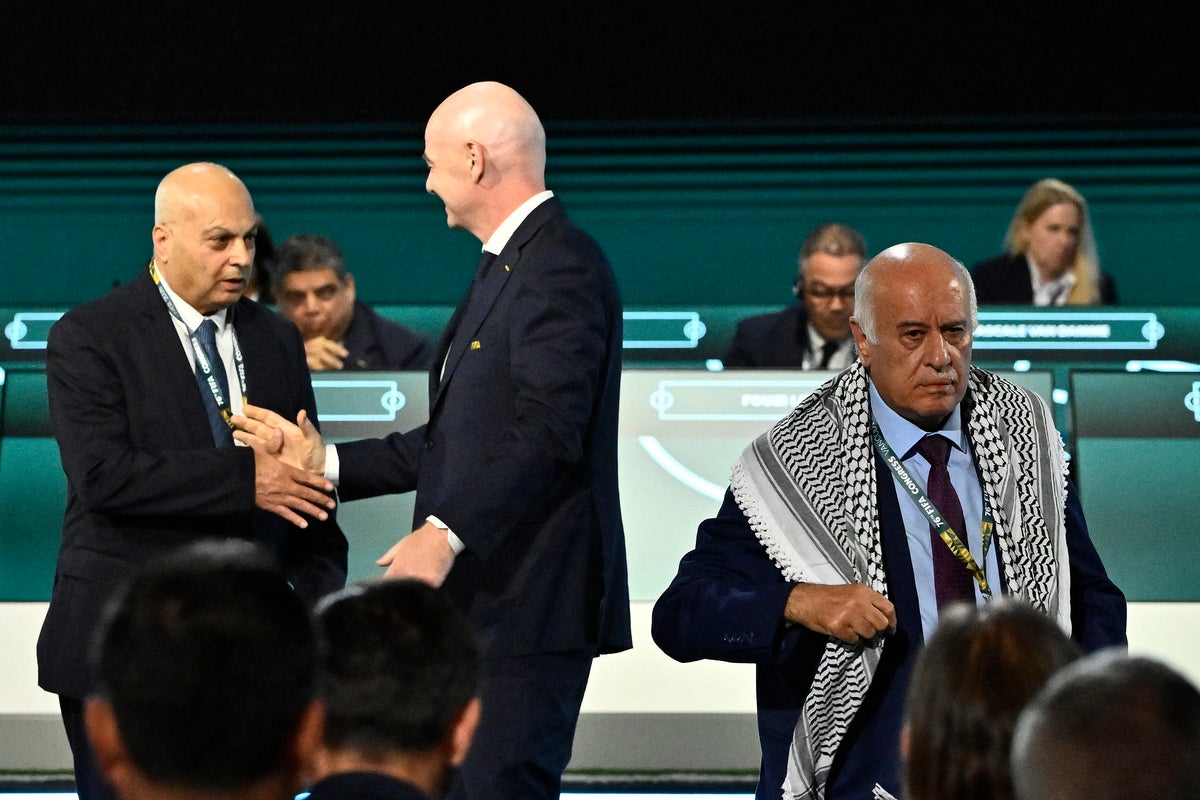
The Fifa Congress in Vancouver concluded with a stark display of political division rather than the institutional unity typically expected of the world governing body. Palestinian Football Federation president Jibril Rajoub refused to stand alongside or shake hands with Israeli Football Association vice-president Basim Sheikh Suliman, despite a direct invitation from Fifa president Gianni Infantino to unite on stage for a photograph. The confrontation unfolded immediately after Rajoub delivered a speech calling for sanctions against Israeli clubs based in West Bank settlements and criticising the representation of Benjamin Netanyahu by the IFA.
Infantino attempted to physically guide Rajoub closer to Suliman, placing his hand on the Palestinian president's arm and gesturing for him to approach. Rajoub resisted the gesture, declining the offer to stand with his counterpart. This physical rejection underscored the depth of the dispute, which centres on the ongoing disagreement over whether clubs based in Israeli settlements should compete in leagues run by the IFA. Rajoub argued that if the other side is representing a figure he describes as a criminal, it is impossible to engage in a gesture of friendship or a photo opportunity.
Susan Shalabi, Palestinian FA vice-president, supported her colleague's stance, stating that the forced handshake negated the purpose of Rajoub's speech regarding the violation of member association rights. She told reporters that she could not shake the hand of someone brought there to whitewash what she termed fascism and genocide. Shalabi described Infantino's intervention as showing little consideration for the Palestinian FA chief's address, in which he spent significant time explaining how the rules matter and how the current situation creates a precedent where the rights of member associations are violated with impudence.
The incident highlights the broader legal and political stalemate surrounding the status of the West Bank. Last week, the PFF appealed to the Court of Arbitration for Sport against Fifa's decision not to sanction the IFA or its clubs. Fifa previously stated it would take no action, citing the unresolved legal status of the West Bank under public international law. Rajoub maintained that while he respects the legal procedure, the double standard policy must stop and that Israel should be sanctioned for allowing clubs to operate in territories Palestinians claim for a future state.
Outside the Vancouver Convention Centre, the atmosphere remained charged as the PFF delegation departed. They were targeted by protesters demanding a ban on Iran's World Cup participation due to alleged ties to the Islamic Revolutionary Guard Corps. While the protesters questioned Rajoub on his stance regarding the IRGC, he insisted that the PFF was not supporting anyone but sought the support of the international community. The separate protests added another layer of complexity to the congress, which was already dominated by disputes over sanctions and representation.
The clash between Rajoub and Suliman, facilitated by Infantino's well-intentioned but ultimately unsuccessful attempt to bridge the gap, serves as a reminder of the deep fissures within global football governance. Rajoub noted that while Infantino has the right to try to bridge gaps, he may not understand the deep suffering of the Palestinian people. The refusal to unite on stage suggests that for now, the institutional mechanisms of Fifa are struggling to reconcile sporting integrity with the intense political realities of the region.