FIFA confirms VAR protocols for 2026 World Cup with no time limits or coach challenges
The Video Assistant Referee system will operate under strict finality rules, utilising embedded ball sensors for automatic checks while leaving penalty reviews to referee discretion without temporal constraints.
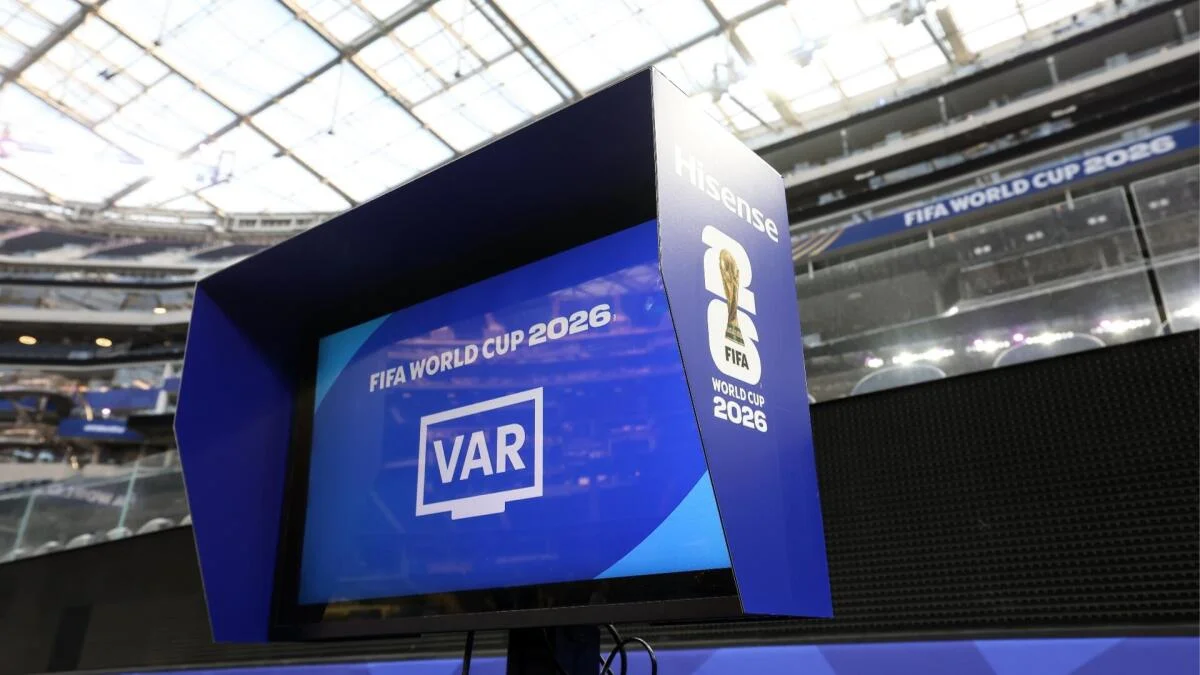
FIFA has confirmed that the Video Assistant Referee (VAR) technology will be deployed at the 2026 World Cup to review decisions for clear and obvious errors or missed incidents. The governing body’s protocol relies on sensors embedded in the match ball to automatically determine offside positions and line-crossing events, ensuring precise data for these specific calls. For other incidents, such as penalties and fouls, the system initiates a review only if a potential error is identified, shifting the burden of proof to the on-field official to verify the footage.
The operational framework distinguishes itself from American sports by rejecting a coach challenge mechanism. Decisions rendered by the VAR are final, and the protocol explicitly warns that excessive dissent regarding these outcomes may result in yellow cards. This approach underscores a governance model that prioritises the authority of the match officials over the tactical interventions of team management, a stark contrast to the challenge systems prevalent in other major global sporting leagues.
When a potential error is detected, the VAR prompts the on-field referee to display the TV signal by drawing a box with their hands. The official then proceeds to a monitor to review the footage before issuing a final decision. Notably, there is currently no time limit imposed on these reviews, a procedural choice that leaves the duration of stoppages to the discretion of the officiating team rather than a fixed regulatory cap. This lack of temporal constraint highlights the complexity of adjudicating murkier incidents where automated checks are insufficient.
The protocol applies to five main scenarios, although the specific list of these incidents is not detailed in the current release. The underlying principle remains the threshold of a "clear and obvious error." If an incident does not meet this high bar, the VAR is instructed to recommend that the original decision made on the field be retained. This standard aims to preserve the flow of the game while correcting significant injustices, balancing technological precision with the traditional human element of officiating.
Post-decision, the referee is required to show the TV signal again and publicly explain and announce the ruling. This transparency measure is designed to maintain fan engagement and clarity during interruptions. As the tournament approaches, the absence of a time limit and the finality of decisions will likely be central points of discussion, testing the robustness of VAR as a tool for governance in high-stakes international football.