Federal Reserve holds rates steady as Middle East conflict clouds inflation outlook
Jerome Powell prepares for final policy meeting before Kevin Warsh takes over; analysts warn oil shocks may be more than a temporary blip
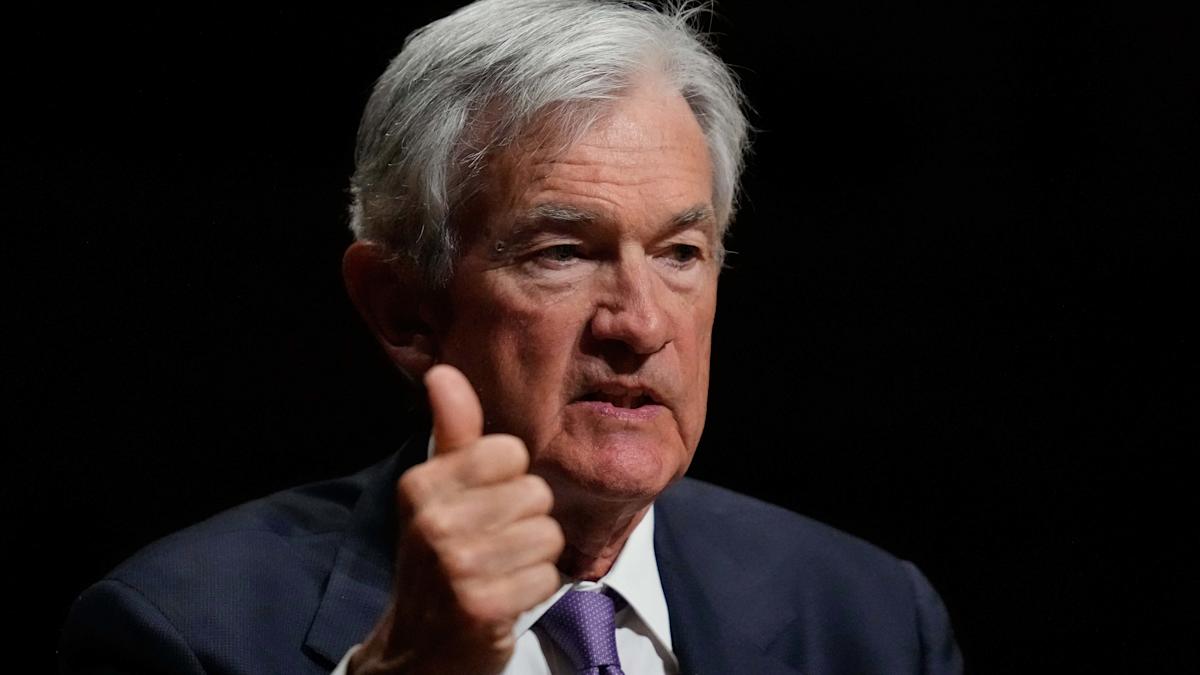
The Federal Reserve is widely expected to maintain its benchmark interest rate on Wednesday afternoon as policymakers navigate a complex economic landscape. With the ongoing conflict in the Middle East creating significant uncertainty regarding future oil prices and growth, officials are taking a measured approach to monetary policy. Fed Chair Jerome Powell, who is set to step down in May following the Senate confirmation of Kevin Warsh, is anticipated to emphasise the pervasive uncertainty surrounding the war's fallout on inflation and growth during his final press conference.
Recent data reinforces the committee's hesitation to pivot quickly. The March Consumer Price Index jumped 3.3%, driven largely by a sharp 21% spike in gas prices, while core inflation, which excludes volatile food and energy costs, inched up to 2.6%. Former Cleveland Fed president Loretta Mester has noted that services inflation remains sticky and may be firming, suggesting that risks to the upside for inflation persist despite goods prices levelling off from the effects of tariffs.
Analysts, including Matt Luzzetti of Deutsche Bank, have revised their forecasts to predict an indefinite pause on rate cuts through 2026 due to these persistent price pressures. Luzzetti stated that for the central bank to cut rates this year, it would require a weakening in the job market alongside softer inflation. He noted that while a rate hike is no longer a trivial possibility, the conditions required for such a move are not expected to manifest in 2026.
The debate continues over whether the oil price spike should be viewed as a short-lived, one-time shock or as a persistent factor requiring policy adjustment. Former Kansas City Fed president Esther George highlighted that higher-income consumers are less sensitive to inflation, capital investment is increasing, and government spending is rising due to the war, creating tailwinds for the consumer. She argued that while high inflation might cause people to back away from demand, there are currently several factors supporting consumer activity.
Fed governor Chris Waller has also suggested that policymakers may eventually have to acknowledge that a series of one-time shocks can become persistent. This sentiment aligns with the broader view among the committee that any consideration of rate cuts is firmly parked at this stage. Krishna Guha of Evercore ISI noted that for the dominant group, the question is now cut or hold this year, rather than cut or hike.
The Federal Reserve's preferred inflation gauge, the Personal Consumption Expenditures index, is scheduled to be released on Thursday, providing further clarity on the inflation trajectory. The central bank's policy decision will be announced at 2 p.m. ET, followed by Powell's press conference at 2:30 p.m. No new interest rate projections or updated economic forecasts are scheduled to be released during the meeting.