Faraday Future pivots to robotics sales amid minimal EV output
The embattled manufacturer is shifting focus from its stalled car production to a new lineup of robots, including the $89,900 Futurist humanoid and the $2,000 Navi quadruped, projecting significant shipment volumes for the remainder of the year.
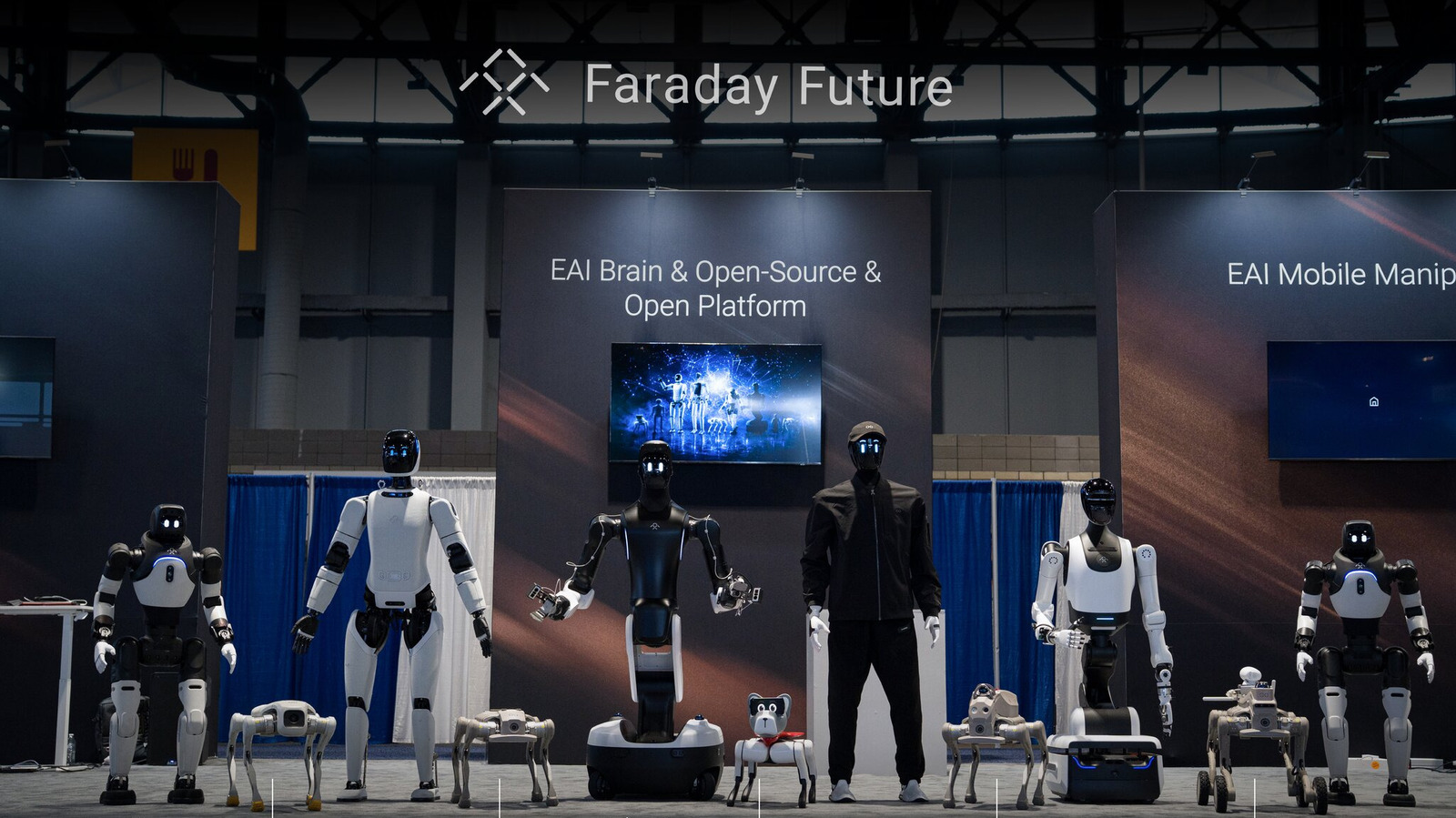
Electric vehicle manufacturer Faraday Future has announced a strategic pivot towards robotics, unveiling a new product lineup that includes humanoid robots, quadrupeds, and robotic arms. The company is offering a quadruped model named Navi for approximately $2,000, designed for educational purposes, and a humanoid robot called Futurist priced at $89,900. Additionally, the firm is selling an industrial-grade mobile manipulator, though specific pricing for this unit has not been disclosed. Faraday Future expects to ship more than 100 robotics units in June, with total shipments for the first half of the year projected to exceed 220 units. This move follows the company's history of financial difficulties and the sale of only 15 to 16 electric vehicles since its inception.
The shift marks a significant departure from the firm’s core automotive ambitions, which have been plagued by delays and funding confusion for nearly a decade. Although the company generated considerable hype prior to showcasing its first production-ready electric car at CES 2017, it has struggled to translate that interest into sales. In January 2025, the firm reported selling only 15 or 16 vehicles, highlighting the severe challenges it has faced in establishing a viable consumer vehicle business.
Founder and sole global CEO YT Jia returned to the helm in May 2025 following an executive shakeup, a move that coincided with the company’s return to CES with promises of a fresh start and a new electric minivan, the FX Super One MPV. The first pre-production model of the van was completed in December 2025, yet the company appears to be directing more immediate energy into its robotics division, mirroring strategic moves employed by competitors such as Tesla.
The new robotics portfolio includes the Navi quadruped, which is targeted at children for learning embodied AI and costs just under $2,000, with an optional 3D-printed canine head available for an additional fee. The humanoid Futurist stands 5 feet 8 inches tall and features NVIDIA Sonic’s full-body motion control system, retailing for just shy of $90,000. An industrial-grade mobile manipulator is also being sold, although the lack of public pricing suggests a cost that remains prohibitive for most business customers.
Despite the high price points and a track record characterised by internal turmoil, layoffs, and approximately a dozen lawsuits, Faraday Future is projecting robust near-term delivery numbers. The company claims to expect shipments of more than 100 robotics units in June alone, with total shipments for the first six months of the year expected to surpass its original target of 220 units. This aggressive shipping schedule stands in stark contrast to the minimal vehicle sales figures reported earlier in the year.
