Falcon 9 upper stage predicted to strike the Moon in August 2026
The event poses no immediate risk to lunar operations, but experts are urging the industry to adopt standardised disposal orbits to mitigate future space debris concerns as lunar activity intensifies.
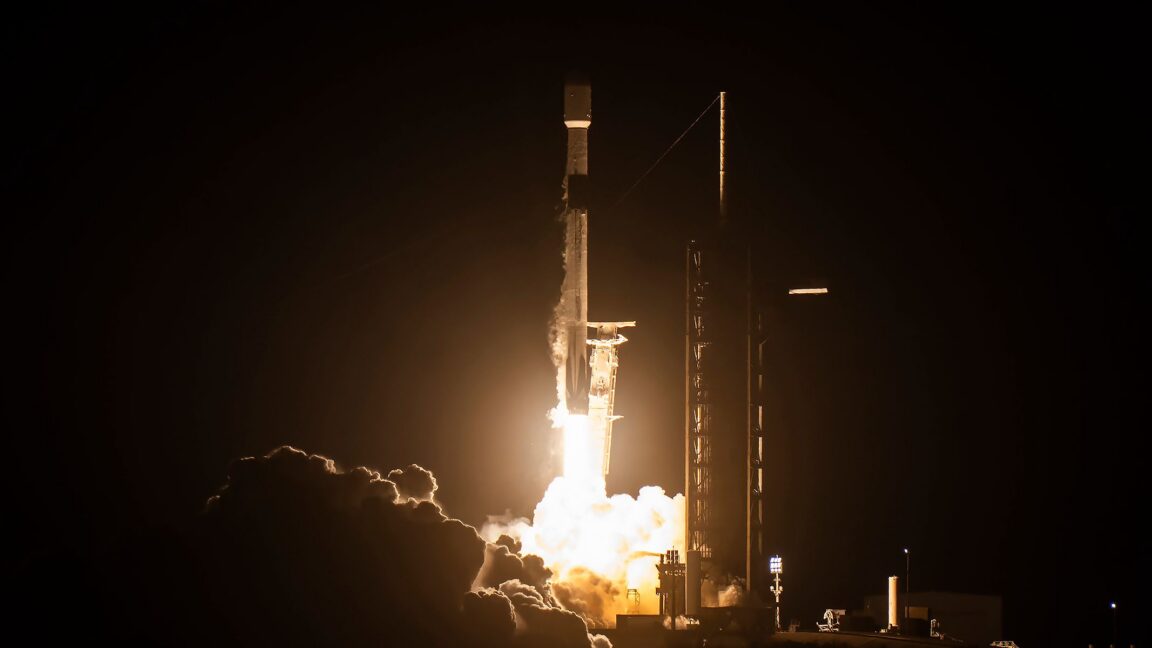
Astronomers have predicted that the upper stage of a Falcon 9 rocket will impact the near side of the Moon on 5 August 2026 at 06:44 UTC. The object, designated 2025-010D, is expected to strike the lunar surface at a velocity of 2.43 km/s, equivalent to approximately 5,400 mph or seven times the speed of sound. This collision is forecast to create a small crater in the vicinity of the Einstein Crater.
The specific identity of the debris was confirmed by Bill Gray, a developer of the Project Pluto software used to track near-Earth objects. Gray distinguishes this object from a previous misidentification involving Chinese hardware, noting that 2025-010D was the upper stage of the Falcon 9 mission launched on 15 January 2025. That launch carried Firefly's Blue Ghost and ispace's Hakuto-R lunar landers, both of which separated from the stage prior to the predicted impact.
Since its separation, the upper stage has remained in Earth orbit, tracked with over 1,000 observations as of February 2026. Unlike the payload fairing which re-entered Earth's atmosphere, or the landers which reached the Moon, this stage maintained a higher orbit that kept it from burning up. Because the Moon lacks an atmosphere, the stage is expected to strike the surface intact rather than disintegrating before impact.
While the impact flash may be visible from parts of North and South America, experts suggest the event is likely too faint to be detected by Earth-based telescopes. The collision poses no risk to current lunar operations, as there are no human-landed objects or active infrastructure in the immediate vicinity of the impact site. The dead world will absorb the kinetic energy without consequence to existing missions.
However, the incident highlights growing concerns regarding space debris as lunar activity expands. With NASA and China planning semi-permanent outposts near the South Pole, the cadence of launches to the Moon is expected to increase by a factor of ten. To prevent similar events in the future, experts recommend that launch companies utilise disposal orbits around the Sun for upper stages, ensuring they do not intersect with Earth or the Moon in perpetuity.
