Experts warn advanced data models fail to capture the spontaneous nature of soccer
Sarah Rudd and Luke Bornn argue that tactical decisions and specific player behaviours remain difficult to predict with absolute certainty.
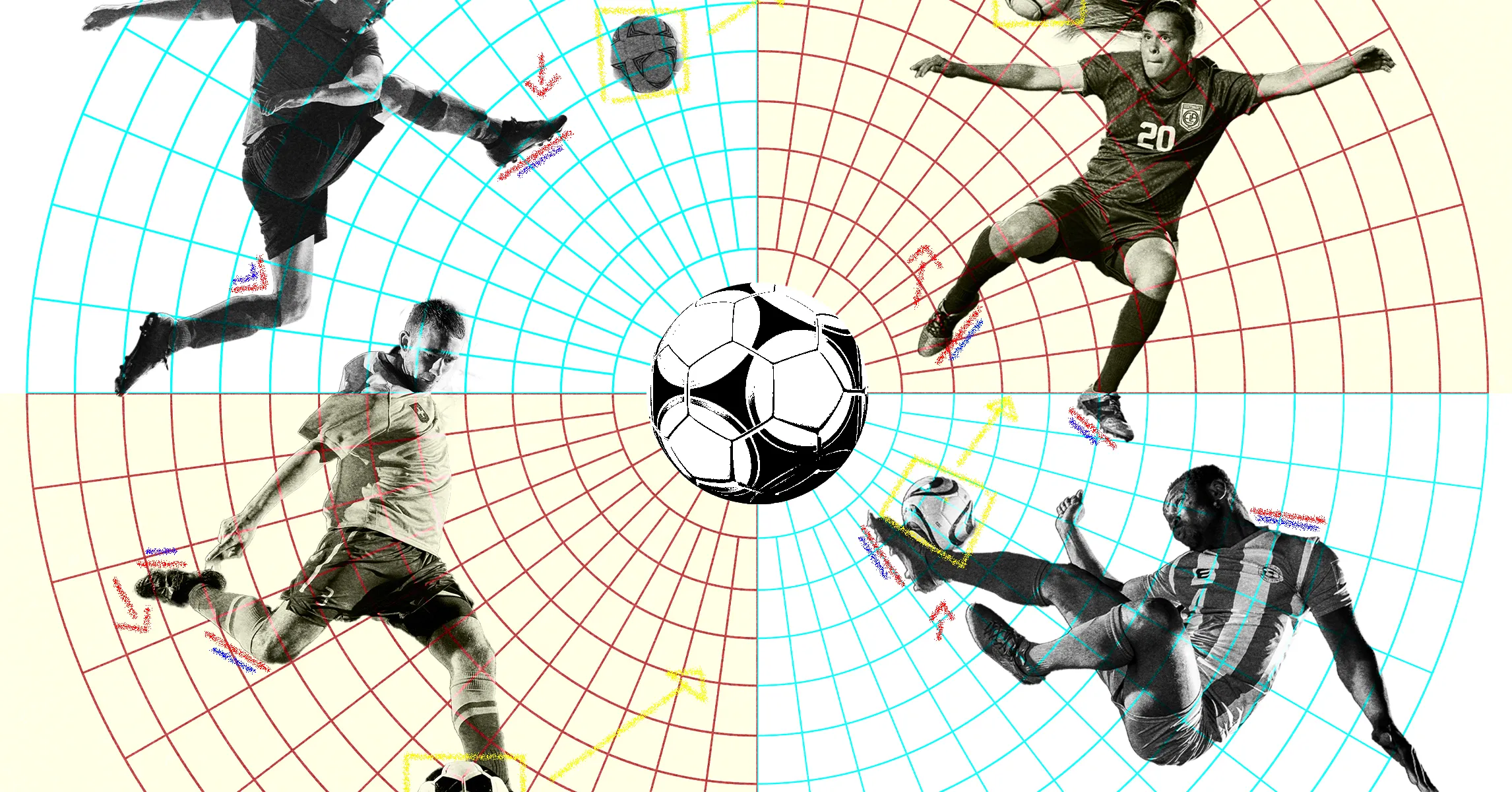
Leading data scientists Sarah Rudd and Luke Bornn have highlighted a fundamental limitation in modern sports analytics: advanced statistical models struggle to quantify the chaotic and spontaneous nature of soccer. While tools such as player tracking and Markov chains have evolved significantly over the last decade, the analysts concede that tactical decisions and specific player behaviours remain difficult to predict with absolute certainty. Their discussion suggests that the sport fundamentally resists orderly examination by design, maintaining a severe allergy to simple answers despite the proliferation of data.
Rudd, who formerly served as the head of analytics at Arsenal, notes that her early work in 2011 involved dividing the pitch into rigid, equal-sized grid boxes to apply Markov chains. She now acknowledges this approach was a misguided desperation for order, as the game operates in nebulous, reactive zones that do not align with linear grid markings. This methodological evolution underscores the difficulty of applying linear mathematics to a fluid environment where congestion and tactical trends shift constantly.
The limitations of current models are perhaps best illustrated by research into Lionel Messi's on-field behaviour. Bornn and his collaborator Javier Fernández quantified the Argentine legend's tendency to stroll as a conscious tactical action rather than a sign of low effort or energy conservation. Their study demonstrates that Messi's slow saunters short-circuit defenses by manipulating opponent positioning and claiming valuable space, allowing him to achieve more control during a stroll than most players do with an all-out sprint.
Rudd describes the challenge of modern football analytics as trying to cover yourself with a blanket that is too short. While certain winning strategies are known, there are too many trade-offs and alternative ways to win for a single optimal model to exist. This philosophical divide between data-driven pragmatism and the spontaneous, joyful nature of the sport means that even pioneers like Rudd find the analytical lens exhausting and sometimes ruin the viewing experience.
The article contrasts the data-driven approach with the entertainment industry reality of football, where conflicting worldviews on possession and style coexist. For so long, the hope was that wide-scale access to tracking data would solve all problems, but Rudd notes that obtaining the data only revealed that the core issues remain. The game remains resistant to orderly examination, proving that there is no single spreadsheet task that can fully capture the complexity of a ninety-minute match.