ESPN Analyst Questions NFL Depth with Hypothetical 'All-Backup' Roster
Nick Herbig’s construction of a 53-man squad composed entirely of reserve players reveals critical vulnerabilities at wide receiver, linebacker, and secondary, limiting competitiveness against elite franchises.
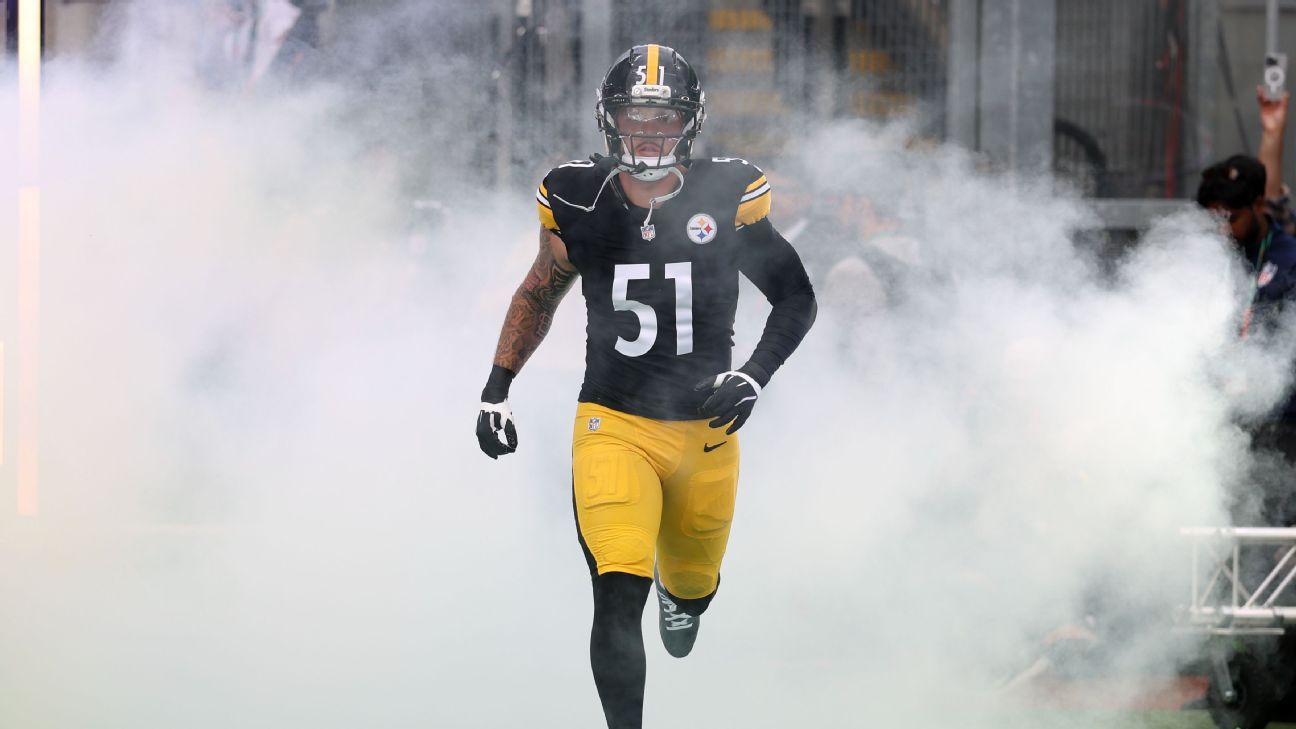
ESPN analyst Nick Herbig has constructed a hypothetical 53-man National Football League roster for the 2026 season, comprising exclusively backup players from all 32 franchises. The exercise aims to evaluate the competitive viability of non-starters, particularly those with special teams value. The roster adheres to specific constraints, including a maximum of two players per team and the inclusion of one rookie from each of the eight 2026 draft rounds. Herbig projects the squad to possess a robust running game and edge rush capability, driven by players such as Joe Flacco, Tyler Allgeier, and Kayvon Thibodeaux. However, the analysis identifies significant vulnerabilities at wide receiver, linebacker, and secondary positions. The projection suggests the team could contend with lower-tier NFL franchises, such as the Miami Dolphins or New York Jets, but would likely face substantial difficulties against elite teams.
The roster construction required selecting at least one backup from each franchise, with a limit of two players per team to ensure broad league representation. Herbig prioritised players who contribute regularly on special teams to fill the back end of the lineup, including specialists and a long-snapper. The offensive strategy leaned into multiple tight end sets, while the defensive scheme adopted a Vic Fangio-style approach designed to generate pressure with the front four while limiting big plays. One rookie from each round of the 2026 draft was included, provided they were not expected to start for their respective teams in Week 1. This rule allowed for the inclusion of specific developmental talents who could serve as rotational pieces.
Quarterback play was anchored by Joe Flacco of the Cincinnati Bengals, Fernando Mendoza of the Las Vegas Raiders, and Jameis Winston of the New York Giants. Herbig noted that if Mendoza performs as a rookie sensation, the quarterback room could be above average, supported by the game-winning capabilities of Flacco and Winston. The running game was deemed a legitimate strength, featuring Tyler Allgeier, Rico Dowdle, Kenny Gainwell, and Keaton Mitchell. These players, often on mid-to-low-cost contracts, offer efficiency and versatility, with Allgeier and Dowdle having recorded 1,000-yard seasons in the past. The offensive line, featuring Lloyd Cushenberry III and Walker Little, was described as versatile rather than dominant, with multiple players capable of filling various interior and exterior spots.
Defensive strengths were concentrated on the edge, with Nick Herbig of the Pittsburgh Steelers, Kayvon Thibodeaux of the New York Giants, and Al-Quadin Muhammad of the Tampa Bay Buccaneers forming a competitive unit. The analysis suggested this group could win one-on-one matchups, providing a viable pass rush. However, the linebacker and secondary positions were identified as critical weaknesses. The cornerback group, including Martin Emerson Jr. and Kristian Fulton, was viewed as a collection of bets on young players rather than a confident starting unit. The safety position was considered the weakest link, with players like P.J. Locke and Cam Lewis offering experience but lacking the elite playmaking ability required to stop advanced passing attacks.
The final assessment compared the squad to a lesser version of the 2025 New York Giants, noting that while the running game and pass rush were viable, the lack of playmakers at wide receiver and depth in the secondary limited their ceiling. Herbig projected that the team would have a decent shot against lower-tier opponents like the Dolphins on a neutral field but would struggle against teams with strong pass rushes or elite receiving corps. The analysis concluded that while a team of backups could compete with the league's bottom tier, it would likely struggle against the majority of NFL franchises, highlighting the thinness of depth at key positions across the league.