ESA commissions quantum eye-scanner to combat astronaut vision loss
The European Space Agency has tasked Siloton with developing a compact, battery-free device to monitor Spaceflight-associated neuro-ocular syndrome, addressing critical health risks for long-duration missions.
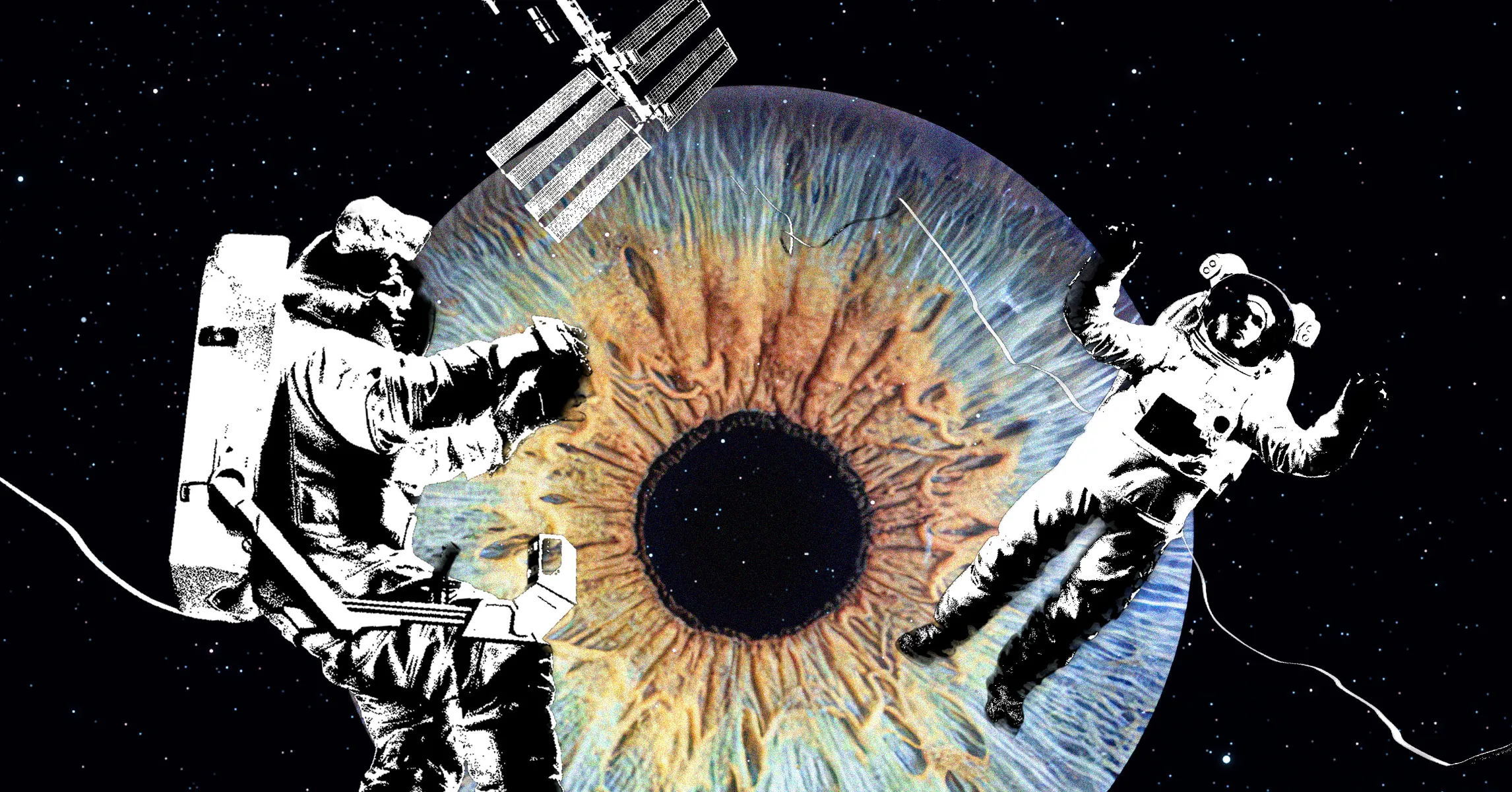
The European Space Agency has commissioned British health-tech startup Siloton to develop a compact, quantum-based eye-scanning device designed to monitor astronauts for Spaceflight-associated neuro-ocular syndrome (SANS). The technology, which utilises quantum methods to shrink core testing components onto a photonic chip smaller than a coin, aims to allow astronauts to self-administer retinal scans without real-time guidance from ground control. This capability is essential for deep space missions where communication delays with Earth make remote expert supervision unfeasible.
SANS affects approximately 70 per cent of astronauts on the International Space Station, according to NASA. The condition is caused by prolonged exposure to low-gravity environments, which leads to fluid buildup in the head. This pressure squashes the eyeballs, swells the optic nerve, and pushes the retina forward. The operational and long-term health risks are significant, with NASA astronaut John Phillips serving as a notable case study; he launched with 20/20 vision in 2005 and returned with 20/100 vision, classified as moderate visual impairment.
Rebecca Evernden, director of the UK Space Agency, identified SANS as a serious health risk for astronauts on long-duration missions. Current monitoring on the ISS relies on bulky optometry equipment that requires real-time remote guidance from experts on Earth. As astronauts journey further into deep space, the lengthening communication delays will render this method ineffective. Siloton’s device seeks to automate the process, enabling more frequent scans and generating data that could provide early warning signs of ocular degeneration before it results in permanent vision change.
Siloton was founded by physicists in 2020 and is currently collaborating with the UK’s National Health Service to enable home scanning for elderly patients with retinal conditions. Euan Allen, Siloton’s co-founder and chief technology officer, noted that the ESA’s requirements are similar to the NHS’s but in a different environment. He expressed confidence that the device would be easier to operate with astronauts, who are younger and have full eye function, compared to 80-year-old NHS patients with visual impairments.
Technical challenges for the space adaptation include eliminating batteries due to fire risks and designing a head-positioning mechanism that functions without gravity. Allen stated that overcoming these engineering hurdles is manageable compared to getting uncooperative elderly patients to cooperate. He added that the research and development work is expected to improve the products destined for the NHS, creating a reciprocal benefit between terrestrial healthcare and space exploration.
