Enhanced Games record set amid doping controversy and commercial scrutiny
As major sporting bodies condemn the event over health risks and fairness, the competition’s business model and investor ties draw fresh criticism.
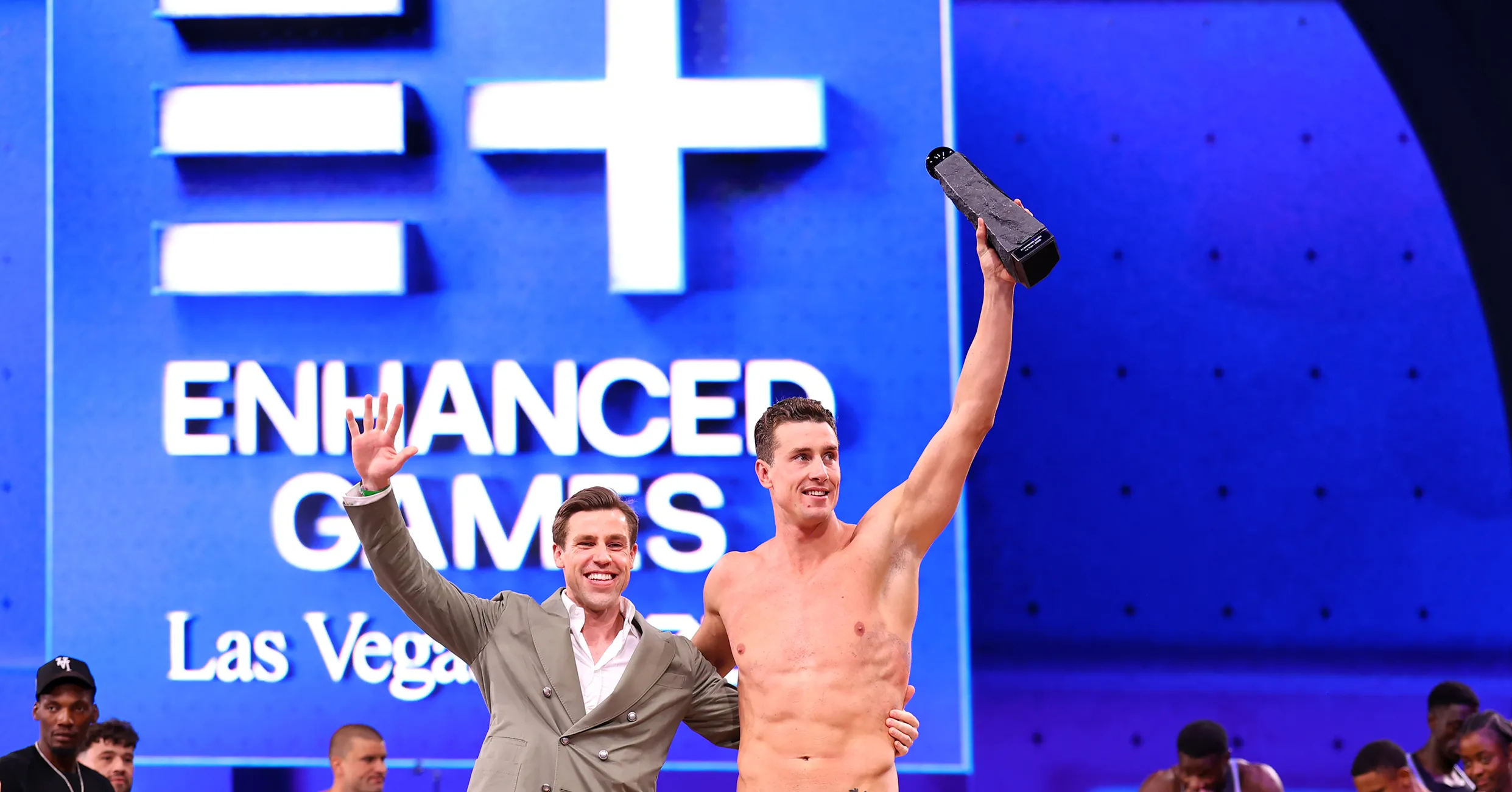
Greek swimmer Kristian Gkolomeev has set a new time in the 50-metre freestyle at the Enhanced Games in Las Vegas, finishing in 20.81 seconds. The result technically surpasses the previous record of 20.88 seconds set by Australian Cameron McEvoy at the China Open in March. However, World Aquatics has confirmed it will not recognise the mark because it was achieved using banned equipment and substances.
The competition, which encourages the use of performance-enhancing drugs, has drawn sharp condemnation from major sporting bodies. Critics cite serious health risks, including potential blood pressure issues, stroke, liver damage, and psychological effects, alongside fundamental concerns regarding competitive fairness. Some organisations have indicated they would ban any athlete who participates in the Enhanced Games.
Gkolomeev, a 32-year-old who has competed in four Olympics without reaching the podium, described the victory as amazing and stated he intends to return next year. The event offered significant financial incentives, including $250,000 for first place and a $1 million prize for breaking a world record. The closing night saw a quarter-empty arena, with the crowd heavily populated by spectators posing for a jumbotron display between competitions.
Beyond the swimming results, the event has highlighted ongoing debates regarding harm reduction and the commercialisation of doping. Organisers argue that providing medical supervision for athletes who would otherwise dope is preferable to unregulated use. A clinical trial involving 36 of the 42 athletes found that participants used a range of substances, including testosterone esters, human growth hormone, and stimulants. Organisers note that all substances studied were FDA-approved, and they sell these products directly through their website.
The business model has attracted scrutiny due to its ties to high-profile investors and its profit-driven structure. Enhanced Games founder Aron D’Souza has described RFK Jr. as pro-human enhancement, and the event features investors such as Peter Thiel and Donald Trump Jr. Critics argue the competition represents a dystopian culmination of biohacking culture, where the primary motive is financial gain rather than athletic integrity.
Irish Olympic swimmer Shane Ryan joined the event, citing the limited compensation available in traditional international competitions. He stated that the Enhanced Games allowed him to be paid while using performance-enhancing methods under medical supervision, hoping to pave the way for a separation between clean events and transparently enhanced competitions.
Despite the hype, most athletes declined to reveal their specific substance use, citing privacy concerns. Only one athlete, strongman Hafthor Björnsson, was willing to disclose his regimen. Björnsson, who has used performance-enhancing drugs since age 19, praised the medical oversight provided by the event, though he noted he had to stop taking some drugs that were not part of the Enhanced Games protocol.
