ENEOS tanker clears Hormuz strait amid regional tensions
The crude oil tanker, owned by a subsidiary of Japan’s largest oil wholesaler, navigated the critical chokepoint on 14 May 2026, following reports of expanded Iranian operational boundaries in the area.
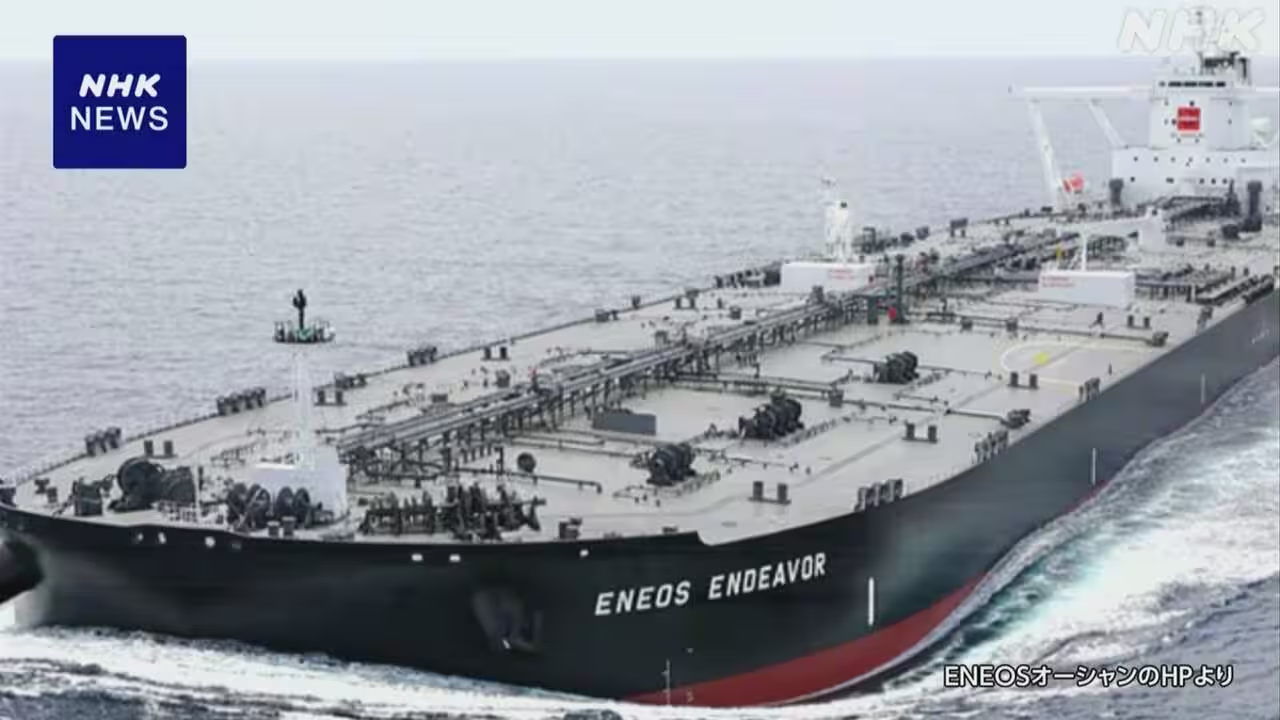
ENEOS Holdings has confirmed that a crude oil tanker owned by its subsidiary successfully passed through the Strait of Hormuz, navigating a region currently marked by heightened geopolitical volatility. The announcement, made by the company on 14 May 2026, comes shortly after reports emerged of Iran expanding its operational boundaries within the strait, a move that has raised concerns regarding the security of global energy supplies.
The vessel was carrying four Japanese crew members at the time of the transit. According to the statement released by ENEOS Holdings, all crew members are reported to be in good health. The company, which stands as Japan’s largest oil wholesaler, did not elaborate on the specific security protocols employed during the passage or the nature of the threats encountered, though the timing coincides with broader regional instability.
The passage occurs against a backdrop of escalating tensions in the Persian Gulf. On 13 May, reports indicated that the Iranian Revolutionary Guard Corps had significantly expanded its operational boundaries in the Strait of Hormuz. Additionally, concerns have been raised regarding potential oil spills near Karg Island, further complicating the operational environment for commercial shipping in the area.
As a critical chokepoint for global energy trade, the security of the Strait of Hormuz is vital for Japan’s energy imports. The successful transit of the ENEOS vessel highlights the ongoing challenges faced by Japanese energy companies in maintaining supply chain continuity amidst recurring regional instability involving Iran.
While the immediate outcome of the passage was positive, the broader implications for shipping routes and insurance costs remain uncertain. The incident underscores the persistent risks associated with energy logistics in the Middle East and the strategic importance of monitoring developments in the region for Japan’s energy security.