Dyson deploys AI camera in new air purifier to track occupants
The $894.99 bladeless fan marks the first stationary Dyson product to utilise an AI-powered camera for presence detection, raising questions about hardware necessity versus privacy safeguards.
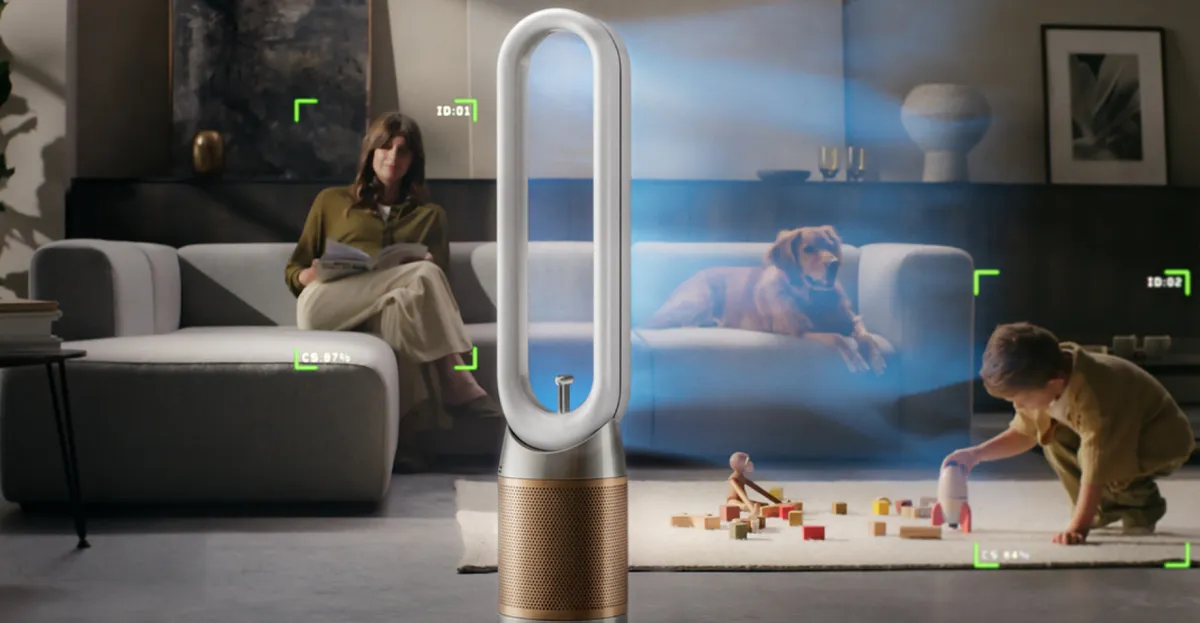
Dyson has launched the Find+Follow Purifier Cool, a bladeless fan and air purifier that utilises an on-device AI camera to track human movement and direct airflow accordingly. Priced at $894.99, the device is available through Dyson’s online and retail stores. It represents the first stationary product from the manufacturer to incorporate an AI-powered camera for tracking people in a room, following previous deployments of similar technology in its robotic vacuums.
The unit processes visual data locally, ensuring that images are deleted after real-time analysis and do not recognise individual persons. According to specifications from The Verge, the AI is used solely to detect presence, allowing the device to adjust its oscillation to target individuals moving around a room. The system can also conserve power by automatically turning the fan off when the room is empty.
In terms of filtration, the purifier captures 99.97 per cent of ultrafine particles as small as 0.3 microns. The source material notes these include allergens, particles causing odours, and viruses. The device connects to Wi-Fi for remote adjustment via a mobile app and is compatible with Matter-based smart home ecosystems, including Apple Home and Google Home.
The integration of a camera for presence detection has been noted as potentially excessive compared to simpler sensor technologies that could accomplish the same function. However, Dyson is known for applying significant engineering resources to such problems, opting for this hardware choice to enable precise airflow targeting and multi-person tracking within a single space.
Privacy claims regarding local processing and the absence of individual recognition are based on Dyson’s stated specifications. Independent verification of these privacy measures is not provided in the source material. The device adjusts airflow intensity when more pollutants are detected, aiming to balance air quality management with energy efficiency.
