DuckDuckGo sees 30% install surge as users flee Google’s AI search overhaul
DuckDuckGo’s U.S. app installs spiked 30.5% as users rejected Google’s new AI agent interface, seeking alternatives that offer opt-out capabilities and data privacy.
DuckDuckGo reported a significant spike in U.S. app installs following Google’s announcement at its I/O 2026 developer conference, where the tech giant revealed a major overhaul of its search product. The surge, which peaked at 30.5% week-on-week between 20 and 25 May 2026, reflects a growing user rejection of Google’s new AI agent interface, which replaces traditional blue-link results with an integrated system capable of answering queries and executing background tasks.
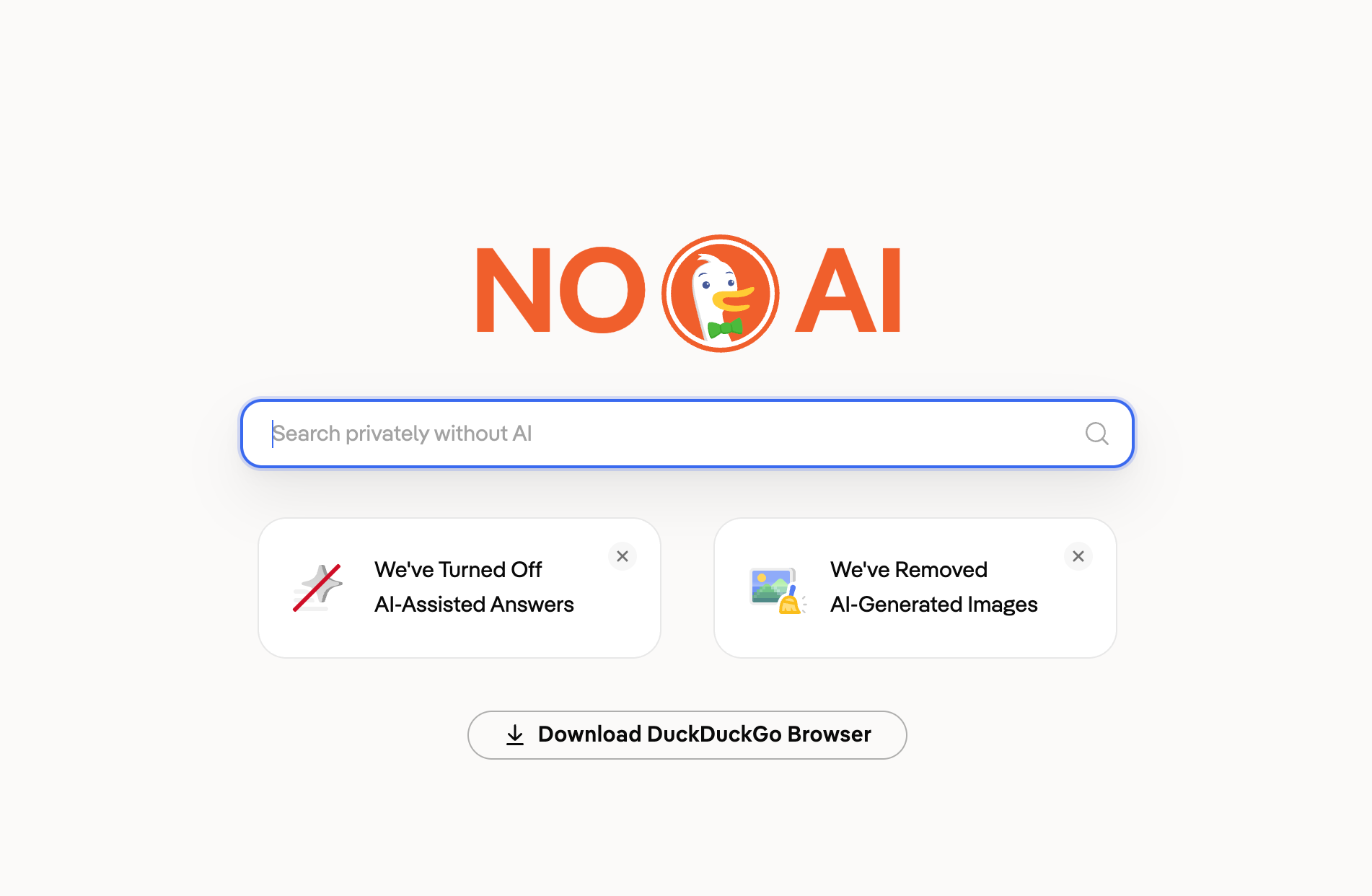
During the same period, visits to DuckDuckGo’s dedicated AI-free search page, noai.duckduckgo.com, increased by an average of 22.7%, peaking at 27.7% on 24 May. This page disables all AI features, including AI-assisted answers and image generation, by default. The trend was particularly pronounced on iOS, where install growth averaged 33% week-on-week and reached a peak of 69.9%, indicating strong demand for privacy-focused alternatives that allow users to opt out of artificial intelligence integration.
DuckDuckGo CEO Gabriel Weinberg criticised Google’s approach, stating that the company is “force-feeding AI with no way to opt out.” In a statement released on Tuesday, Weinberg argued that this strategy is degrading result quality and reducing user control. He positioned DuckDuckGo as the alternative that puts users in charge, allowing them to decide how much or how little AI they wish to engage with, contrasting this with Google’s new default integration.
Despite its criticism of Google’s model, DuckDuckGo maintains its own private AI ecosystem. Its product, Duck.ai, provides access to models from Anthropic, Meta, Mistral, and OpenAI, while stripping user IP addresses and deleting conversations within 30 days. Kamyl Bazbaz, DuckDuckGo’s chief communications and policy officer, noted that the company’s AI features, including Search Assist and an AI Image Filter, are among its most popular tools, underscoring that users desire choice rather than the complete absence of AI.
DuckDuckGo currently holds approximately 2% of the U.S. search market, a figure that has remained stagnant despite its privacy-first ethos. During Google’s antitrust trial in 2023, Weinberg testified that Google’s exclusive default search contracts hindered DuckDuckGo’s ability to become a default option on other browsers. The recent surge suggests that dissatisfaction with Google’s search direction may be providing a temporary opportunity for the smaller competitor to gain traction among privacy-conscious consumers.
