Dreame scraps rocket-powered car project as government funding dries up
The Chinese vacuum manufacturer is winding down its automotive division after scrutiny revealed its flagship concept car lacked a chassis and was driven by remote control.
Chinese vacuum cleaner manufacturer Dreame is shutting down its ambitious automotive division, known as “Project Starry Sky,” following the withdrawal of government funding. The move marks a significant contraction for the company, which had previously employed over 1,000 staff in the division. According to reports from CarNewsChina, the team has been reduced to a handful of legal and human resources personnel tasked with winding down the operation.
The decision comes as China’s government issues new rules aimed at tightening oversight of the $3.4 trillion private fund industry, a regulatory shift that specifically singled out Dreame. The company had expanded rapidly from its core vacuum business into smartphones, robotics, and cars, spawning nearly a thousand affiliated ventures. Much of this expansion was underwritten by government capital, which is now facing closer scrutiny regarding how those funds are deployed.
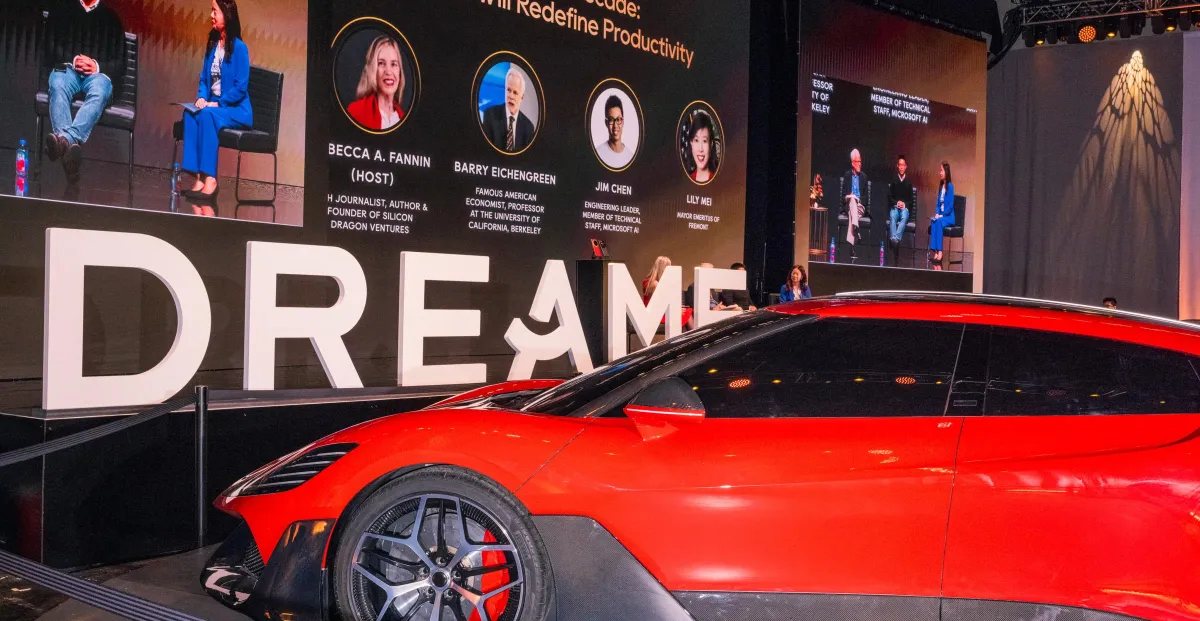
The shutdown follows intense scrutiny of Dreame’s “Nebula Next 01 Jet Edition” concept car, which was showcased at a San Francisco expo earlier this year. The vehicle featured a pair of rocket engines and a sulfide-based solid-state battery with an energy density exceeding 450 Wh/kg. Dreame claimed the car could accelerate from 0 to 60 mph in 0.9 seconds and achieve a range of over 550 km, with boosters delivering 100 kilo-Newtons of force.
However, former employees revealed to China Economy that the concept car shown in San Francisco lacked an actual chassis and was driven via remote control. This revelation raised questions about the vehicle’s ability to meet its claimed performance metrics, particularly regarding the physics of its acceleration. While concept cars are rarely fully functional in a technical sense, the level of deception in this case has drawn attention to the company’s broader expansion strategy.
In a statement, Dreame said it “recently adjusted certain operations that were in the exploratory phase.” The company indicated it will now focus on four key business areas: smart home, outdoor and garden, smart mobility, and embodied AI. A spokesperson for the company did not respond to a request for comment regarding the specific timeline for the wind-down process.
The situation echoes the trajectory of Faraday Future, another Chinese electric vehicle company that faced accusations nearly a decade ago of using remote control for public demos of its self-driving vehicles. For investors and institutions, Dreame’s pivot highlights the risks associated with rapid, government-funded diversification into capital-intensive new sectors.