DRC and WHO reaffirm partnership to combat Bundibugyo Ebola outbreak
Authorities in the Democratic Republic of the Congo and the World Health Organization have issued a joint statement following a high-level visit to Bunia, outlining a coordinated response to the rapidly evolving Bundibugyo virus outbreak.
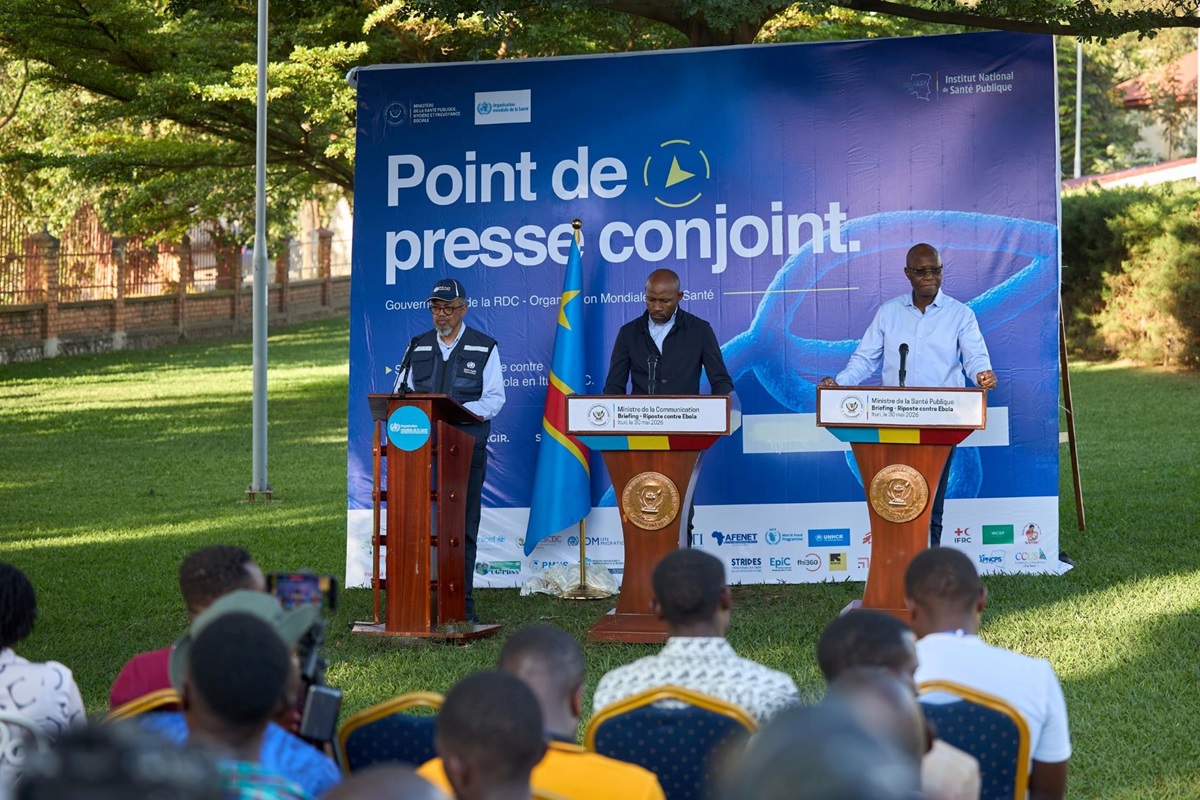
The Government of the Democratic Republic of the Congo (DRC) and the World Health Organization (WHO) have reaffirmed their commitment to combating an Ebola outbreak caused by the Bundibugyo virus in the Ituri, North Kivu, and South Kivu provinces. This joint statement follows a high-level mission to Bunia led by DRC Health Minister Dr Samuel Roger Kamba, DRC Minister of Communication and Medias Mr Patrick Muyaya Katembwe, and WHO Director-General Dr Tedros Adhanom Ghebreyesus.
The Ministry of Health reports a rapidly evolving situation, with cases and deaths notified in several health zones across the three affected provinces. In response, authorities are intensifying surveillance, laboratory testing, and patient care to interrupt transmission as quickly as possible. The DRC is leading a comprehensive national response, working closely with provincial authorities, while the WHO and broader United Nations partners provide full support to these efforts.
A central component of the response is the recognition that communities are at the heart of the solution. Success depends on the trust, engagement, and leadership of local populations. National and provincial authorities, supported by the WHO, are intensifying dialogue with community leaders, women's groups, youth representatives, religious leaders, and the private sector to co-develop culturally appropriate solutions.
The Bundibugyo strain presents specific challenges, as there is currently no licensed vaccine or specific treatment available. However, the Ministry of Health, WHO, and partners are working to rapidly undertake randomised control trials on candidate vaccines and treatments. Proven public health measures remain effective in slowing transmission, including early detection and isolation of cases, contact tracing, safe and dignified burials, and robust infection prevention and control in health facilities.
The DRC is leveraging its experience from containing multiple previous Ebola outbreaks to manage this current crisis. Both parties emphasise that the response must maintain primary health care and essential services while strengthening long-term health system resilience. Investments in laboratories, health workers, and surveillance systems are intended to leave a lasting legacy for the people of Ituri and the DRC.
Both parties call for sustained international solidarity and open borders to ensure the flow of medical supplies and personnel. They encourage communities to adopt protective behaviours, such as regular hand hygiene and early care seeking, while sharing accurate information. Cooperation between countries is vital to ensure that entry controls do not obstruct the delivery of desperately needed aid.