Djokovic’s French Open exit signals shift in tennis power dynamics
Novak Djokovic’s elimination by Joao Fonseca marks the end of his bid for a 25th Grand Slam title, with the Serbian player citing physical exhaustion as the decisive factor in a match that underscores the generational transition in men’s tennis.
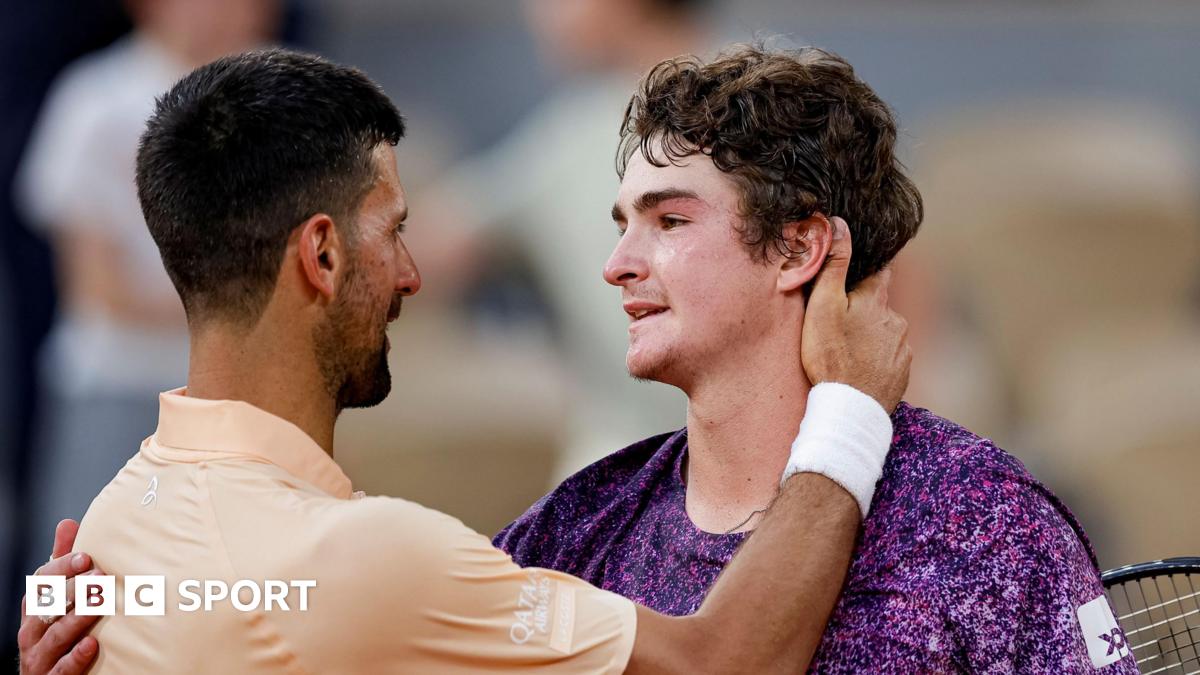
Novak Djokovic, 39, was eliminated from the French Open in the third round after losing to 19-year-old Joao Fonseca in a five-set match that lasted four hours and 53 minutes. The defeat ends Djokovic’s bid for a record 25th Grand Slam title and marks the first time he has exited the tournament before the quarter-finals since 2016. Fonseca, the first Brazilian teenager to reach the last 16 of a major, rallied from two sets down to win 4-6, 4-6, 6-3, 7-5, 7-5.
Djokovic had led by two sets and held break points when leading 4-3 in the fourth set, but he ultimately succumbed to physical fatigue. Speaking in the Roland Garros media centre less than half an hour after the match, Djokovic admitted he had "ran out of gas" and did not feel good during the final three sets. He suggested that a best-of-three format might be preferable for him at this stage of his career, acknowledging that Fonseca was simply the better player on the day.
The loss leaves the men’s draw open, with previous major contenders Jannik Sinner and Carlos Alcaraz already eliminated. Djokovic was the only remaining Grand Slam champion in the men’s draw at this stage of the tournament. Had he advanced, he would have faced either Alexander Zverev or Casper Ruud in the quarter-finals. Instead, Fonseca will face either Casper Ruud or Tommy Paul in the next round.
Fonseca’s victory is viewed as a significant indicator that the ageing process is catching up with Djokovic. The Serbian player had already played nearly seven hours of tennis prior to this match, needing four sets to defeat French pair Giovanni Mpetshi Perricard and Valentin Royer. Djokovic, a seven-time French Open champion, has reached at least the semi-finals at the past five Grand Slams prior to this event.
Fonseca, born in 2006, demonstrated composure and consistency against the veteran. Djokovic acknowledged Fonseca’s superior performance, specifically highlighting his consistency, dropshots, and ability to execute under pressure. Djokovic revealed he has been a fan of Fonseca since the previous year’s Australian Open. The win marks a landmark moment for Brazilian tennis, with only two Brazilian men having won major singles titles, the last being Gustavo Kuerten in 2001.
Djokovic can now reset and recharge for Wimbledon next month, where he remains a contender despite his recent struggles against younger rivals. The defeat at Roland Garros, however, serves as a stark reminder of the physical demands of the sport and the inevitable transition of power to the next generation of players.