Discovered Materials secures $9 million to deploy AI for semiconductor thermal management
Led by Lightspeed India Partners, the round funds a software pipeline using Anthropic models to identify novel materials for cooler, more efficient chips, though wet-lab synthesis remains a commercial bottleneck.
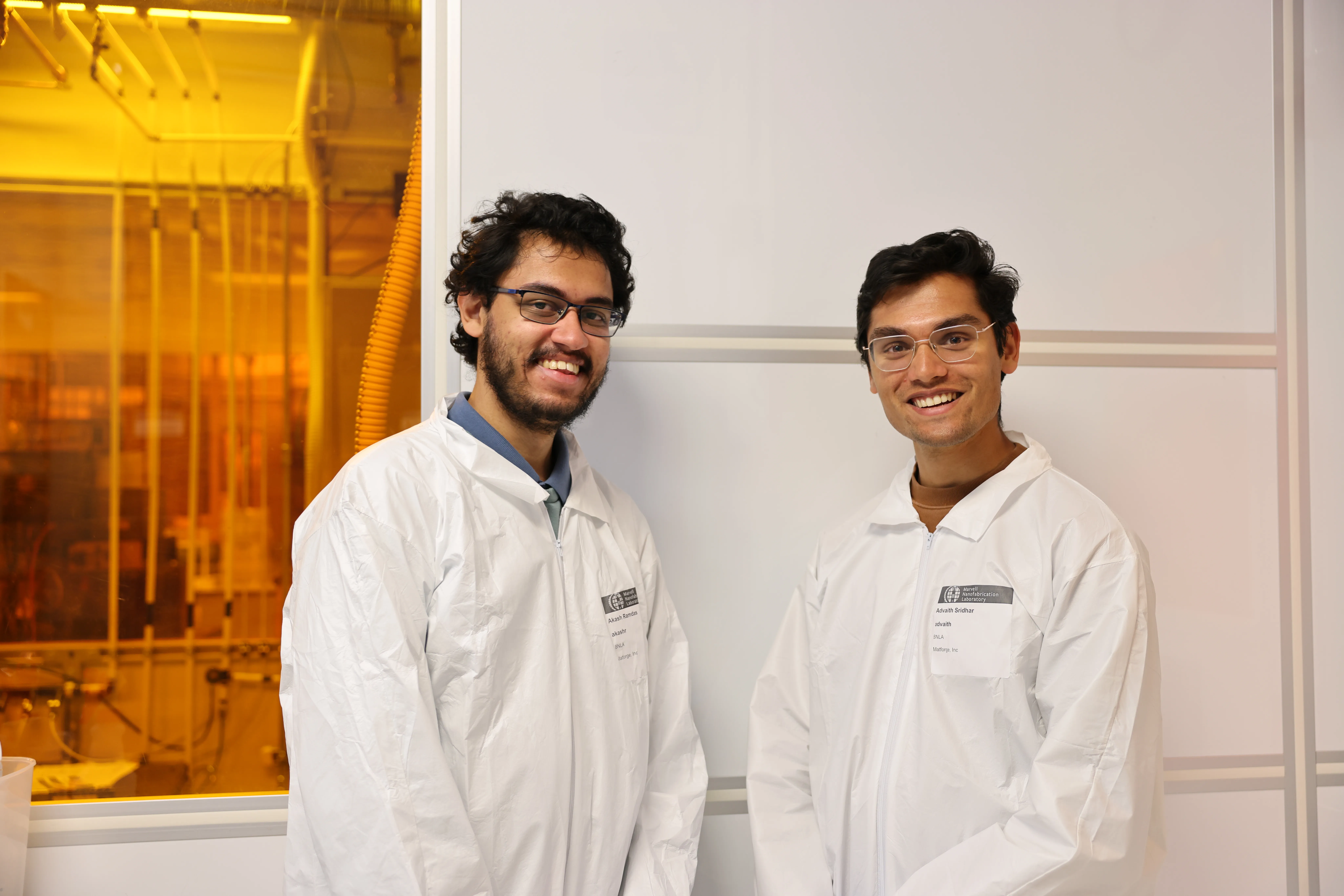
Discovered Materials, a startup emerging from Y Combinator, has closed a $9 million seed funding round led by Lightspeed India Partners. The investment round also saw participation from Peak XV Partners and angel investors including Paul Graham, Gokul Rajaram, and Thariq Shihipar. The capital will be used to scale the company’s efforts to identify novel materials capable of improving thermal efficiency in integrated circuits, addressing the growing heat generation challenges in AI workloads.
Founders Advaith Sridhar and Akash Ramdas have developed a software pipeline that utilises swarms of AI agents to generate and verify material candidates at scale. The system employs Anthropic models within a custom harness to generate leads, followed by foundational physics models trained by the company to simulate and verify the viability of these candidates. This approach allows the team to explore thousands of material permutations daily, a significant acceleration from the manual experimentation methods used during Ramdas’ doctoral research at Stanford.
The company has released examples of hundreds of new materials and launched a “Material Discovery Bench” to track how frontier models perform in this specific challenge. Discovered Materials claims to have identified several materials that match the properties of existing substances used by major chipmakers, although specific details remain confidential due to ongoing patent considerations. The startup intends to patent the use of these materials in GPUs or the manufacturing processes, with the aim of licensing them to chipmakers within the next year.
Despite the technological advances, the path to commercial deployment faces significant hurdles. Lightspeed partner Hemant Mohapatra described the process as “playing whack-a-mole with atomic structures,” noting that a material must satisfy multiple engineering constraints simultaneously to be viable. Mohapatra emphasised that while predicting novel substances may become commoditised as models improve, the critical bottleneck remains filtering candidates correctly and synthesising them in wet labs, a physical process that cannot be accelerated by software alone.
Discovered Materials operates in a competitive landscape that includes firms such as MatNex, SandboxAQ, and CuspAI. While AI-discovered materials have shown promise in sectors such as pharmaceuticals and rare-earth magnets, none have yet achieved large-scale commercial deployment. The founders acknowledge that their strategy relies on combining rapid computational discovery with rapid physical validation in the lab, aiming to bridge the gap between theoretical material properties and manufacturable semiconductor components.
