Dessn secures $6 million to bring AI design directly into production codebases
New funding round led by Connect Ventures backs tool that abstracts dependencies to eliminate local setup costs and switching friction.
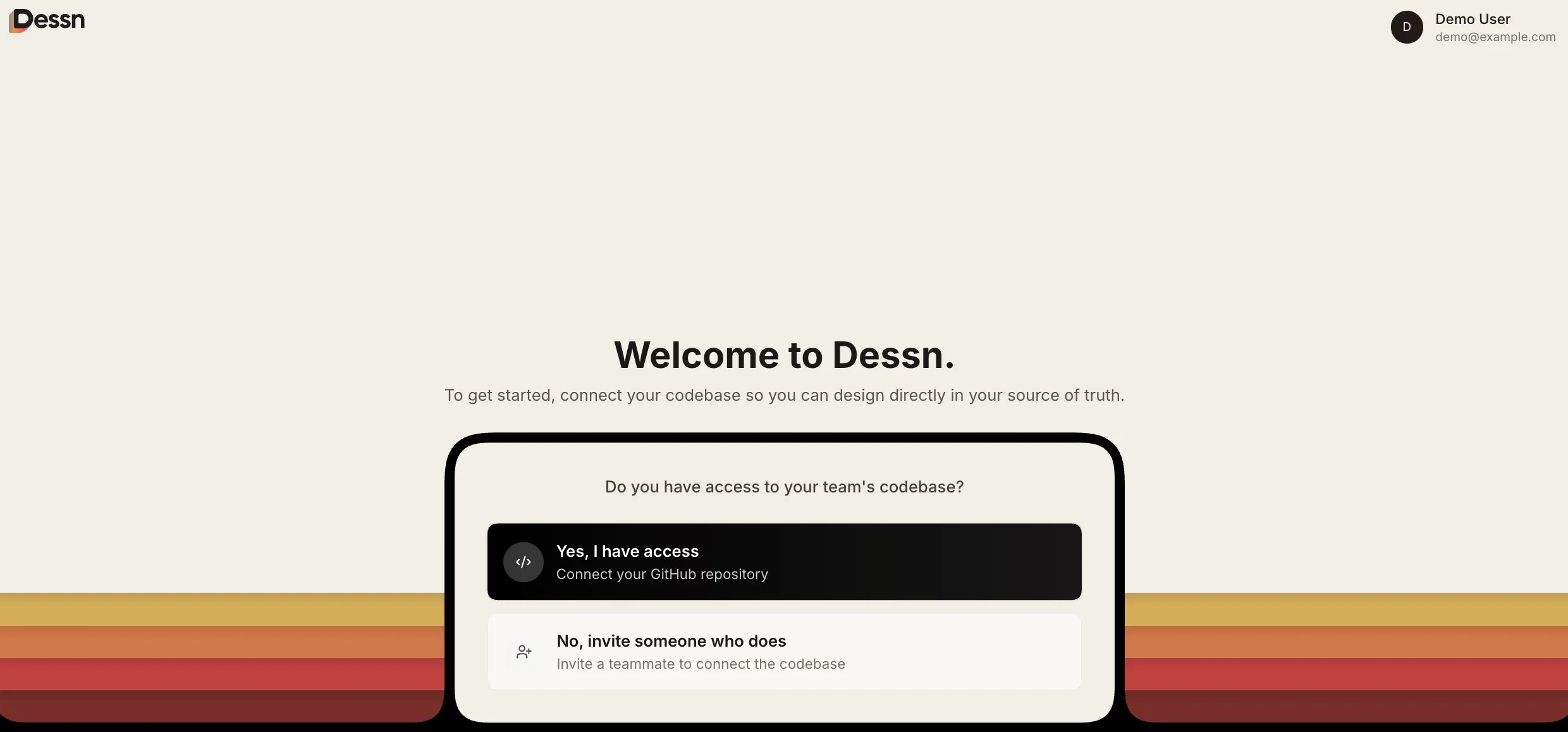
A new venture capital round has provided Dessn with $6 million to advance its mission of embedding AI-powered design tools directly within production codebases. Founded by Gabriella Hachem and Nim Cheema, the startup aims to remove the traditional friction of setting up local environments by abstracting codebase dependencies. This approach allows designers to iterate on existing software without needing to switch applications or incur significant setup costs.
The funding round was led by Connect Ventures, with participation from Betaworks and N49P. Current clients include teams at health company Color, voice AI company Wispr, and fintech Mercury. The capital injection supports Dessn's strategy to operate within live development environments, a move that the founders argue bridges the gap between design and development more effectively than tools that require designers to work outside the actual codebase.
Co-founder Nim Cheema stated that the company's core thesis is that code will become commoditised, making design the key differentiator in a world where software creation is increasingly cheap. Unlike competitors such as Lovable or v0 by Vercel, which focus on ground-up ideation, Dessn targets teams with existing codebases looking to iterate. The tool is designed specifically for organisations that already have live software and wish to enhance it without the overhead of local setup.
To achieve this, Dessn abstracts away the dependencies that typically make a codebase necessary to run locally. This infrastructure allows the company to support various backend architectures without requiring a developer to configure the environment for every new user. The result is a workflow where designers can hand off work to developers more easily, as the tool operates in a production environment rather than a separate sandbox.
The pricing model for the service is set to begin at $39 per user per month, offering five free prompts per week for trials. While the tool allows users to prompt for new designs, the founders describe themselves as token maximalists, preferring to spend more tokens to achieve better results rather than relying on static toolbars. This philosophy underpins their approach to creating a truly delightful and emotional experience for users, rather than offering a simple utility.
Future integration plans include Slack for context-aware prototyping and meeting notetakers like Granola to feed discussions into design generation. However, the company has explicitly ruled out integration with Figma, arguing that such a move would pull teams away from their production environments and contradict the tool's ethos. Betaworks partner Jordan Crook noted that if Figma were built today, it would resemble Dessn, highlighting the tool's focus on perfect fidelity within the codebase.
Dessn currently employs four people and intends to remain small while adding a few more staff members. The startup plans to launch additional pricing tiers that unlock more prompt limits, public links, and the ability to opt out of AI training. By avoiding the switching costs associated with traditional design tools, Dessn aims to become an essential part of the workflow for teams iterating on live software.
