Dell earnings and Iran ceasefire hopes lift US markets
The Dow Jones Industrial Average rose 0.4% on Friday, buoyed by Dell Technologies’ strong quarterly results and reports of a tentative 60-day ceasefire extension between the US and Iran.
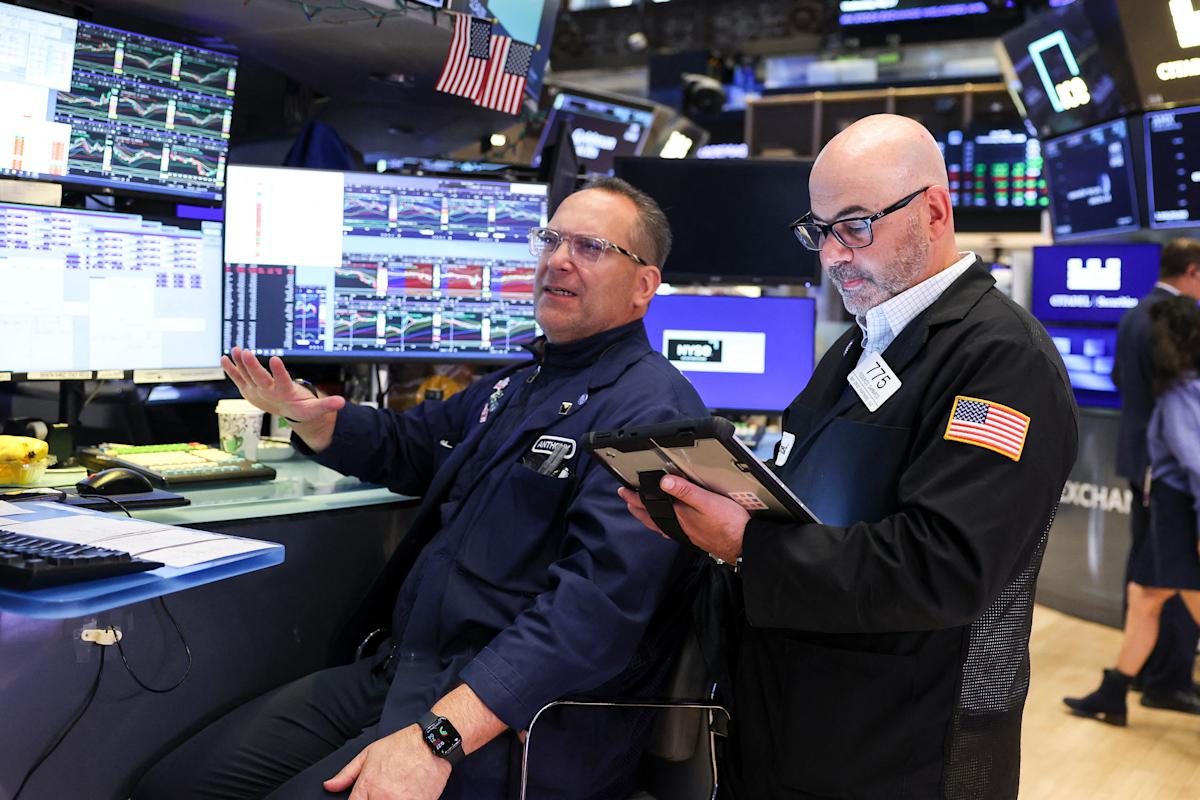
US stock markets posted modest gains on Friday, with the Dow Jones Industrial Average rising 0.4%, the S&P 500 increasing 0.3%, and the Nasdaq Composite adding 0.2%. The rally was underpinned by robust corporate earnings from Dell Technologies and growing optimism surrounding potential US-Iran negotiations. The major indexes touched record highs, driven by confidence in the artificial intelligence trade and hopes for easing global geopolitical tensions.
Dell Technologies shares surged approximately 40% in extended trading after reporting earnings that significantly exceeded analyst expectations. The company cited robust demand for AI servers, booking $24.4 billion in AI orders and generating $16.1 billion in AI server sales in the quarter ended May 1. Dell updated its annual revenue outlook for the fiscal year ending January 2027 to approximately $167 billion, including $60 billion from AI server sales, surpassing the prior estimate of $140 billion and the average analyst estimate of $142.1 billion.
Concurrently, crude oil prices declined as reports emerged of a tentative 60-day ceasefire extension between the US and Iran. Brent crude fell below $93 a barrel, down 18% for the month, while West Texas Intermediate traded near $88. The potential agreement, which is pending President Trump’s signature, has raised hopes for the reopening of the Strait of Hormuz, a critical chokepoint for global energy supplies.
Despite the recent pullback, oil executives warned that global inventory levels are approaching operational minimums, which could push prices higher in the coming months. Exxon senior vice president Neil Chapman and Chevron CEO Michael Wirth both highlighted that buffers are being drawn down rapidly. Chapman noted that inventory levels are "really, really low," while Wirth stated that the market's ability to absorb imbalances has "drastically diminished," expecting upward pressure on physical prices as June and July approach.
In contrast to the tech and energy sectors, Gap shares fell 15% in premarket trading after the retailer slashed its full-year sales outlook. The decline was driven by weak performance in its Old Navy dress division, where CEO Richard Dickson acknowledged a failure to strike the right fashion and value equation. However, the namesake Gap division posted a 10% same-store sales increase, and Banana Republic saw a 2% same-store sales gain, indicating mixed results across the retailer's portfolio.