Dell and Microsoft Respond to Apple’s MacBook Neo with Divergent Strategies
While Dell mirrors Apple’s premium build and memory constraints, Microsoft’s high-priced, low-spec business model faces scrutiny amid an industry-wide memory shortage.
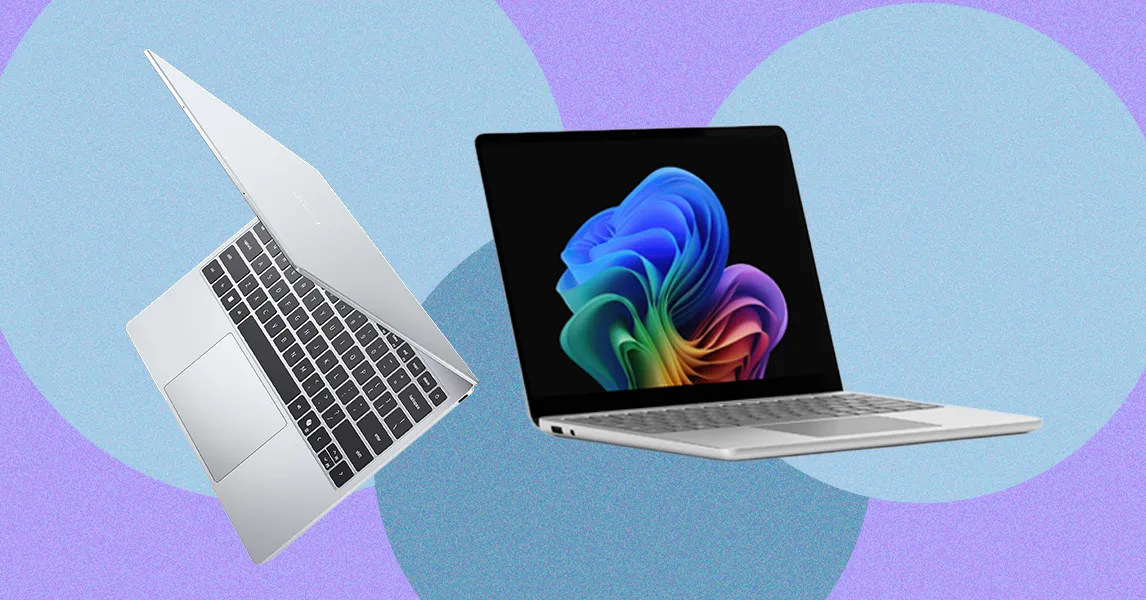
The launch of Apple’s $599 MacBook Neo has triggered a strategic realignment across the personal computing sector, forcing major Windows manufacturers to recalibrate their value propositions. Dell and Microsoft have unveiled new laptop models to compete directly with Apple’s entry into the budget segment, though their approaches highlight a stark divergence in how the industry is interpreting the competitive threat. The market response underscores the constraints imposed by an industry-wide memory shortage and the intensifying pressure on sub-$700 devices.
Dell’s new XPS 13 adopts a strategy nearly identical to Apple’s, prioritising premium aesthetics and display quality over raw base specifications. Constructed from a solid aluminium chassis and measuring half an inch thick, the device features a high-resolution 2560 x 1600 IPS screen with a 120 Hz refresh rate and up to 500 nits of brightness. Priced at $699 for general consumers and $599 for students from July to September, the XPS 13 mirrors the MacBook Neo’s trade-offs by starting with only 8GB of RAM and 256GB of storage, powered by a slower Intel Core 5 processor rather than the newer Core Ultra series.
Despite these similarities, Dell offers greater configurability than Apple, allowing users to scale the XPS 13 up to 32GB of RAM and 1TB of storage, whereas the MacBook Neo remains capped. This approach contrasts with competitors such as Acer, Lenovo, and HP, who are testing $500 to $600 laptops that offer 16GB of RAM and more powerful chips. However, these conventional Windows alternatives lack the premium chassis materials and high-end display specifications found in both the Dell XPS 13 and the MacBook Neo, targeting a different audience segment.
Microsoft’s entry into this space has drawn sharper criticism for what is viewed as a misstep in value delivery. The company announced a 13-inch Surface Laptop for Business starting at $1,200 with only 8GB of RAM, a configuration that arrives later in the year separately from higher-spec 16GB and 24GB versions. Industry observers note that this represents a potential generational downgrade compared to the consumer Surface Laptop 13, which started with 16GB of RAM in its previous iteration. The decision to offer a high-priced device with reduced memory is seen as a reaction to Apple’s pricing rather than a logical evolution of the product line.
The broader competitive landscape is further complicated by supply chain constraints and emerging hardware options. Qualcomm has announced the Snapdragon C, a lower-priced chip for Windows laptops starting at $300, which may influence future pricing structures. As manufacturers navigate the memory shortage, the Windows ecosystem is expected to offer a wider diversity of options, ranging from Dell’s premium, spec-constrained models to Acer and HP’s value-focused, high-RAM alternatives. This fragmentation will likely force buyers to weigh build quality against raw performance in the increasingly crowded budget laptop market.
