Deezer to purge inactive AI tracks as artificial music surpasses half of daily uploads
CEO Alexis Lanternier says removal of dormant and fraudulent uploads aims to protect artist revenue and reduce payment dilution.
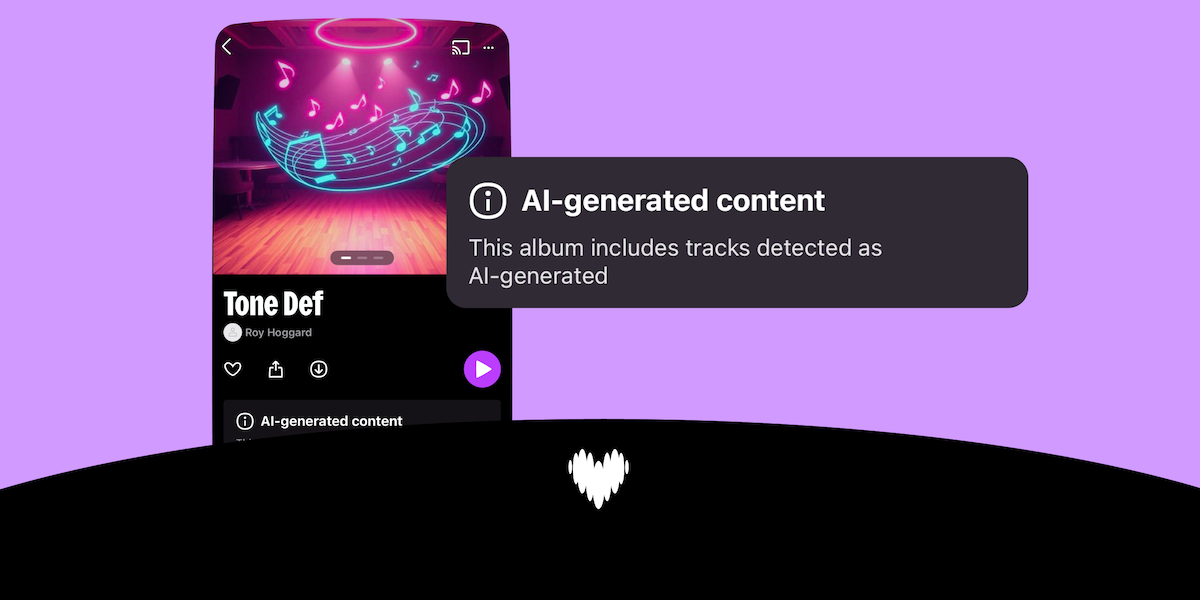
Music streaming platform Deezer has announced a significant policy shift regarding artificial intelligence-generated content, following data that shows AI tracks now account for more than 50% of daily uploads. In June 2026, the service recorded an average of 90,000 AI-generated tracks uploaded per day, marking a sharp acceleration in the volume of machine-made music on the platform.
To address the influx, Deezer will begin removing AI-generated tracks that have not been streamed in the previous six months or are linked to fraudulent activity. The move is designed to protect artist rights and reduce payment dilution, ensuring that revenue streams are not fragmented by low-engagement or bot-driven content. Deezer CEO Alexis Lanternier stated the initiative aims to safeguard creators while maintaining a focus on music preferred by fans.
The escalation in AI uploads follows a steady upward trajectory tracked by Deezer since January 2025. At that time, daily uploads of AI-generated content stood at approximately 10,000 tracks, representing 10% of the total. By April 2025, that figure had doubled to 20,000 tracks (18%), rising to 30,000 (28%) in September 2025, and 50,000 (34%) in November 2025. The trend continued into 2026, with 60,000 tracks in January and 75,000 in April, before crossing the 50% threshold in June.
Deezer has been actively developing detection technology to identify tracks generated by major AI music models, including those from Suno and Udio, two startups currently involved in copyright litigation. The company began labeling AI music on its platform last year and made its detection technology available to other platforms earlier this year, although it remains unclear if any major competitors are currently utilising the tool.
The industry currently lacks a unified approach to managing AI-generated music. Competitors have adopted varying strategies: Bandcamp has implemented a total ban on such tracks, Tidal has cut off monetisation for AI content, Apple Music utilises a voluntary tagging system, and Spotify has developed its own internal policies regarding AI usage in music creation.
In addition to its internal culling measures, Deezer recently released a tool capable of scanning playlists on rival services, including Apple Music and Spotify, to identify AI-generated tracks. This expansion of its detection capabilities underscores the company’s efforts to combat fraud and maintain the integrity of its revenue model amidst the rapid proliferation of generative audio.
