DeepMind’s AI model delivers extra day of hurricane lead time, surprising forecasters
Google DeepMind’s open-source WeatherNext AI model has demonstrated unprecedented accuracy in forecasting cyclone intensity and trajectory, providing forecasters with an additional day of lead time compared to existing numerical models.
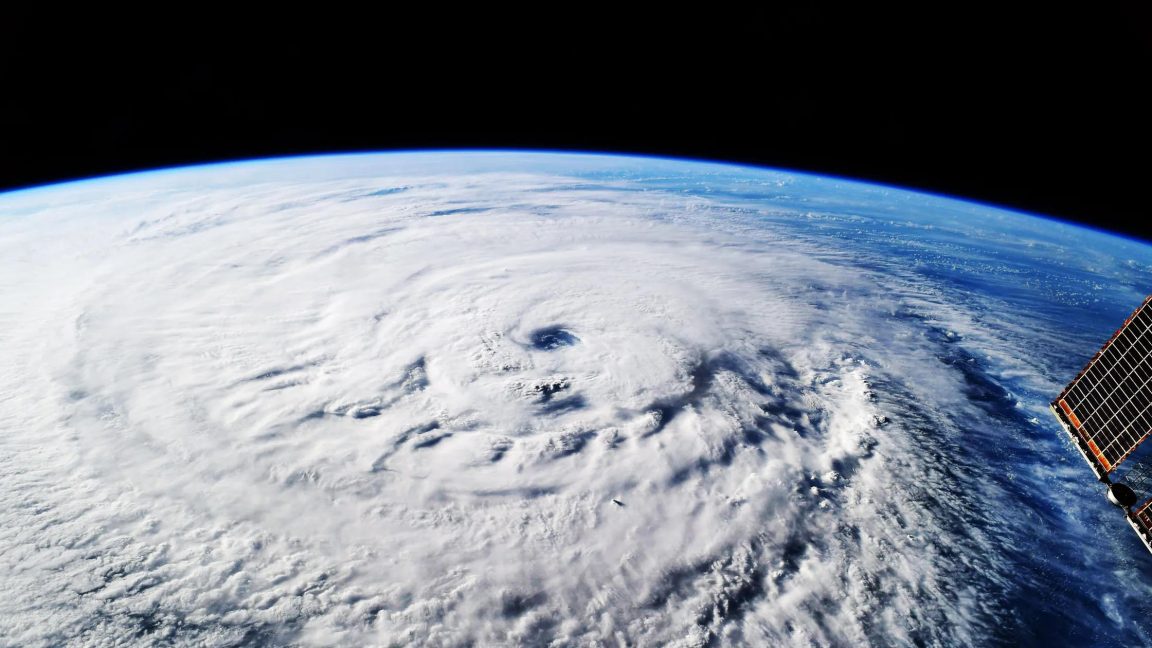
Google DeepMind’s open-source WeatherNext AI model has demonstrated the ability to predict cyclone intensity and trajectory with unprecedented accuracy, providing forecasters with an additional day of lead time. The model, which utilises lower-resolution atmospheric data than traditional numerical models, successfully predicted the intensification of Hurricane Melissa into a Category 5 storm five days before landfall. Researchers note that the AI captures complex signals in coarse data, though the specific mechanisms remain a "black box." The model generates 1,000 potential scenarios per storm to account for variability, and has been open-sourced for further scientific research.
In October 2025, as a storm brewed over the Caribbean Sea, traditional weather models differed on its trajectory, debating whether it would remain weak and strike Haiti or intensify and head towards Jamaica. WeatherNext, developed by Google’s DeepMind and Google Research, predicted the latter with 80 per cent confidence. Five days before landfall, the model forecast that the storm would hit Jamaica as a Category 5 hurricane. Hurricane Melissa proved catastrophic, causing flooding and landslides across Jamaica, but the AI’s early warning allowed communities in its path to better prepare.
A paper published on Thursday in Nature shows that WeatherNext can predict cyclones with unprecedented accuracy. On average, it gives forecasters a day more lead time than existing models, meaning its predictions three days out are as accurate as previous models’ predictions two days out. Historically, bringing forecasts forward by a day would take a decade of work, according to researchers. Mike Brennan, director of the US National Hurricane Center, noted that even a few hours can make a difference in organizing evacuations and staging supplies, describing the ability to push forecast accuracy out by a day as "really valuable."
Modeling extreme events presents challenges for AI due to the rarity of cyclone-specific data. Ferran Alet, a research scientist at Google DeepMind and a lead author on the paper, explained that while cyclone data is limited, broader weather data is abundant, leading the team to train the model on both. Kate Musgrave, tropical cyclone group lead at the Cooperative Institute for Research in the Atmosphere, noted that predicting a storm’s track requires global-scale data, while predicting intensity requires small-scale local atmospheric and oceanic data, which global models typically lack.
The model does not just spit out one prediction; it produces a range of potential scenarios for a developing storm to capture potential variability. Last year, the AI model created 50 scenarios per storm, but now generates 1,000, enabled by available computing power. Musgrave stated that this level of scenario generation is something that cannot be done with existing numerical models. Despite the success, Brennan emphasized that the human element remains critical for translating technical forecasts into impact assessments, as it is the impacts that kill people.
Google DeepMind has announced that it is open-sourcing the WeatherNext models used during the hurricane season so that researchers can use and improve on them. Alet expressed hope that opening the models up to the research community could help uncover fresh insights into how cyclones work, suggesting that AI is providing new tools to explore the laws of the universe.
Melissa marked the first time the National Hurricane Centre was able to predict a Category 5 hurricane when the storm was only at a Category 1 stage. Before the WeatherNext model was used in live forecasts, researchers tested it on retrospective data. Musgrave said the results were so good that they were skeptical they would see that in real-time, but when forecasters started adopting the model, the performance held true. "I think everybody was surprised at just how well it did," she said.
Even the DeepMind researchers working on the model don’t fully understand how the AI produces such accurate predictions, given that it uses much lower-resolution atmospheric data than traditional models require. Alet said that when they told the community the model was using relatively coarse resolution, they were shocked, as it means lower-resolution inputs capture more signal than previously believed. "It’s a black box at the end of the day, but that gives physicists a signal that something is happening that was not previously understood," Alet said.
