Deep-Sea Anemone Identified as Source of Mysterious Gulf of Alaska Golden Orb
A study awaiting peer review confirms the golden capsule found on the ocean floor is the detached remains of a poorly documented giant anemone, ruling out extraterrestrial theories.
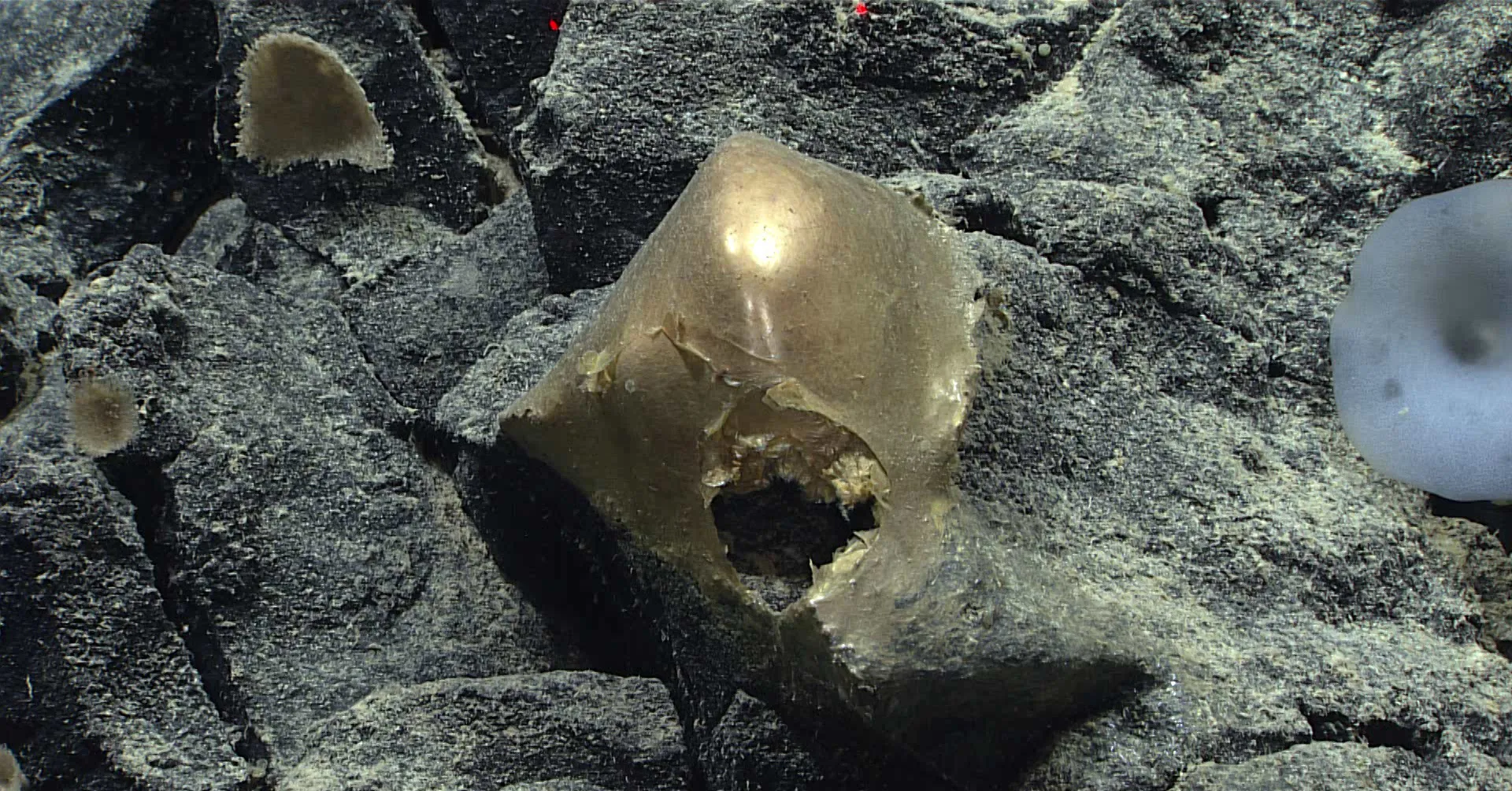
A golden orb discovered on the ocean floor in the Gulf of Alaska three years ago has been identified as the detached cuticle of Relicanthus daphneae, a rare and poorly documented giant anemone. The finding, detailed in a study awaiting peer review, rules out extraterrestrial origins and initial theories that the object was an egg or biofilm. DNA sequencing confirmed a 99.9 percent match to the anemone, while microscopic examination revealed spirocytes unique to cnidarians. Researchers determined that the anemone leaves behind this multi-laminated golden cuticle as it moves across the seabed, explaining why the structure appeared as a mysterious capsule.
The object was first detected by a submarine during an expedition in the Gulf of Alaska, where its smooth, organic surface contrasted with surrounding rocks. Social media speculation at the time of discovery suggested an extraterrestrial origin, which the new study explicitly rules out. The species is considered enigmatic because its biology does not fully align with the standard definitions of anemones and corals, and its evolutionary origin remains uncertain. Relicanthus daphneae is a giant anemone that can reach 30 centimeters in diameter and inhabits depths between 1,600 and 4,000 meters.
Researchers confirmed the origin through microscopic examination, which revealed spirocytes (cells unique to cnidarians), and DNA sequencing, which showed a 99.9 percent match to the anemone’s mitochondrial genome. The report details that an initial examination found these ultra-specialised cells, ruling out the possibility that it was an egg or a biofilm, as initially thought. However, the remains did not match any known structures of this species or other anemones, requiring researchers to revisit a specimen collected years earlier to find fragments of the golden cuticle.
The specific mechanism of the orb's formation was clarified when researchers observed live specimens. They discovered that as R. daphneae moves along the bottom, it leaves behind this cuticle, which remains on the rocks until it disintegrates or is buried. The study explains that the anemone sheds this coating as it moves, and sometimes that structure sinks and takes the form of a capsule that looks like something out of another world. This explains why no specimen retained the golden coating and why the structure appeared as a mysterious capsule.
The report concludes that the findings highlight how much of deep-sea biodiversity remains unresolved, noting that over 80 percent of the ocean remains unmapped and unexplored. According to scientific estimates, more than 80 percent of the ocean remains unmapped, unobserved and unexplored directly. This story originally appeared on WIRED en Español and has been translated from Spanish.
