Cybersecurity strategies must evolve with AI at their core, experts warn at EmTech AI conference
Leaders gathered at the MIT Technology Review EmTech AI conference to discuss how organisations must rearchitect their defences rather than treating AI as an afterthought.
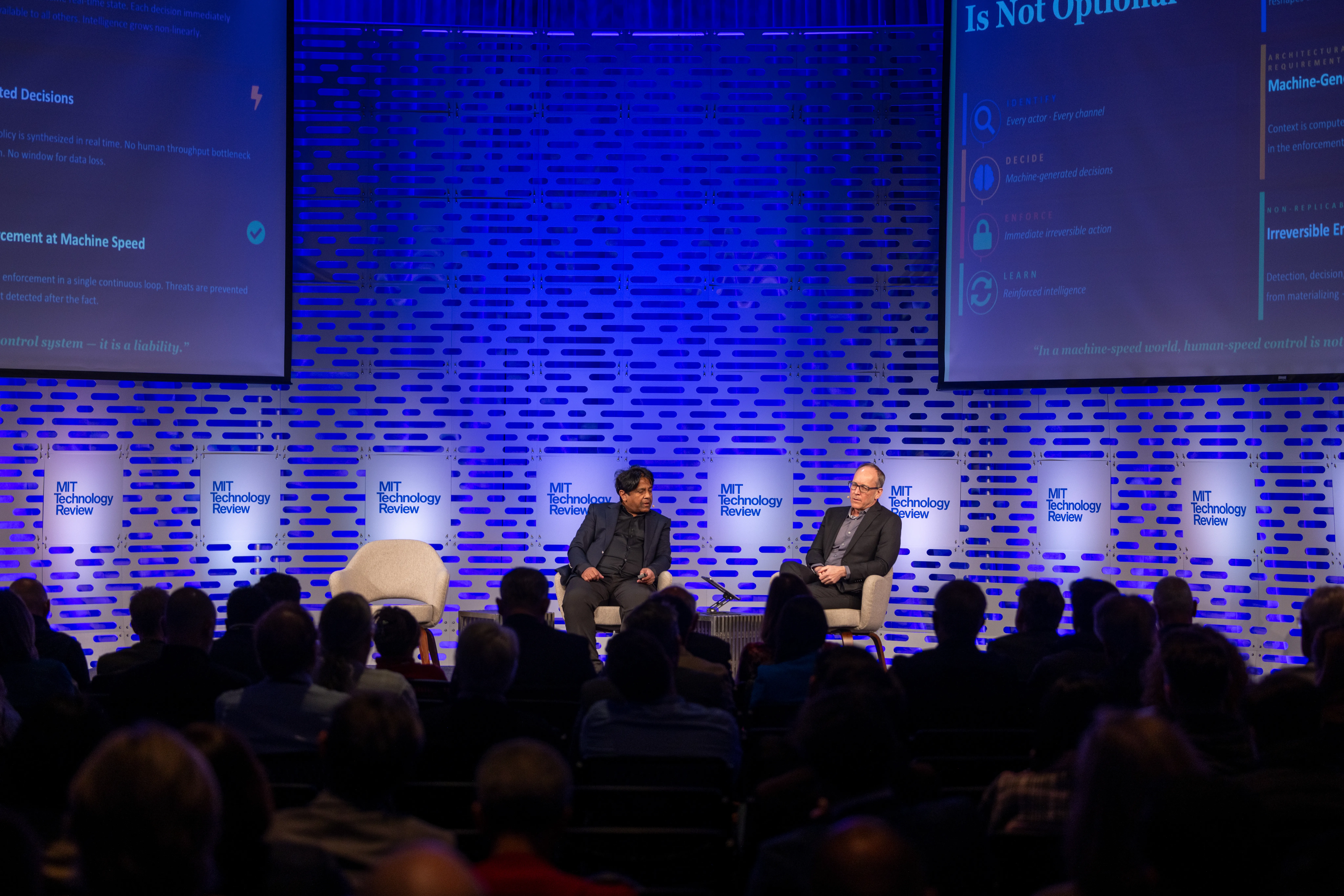
Cybersecurity was already under significant strain before artificial intelligence entered the technological stack. However, the integration of AI has further expanded the attack surface and added layers of complexity that render traditional legacy security approaches insufficient. This reality was the central theme of a session at the MIT Technology Review EmTech AI conference, which explored why security strategies must be fundamentally rethought with AI at their core.
Tarique Mustafa, co-founder and CEO/CTO of GCCybersecurity, Inc. and Chorology, Inc., provided key insights during the discussion. Mustafa, whose expertise spans autonomously collaborative AI applied to ultra-high-scale challenges in cybersecurity, data security, and compliance, argued that security measures cannot simply be layered on after the fact. Instead, he emphasised that organisations must rearchitect their strategies to account for the new dynamics introduced by generative and autonomous systems.
Mustafa's perspective is grounded in extensive technical leadership experience spanning over two decades. He holds multiple USPTO patents and has held senior roles at major entities including Symantec, DHL Airways IT, MCI WorldCom, and others. At GCCybersecurity, he architected the core AI algorithms powering the company's fourth and fifth generation fully autonomous data leak protection and exfiltration platforms, positioning him as a recognised authority in knowledge representation and AI planning.
The conference highlighted a critical gap between technological acceleration and defensive capabilities. While AI accelerates capabilities, the industry is struggling to keep pace with the resulting security implications. Mustafa noted that the limits of existing defences are becoming harder to ignore as the nature of threats evolves alongside these powerful new tools.
The EmTech AI conference serves as a platform for discussing the intersection of emerging technologies and societal impact. In this context, the dialogue focused on the necessity of moving beyond outdated models. The consensus emerging from the session was that waiting to integrate AI into security protocols is no longer a viable option for organisations facing an increasingly complex digital landscape.
