Cuban emergency guide sparks outrage as US-Cuba tensions escalate over drone reports
Analysts warn that the primary risk to Washington is not direct conflict, but the political and humanitarian fallout of mass migration from an increasingly vulnerable island state.
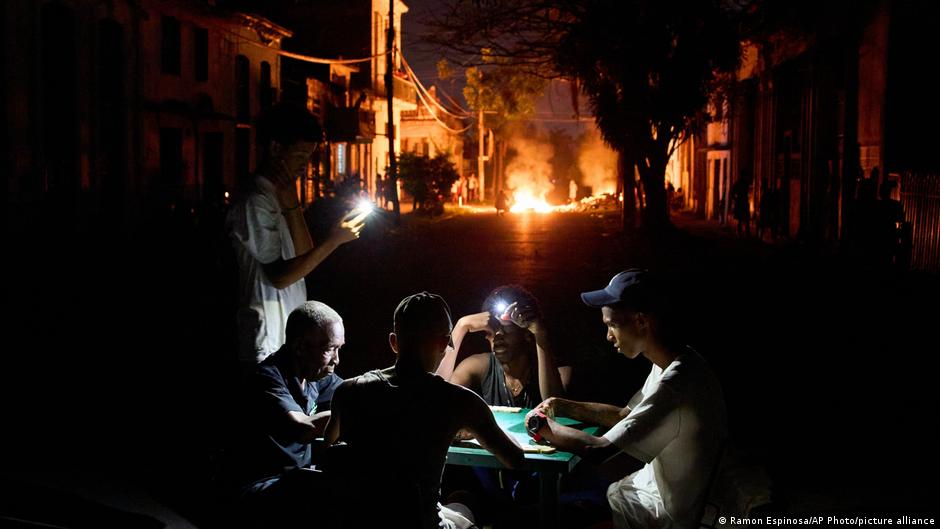
Cuba’s Civil Defence has released a "Family Guide for the Protection of the Population in the Event of Military Aggression," prompting widespread frustration among citizens already grappling with severe economic hardship. The official document advises residents to assemble emergency kits containing personal documents, radios, flashlights, food for three days, and medications, while also identifying potential shelters. The directive has drawn sharp criticism on social media, with one user questioning the feasibility of such preparations: "If we’re living hand-to-mouth, how can we save food for the war?"
The publication of the guide coincides with a significant deterioration in relations between Havana and Washington. US President Donald Trump has repeatedly hinted at potential action against the island, stating that "Cuba is next." This rhetoric was amplified by reports from the US media outlet Axios, which cited intelligence sources claiming Cuba had acquired more than 300 military drones and was evaluating scenarios for their use near the US base at Guantanamo.
Despite the alarming reports of drone acquisitions, experts argue that the military threat is overstated. Guadalupe Correa-Cabrera, a professor of Politics and Government at George Mason University, told Deutsche Welle that 300 drones represent a negligible threat compared to US military capacity. "The asymmetries are enormous," she said, noting that the situation should be viewed within a broader geopolitical context involving tensions with Russia and China rather than as a bilateral military confrontation.
Correa-Cabrera emphasised that Cuba’s strategic value lies in its geographical position in the Western Hemisphere and its potential alliances with nations hostile to the United States. She suggested that the focus on drones and "irregular warfare" reflects a larger global conflict dynamic, where Cuba serves as a flashpoint for wider geopolitical competition rather than the primary theatre of direct combat.
Meanwhile, Juan Battaleme, a senior fellow at the Argentine Council for International Relations, warned that the greatest risk to Washington is political and humanitarian rather than military. He argued that a potential humanitarian crisis or mass migration would carry an "enormous political cost" for the US, particularly if images of Cubans fleeing by sea emerged. Battaleme compared Cuba’s current vulnerability to that of Venezuela, sustained partly by external support, and concluded that Washington is more likely to manage a political standoff than engage in direct military action.