Cramer challenges Buffett’s ‘gambling’ thesis, cites S&P 500 ETF concentration as real market risk
While Warren Buffett points to zero-day options as evidence of speculative excess, Cramer contends the true danger lies in the unexamined concentration of capital within the S&P 500.
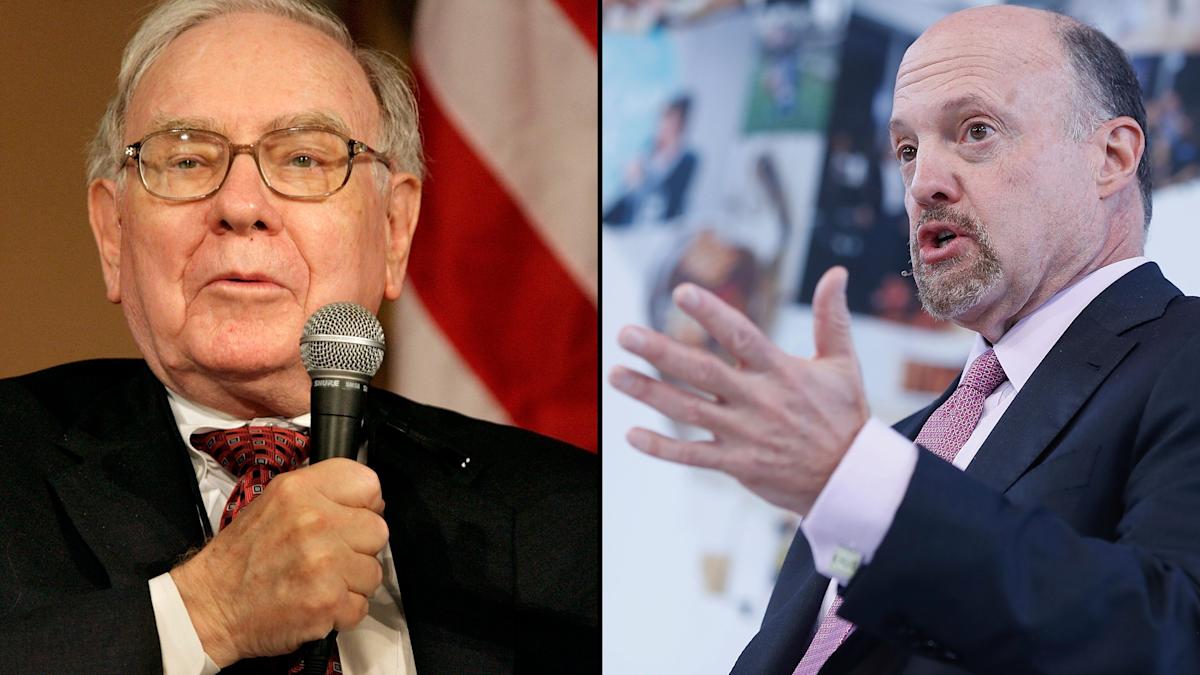
Jim Cramer has publicly disputed Warren Buffett’s assertion that current market behaviour is driven by a gambling mentality, arguing instead that investors are addicted to buying S&P 500 exchange-traded funds (ETFs). The disagreement occurred following Buffett’s comments to CNBC’s Becky Quick at the Berkshire Hathaway annual meeting in Omaha in early May, where he described markets as having a "gambling mood" and cited zero-day-to-expiration (0DTE) options and prediction markets as evidence of speculation.
Cramer countered on X, stating that blind faith in the S&P 500 and passive ETF investing represents the true market distortion, creating a concentration of capital in mega-cap technology stocks that mimics a casino-like environment. He argued that individual stock investing has been denigrated to such an extent that investors pour money into index funds regardless of underlying valuations, effectively turning the broad market index into a concentrated bet on a handful of large technology companies.
Buffett compared today’s markets to “a church with a casino attached,” noting that the casino side has grown increasingly crowded. He highlighted one-day options, which are bought and settled within a single trading session, as a primary example of behaviour that is neither investing nor speculating, but rather gambling. Buffett also referenced the case of a US Army sergeant who made significant profits on a prediction market, using these examples to illustrate the speculative excess he believes characterises the current financial landscape.
In response to these conditions, Berkshire Hathaway has adopted a defensive posture, accumulating cash rather than deploying it into stocks it considers overpriced. The company ended the first quarter of 2026 with $397.4 billion in cash and Treasury bills. Buffett stated that the most likely time to buy assets is when panic prevails, noting that during his 60 years in business, only about five periods offered truly attractive buying opportunities, and the current environment is not one of them.
Cramer’s critique focuses on the structural risks within conventional index investing, which he argues poses a greater threat to the average investor than active speculation. Data from Morningstar indicates that the Vanguard S&P 500 ETF alone drew in $143 billion in 2025, while the broader ETF industry recorded its highest annual inflow ever at $1.46 trillion. With the top 10 holdings in the S&P 500 representing nearly 41% of the entire index, Cramer warns that investors seeking diversification are instead making heavily weighted bets on a small group of mega-cap firms.