Cleveland Fed President Hammack Signals Potential Rate Hikes as Inflation Risks Mount
The Federal Reserve official highlighted broad-based price pressures and a declining real federal funds rate, suggesting current policy may not be restrictive enough to return inflation to the 2% target.
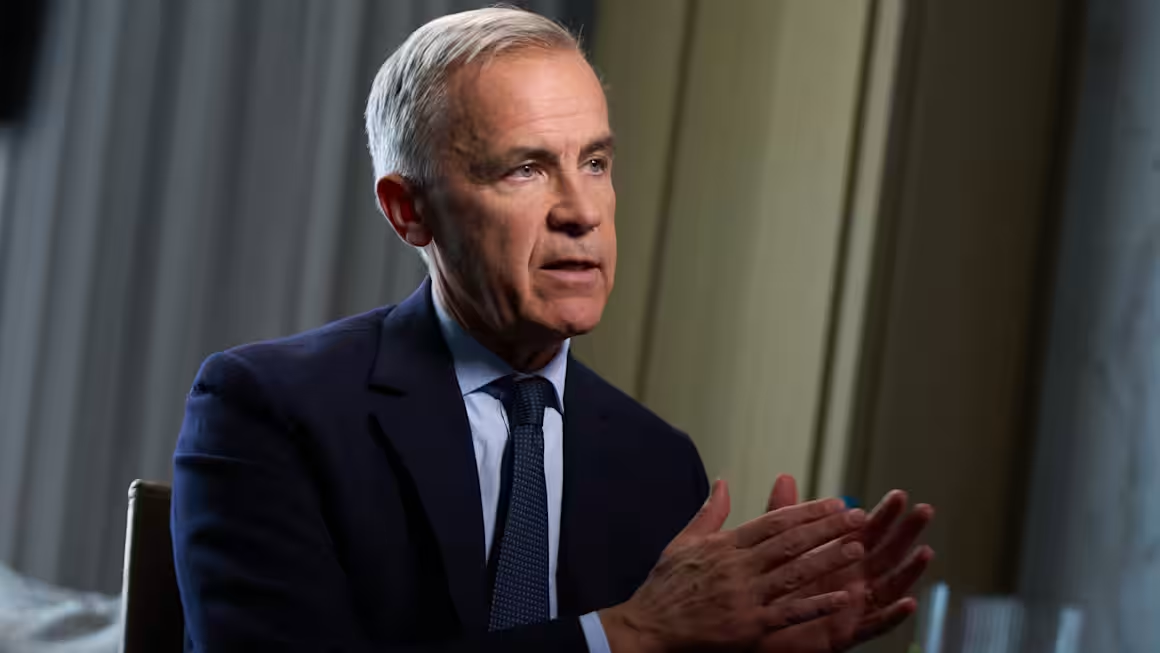
Beth Hammack, president of the Federal Reserve Bank of Cleveland, cautioned on Tuesday that raising interest rates may soon be necessary if current economic trends persist. While she advocated for maintaining steady rates in the immediate term due to prevailing economic uncertainties, she expressed a growing concern regarding the risk of entrenched inflation over the threat to full employment.
Hammack noted that interest rates may not currently be sufficiently restrictive to return inflation to the Federal Reserve’s 2% target. She cited broad-based price pressures across goods and non-housing services as key indicators, warning that delaying action until high inflation becomes embedded in the economy could necessitate larger policy adjustments at a greater cost.
The president of the Cleveland Fed observed that the real federal funds rate has declined over recent months as rising inflation has outpaced the benchmark interest rate. This decline in the real rate signals looser monetary conditions, even if nominal rates remain steady, potentially undermining efforts to cool the economy.
Furthermore, Hammack indicated that business investment plans are proceeding, suggesting that credit markets and current interest rates are not holding companies back. This anecdotal evidence from her communications implies that policy may not be restrictive enough to curb economic activity, reinforcing the need for vigilance.
She emphasised that the longer inflation remains above the goal, the greater the risk that it feeds into expectations and becomes embedded in wages, contracts, and pricing behaviour. This perspective distinguishes her view by prioritising the risks of persistently elevated inflation over risks to full employment, marking a significant stance in the ongoing debate over monetary policy.