China Unveils World’s First Wind-Powered Underwater Data Centre in Shanghai
The facility, submerged 10 metres off the coast, utilises seawater for natural cooling and offshore wind energy, marking a significant step in Beijing’s strategy to secure power for artificial intelligence growth while reducing reliance on fossil fuels.
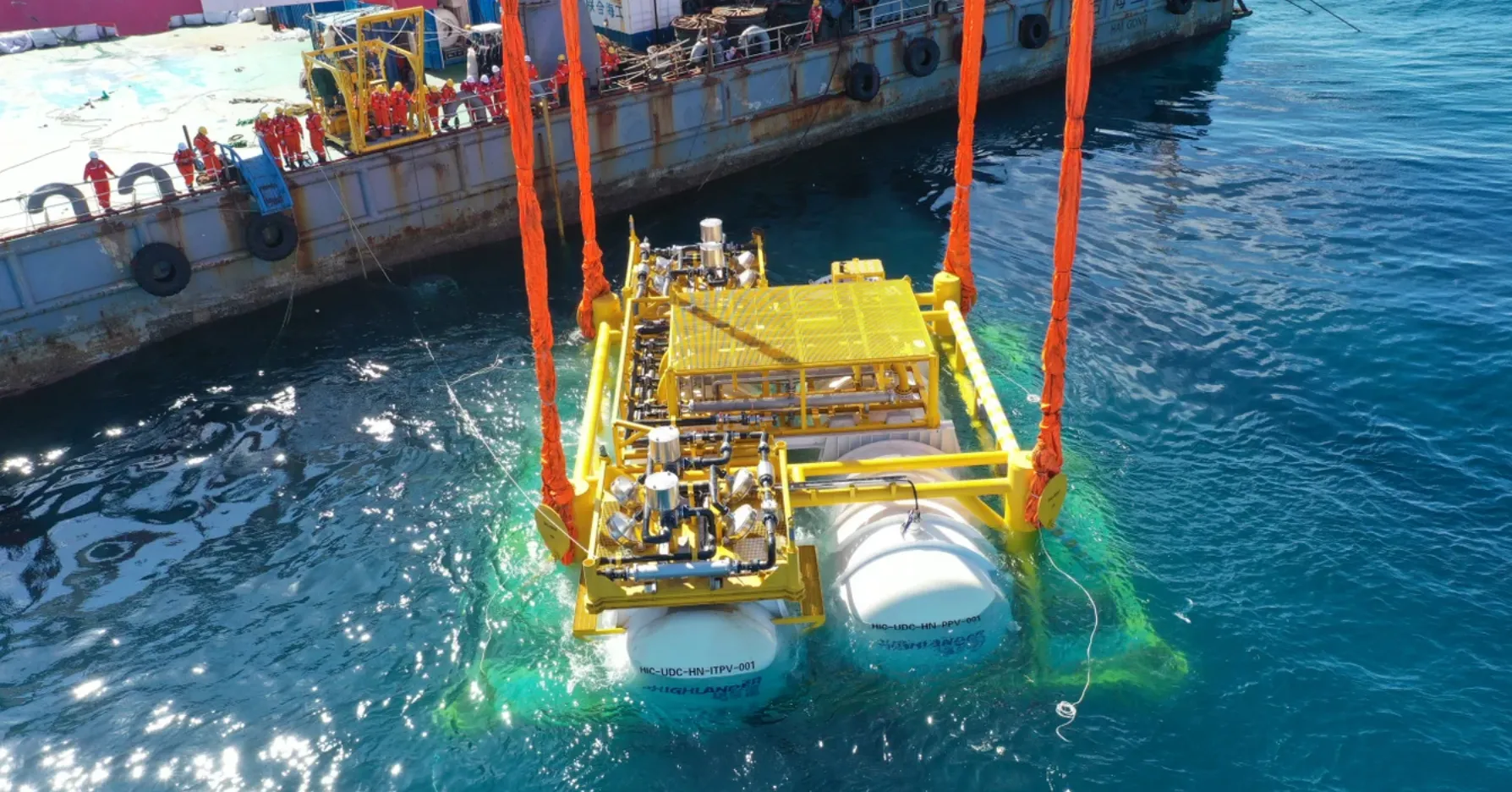
China has commissioned the world’s first underwater data centre powered by offshore wind, located in the Lin-gang Special Zone within the China Pilot Free Trade Zone in Shanghai. Developed through a collaboration between private firm HiCloud Technology and state-owned China Communications Construction, the project required an investment of 1.6 billion yuan, equivalent to approximately $236 million. Construction was completed in mid-October last year, establishing a new benchmark for energy-efficient infrastructure in the technology sector.
The facility operates with an initial capacity of 24 megawatts and is submerged at a depth of 10 metres. By utilising seawater as a natural cooling system, the centre reduces the energy required for cooling to less than 10 percent of total consumption. This approach addresses a major inefficiency in conventional data centres, where air conditioning systems typically account for 40 to 50 percent of electricity use. The thermal efficiency is reflected in a target power usage effectiveness (PUE) of no more than 1.15, a figure considered state-of-the-art within the industry where 1.0 represents maximum theoretical efficiency.
This development follows HiCloud’s opening of the world’s first commercial underwater data centre in Hainan in 2023, although that earlier facility did not utilise offshore wind power. The Shanghai complex is designed to use more than 95 percent green electricity. According to the Chinese government, the project reduces energy consumption by 22.8 percent and lowers water and land use by 100 percent and more than 90 percent, respectively, compared to traditional onshore facilities.
The opening of the centre is part of a broader strategy to secure energy supplies for the accelerated growth of artificial intelligence and reduce dependence on fossil fuels. A recent United Nations report indicates that only 32 countries host data centres specialised in AI, with approximately 90 percent of this global infrastructure concentrated in China and the United States. While the US has seen fluctuations in energy transition investments, China is actively pursuing energy self-sufficiency through technologies ranging from renewables to nuclear generation.
Beijing’s push for technological and industrial autonomy is supported by legislative reforms, including a new energy law that came into force last year. This legislation prioritises renewable sources and hydrogen, obliging authorities to set minimum targets for clean energy consumption. Additionally, as of June 2025, all solar and wind energy in China is required to be traded through market mechanisms or auctions, phasing out old feed-in tariff schemes to boost investment in clean technologies.
