China bans Nvidia RTX 5090D V2 chip as Jensen Huang visits Beijing
The move coincides with Nvidia’s chief executive attending a US delegation led by Donald Trump, highlighting Beijing’s determination to restrict foreign AI infrastructure in favour of local manufacturers.
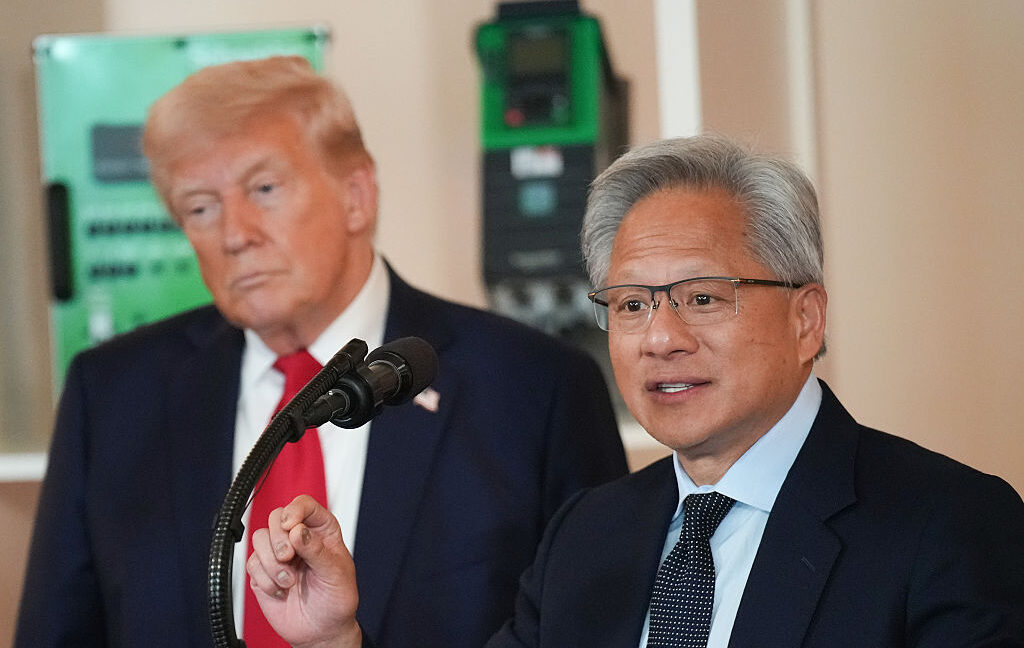
China has added the Nvidia RTX 5090D V2 graphics card to its list of banned goods at customs checkpoints, a decision implemented last Friday while Nvidia CEO Jensen Huang was visiting Beijing. The timing underscores the intensifying strategic competition between the United States and China to dominate artificial intelligence infrastructure, with Beijing signalling its resolve to limit reliance on US technology even during high-level diplomatic engagements.
Huang joined former President Donald Trump at the last minute as part of a US delegation to the Chinese capital, where he was observed touring the city and sampling local cuisine outside of official summit activities. Despite the presence of the Nvidia chief, the customs ban targets chips specifically designed to comply with existing US export controls. The RTX 5090D V2, introduced last August for Chinese gamers and 3D animators, has also been purchased by AI developers who are cut off from more sophisticated Nvidia products.
The restriction follows previous blocks on Nvidia’s H200 and H20 chips, despite US approval for sales to major Chinese technology groups such as Alibaba and Tencent. Donald Trump stated on Air Force One following the Beijing visit that China chose not to approve H200 chip purchases because it wishes to develop its own domestic alternatives. This aligns with Beijing’s broader policy of supporting local semiconductor manufacturers, including Huawei and Cambricon, as they attempt to catch up with their US rivals.
Market data indicates a significant shift in supply dynamics. Huawei is projected to capture the largest share of China’s AI chip market this year, with sales increasing by at least 60 per cent amid strong demand for domestic options. In contrast, Nvidia sold products worth just over $17 billion in China during the 2025 financial year, primarily through H20 chips. Morgan Stanley forecasts that China’s AI chip market will reach $67 billion by 2030, with 86 per cent of supply expected to come from domestic groups.
Huang expressed optimism to Bloomberg TV on Monday, stating his belief that China’s market would become accessible to US chip suppliers over time. However, the immediate outlook remains constrained by regulatory hurdles. Nvidia is scheduled to report earnings on Wednesday afternoon, a release viewed as a key indicator of the broader AI infrastructure boom and the financial impact of these geopolitical restrictions.
