Chicxulub crater stayed hydrothermally active for about 8 million years
Rock dating and simulations suggest the impact crater may have offered microbial life suitable conditions for several million years, but the study does not show that it was inhabited.
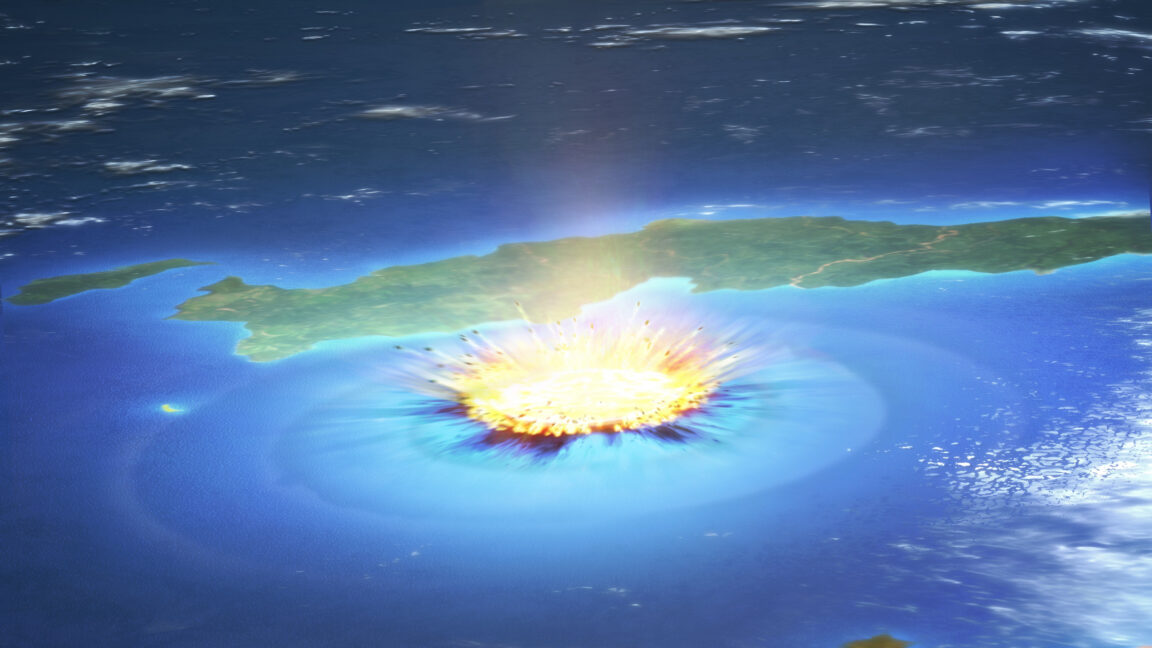
The hydrothermal system beneath the Chicxulub impact crater remained heated for about eight million years after the asteroid struck 66 million years ago, according to a study published in Communications Earth & Environment. The findings extend earlier estimates, which put the system’s duration at about two million years.
Researchers led by Annemarie Pickersgill analysed drilled rock samples from the crater, on what is now Mexico’s Yucatán Peninsula. Potassium-argon dating of feldspar indicated hydrothermal activity from about 66 million to 58 million years ago.
Computer simulations estimated that temperatures at a depth of one kilometre took 1.5 to 2.3 million years to fall to 90°C. They took up to five million years to drop below 50°C, while fluid flow had ceased by about eight million years after the impact.
The results point to a potentially long window for microbial colonies to develop in the heated, nutrient-rich environment. They do not establish that life lived in the crater.
Microbes have been found to colonise only eight of 70 underwater impact craters with hydrothermal activity. Pickersgill said the findings could help assess how larger impacts on early Earth and other planetary bodies might sustain habitable conditions.