Canon targets content creators with EOS R6 V, a video-centric hybrid camera
Priced at $2,500, the EOS R6 V omits an electronic viewfinder and mechanical shutter to deliver professional-grade video performance for vloggers and filmmakers.
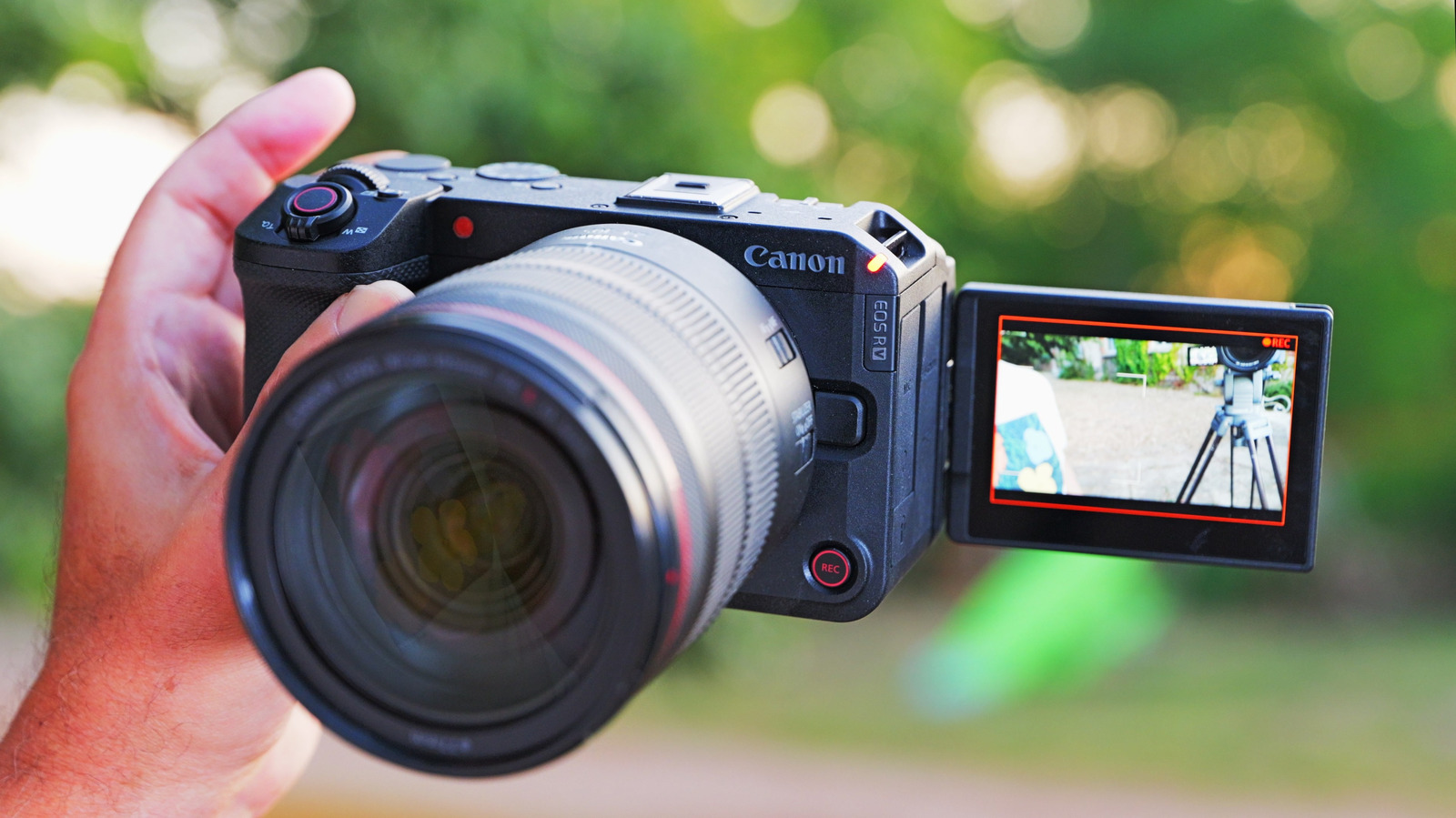
Canon has officially released the EOS R6 V, a mirrorless camera engineered specifically for video production and content creation. Priced at $2,500, the device utilises a 33-megapixel full-frame sensor and incorporates active cooling to support sustained recording of up to 7K RAW video. The release marks a strategic pivot for the manufacturer, positioning the R6 V between its mainstream R6 III and the pro-oriented C50 models by combining robust video capabilities with a more accessible form factor.
The camera’s design philosophy prioritises video performance over photography, a decision evident in its physical specifications. The EOS R6 V lacks both an electronic viewfinder and a mechanical shutter, features typically found in hybrid cameras. Instead, it relies on a rear three-inch display that flips out for multi-angle shooting, a configuration intended to facilitate vlogging and self-recording. The body, constructed from magnesium and polycarbonate, weighs 688 grams and includes dust- and water-resistant sealing, with a thickness increased to accommodate the internal cooling fan.
In terms of technical specifications, the R6 V offers significant flexibility for professional workflows. It can capture up to 7K 12-bit RAW video in either 3:2 open gate mode or 17:9 aspect ratios, alongside 4K DCI RAW support. To manage the high data rates associated with RAW recording, the device features a single CFexpress Type B slot, supplemented by an SDXC UHS II card slot for proxy files. Connectivity options include microphone and headphone jacks, a full-sized HDMI port, and a USB Type C 3.2 Gen 2 connector, though it notably omits the timecode port found on Canon’s higher-end cinema cameras.
The EOS R6 V employs Canon’s Dual Pixel AF II system, which provides robust subject tracking for people, animals, and vehicles. Independent testing indicates that the autofocus performance is comparable to leading competitors, maintaining sharp focus on eyes even at shallow apertures. Additionally, the camera offers 7.5 stops of in-body image stabilization, which is enhanced by digital IS modes to reduce shake during handheld operation. While the sensor is not stacked, readout speeds are fast enough to minimise rolling shutter distortion in most standard shooting scenarios.
Photography capabilities are secondary to video functions in this model. The R6 V can shoot RAW bursts at up to 40 fps using an electronic shutter, but it is limited to 12-bit RAW files, resulting in lower dynamic range compared to cameras that support 14-bit RAW. This limitation, combined with the absence of a mechanical shutter, suggests that the EOS R6 V is best suited for creators who require high-quality video output and view still photography as a supplementary function.