Brent crude posts steepest monthly drop since 2020 on Iran deal hopes
Brent crude has fallen below $93 a barrel, marking an 18% decline for the month, while US equities advance on broader geopolitical de-escalation and corporate earnings.
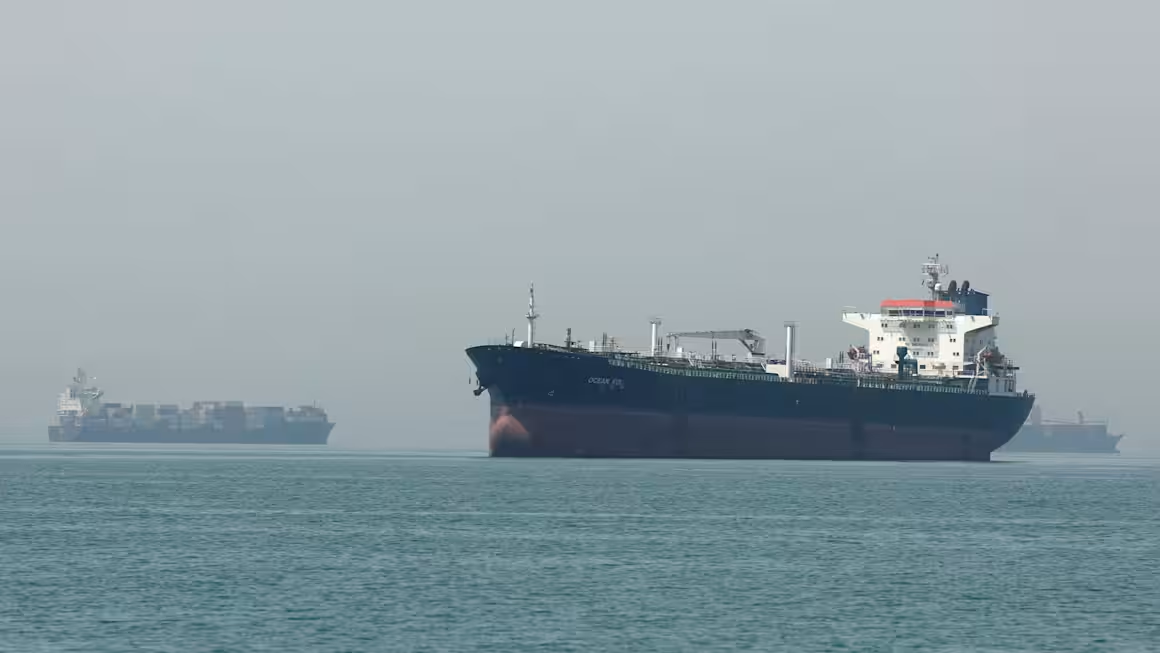
Brent crude oil has recorded its largest monthly decline since 2020, driven by market optimism surrounding a potential agreement between the United States and Iran. According to the Financial Times, the price retreat coincides with indications that the two nations are nearing a deal, prompting a significant reassessment of supply risk in global energy markets.
The sharp correction in oil prices is largely attributed to hopes that a tentative 60-day ceasefire extension will lead to the reopening of the Strait of Hormuz. This waterway serves as a critical chokepoint for global energy supplies, and any prospect of normalised transit has triggered a measurable response from traders. Brent crude has dipped below the $93 per barrel threshold, representing an 18% drop for the month.
West Texas Intermediate (WTI) has also seen downward pressure, trading near $88 per barrel. The convergence of these benchmarks reflects a broader risk-off sentiment in the energy sector, as investors price in the likelihood of reduced geopolitical friction in the Middle East.
Concurrently, US stock markets posted gains, influenced by the same de-escalation narrative alongside other corporate developments. The Dow Jones Industrial Average rose 0.8%, the S&P 500 increased by 0.3%, and the Nasdaq Composite climbed 0.2%. These advances occurred as President Donald Trump and Chinese President Xi Jinping commenced a two-day summit in Beijing, addressing trade, artificial intelligence, and regional tensions.
Corporate sentiment was further bolstered by Nvidia, whose shares surged more than 2% following news that the US approved H200 chip sales to Chinese firms. In a separate regulatory development, the US Justice Department announced the closure of a criminal probe into Federal Reserve Chair Jerome Powell regarding headquarters renovation costs, transferring the matter to the Fed’s Office of the Inspector General.
Despite the market rally, uncertainties remain regarding the finalisation of the US-Iran agreement. The potential deal is pending the signature of President Trump, whose latest demands may impact the timeline for a permanent resolution. Until the specific inclusions and final terms are clarified, the market is likely to remain sensitive to further statements from the White House.