Brent crude climbs to nearly $120 as US administration signals indefinite Hormuz blockade
Prices have risen for eight consecutive days after reports indicate the US President intends to maintain a naval closure of the strategic Strait of Hormuz.
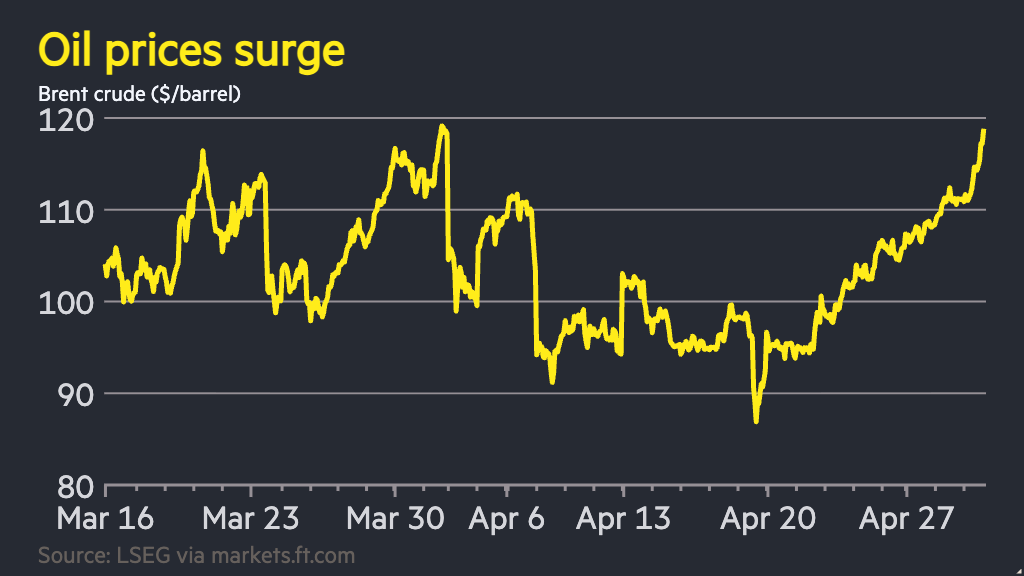
Brent crude oil prices have climbed to almost $120 per barrel, marking the eighth consecutive day of gains. This sustained surge in costs follows public indications from the US President that the administration intends to maintain a naval blockade in the Strait of Hormuz. The strategic waterway, critical for global energy supplies, has effectively remained closed to shipping for weeks, disrupting international energy flows and driving up commodity prices.
The latest price jump was triggered by reports from Washington that the President has instructed aides to prepare for an extended duration of the blockade. Context for this development emerged after the US President met with Chevron executives at the White House on Tuesday. The discussion focused on limiting the conflict's impact on American consumers, but traders interpreted this high-level engagement as confirmation that the closure of the waterway would persist for a prolonged period.
Prior to these recent reports, crude oil prices had already surged to over $117 a barrel, representing the highest level of the month. The current situation involves the US administration preparing to extend its blockade of Iran's ports indefinitely. While the specific duration of the prolonged period mentioned by traders and aides is not yet quantified, the market reaction suggests a significant shift in expectations regarding the timeline for the resolution of the stand-off.
Reports indicate that the full extent of the indefinite extension of the port blockade remains subject to ongoing diplomatic and military developments. The uncertainty surrounding the specific length of the closure continues to weigh on global energy markets. As the situation evolves, the focus remains on the potential for further escalation or the eventual reopening of the vital shipping lane that has been effectively shut down.
The Financial Times reported on the development, highlighting the direct link between the US President's stance and the market's response. With prices hovering near $120, the financial sector is closely monitoring any further statements from Washington that could clarify the administration's long-term strategy for the region. The convergence of geopolitical tension and market volatility underscores the fragile nature of global energy security in the current climate.