Brent crude breaks $100 barrier as global supply chain fractures deepen
Analysts warn that futures markets are underpricing the severity of physical constraints as strategic inventories erode and alternative export routes face new threats.
Brent crude futures surged past the $100-a-barrel threshold on Thursday, marking the first time the benchmark has reached this level since May. The rally, which saw the price rise more than 6 per cent, was driven by a convergence of escalating geopolitical conflicts and logistical bottlenecks that are increasingly constraining global energy flows. US West Texas Intermediate (WTI) crude also climbed, crossing the $90 mark on the same day.
The primary driver of the price spike remains the ongoing US-Iran conflict, which has severely restricted transit through the Strait of Hormuz. Data from Kpler indicates that verified transits through the waterway plunged to just 22 between July 20 and 21, a sharp decline from the more than 100 daily crossings recorded prior to the war. Iranian parliament speaker Mohammad Bagher Ghalibaf stated that security conditions, specifically the absence of American forces, prevent a return to pre-war conditions, prompting shipowners to hold back from making dangerous crossings.
Compounding the disruption in the Persian Gulf, Houthi militia attacks in the Red Sea have threatened alternative Saudi export routes. Overnight on Wednesday, the group attacked two Saudi Arabian vessels, targeting the Bab el-Mandeb Strait. This route is critical as Saudi Arabia has shifted roughly 4 million barrels per day of exports through its East-West pipeline to the port of Yanbu to bypass the Hormuz chokepoint. Rystad Energy strategist Jorge León noted that any disruption at Bab el-Mandeb would threaten one of the few remaining routes capable of compensating for the severe reduction in Hormuz traffic.
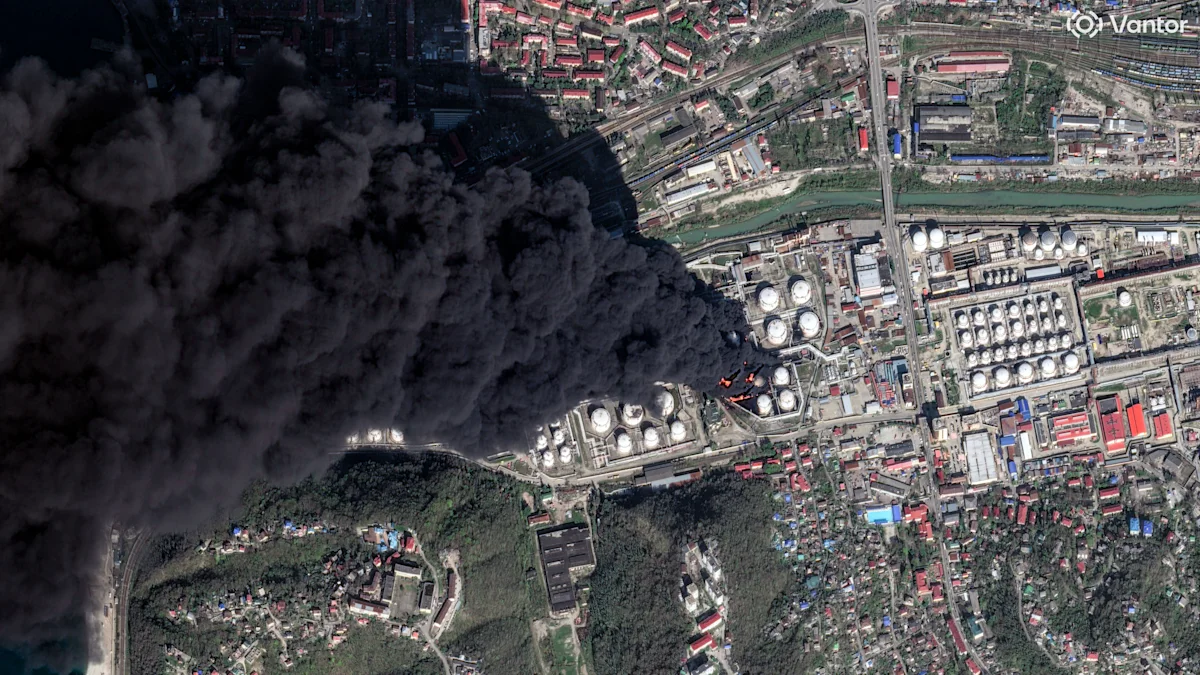
Further north, Ukrainian military strikes have curtailed Russian energy exports, adding to the supply squeeze. Attacks on more than a dozen Russian refineries have led to a suspension of diesel exports, which accounts for roughly 10 per cent of the world's diesel supply. Additionally, the Caspian Pipeline Consortium (CPC) suspended loadings on Monday following drone attacks on Black Sea terminals. The CPC pipeline, which carries oil from Kazakhstan, accounts for roughly 2 per cent of global oil trade.
Despite these physical constraints, Rabobank strategist Joe DeLaura warned that futures prices are currently underpricing the reality of the market. While futures remain $20 to $30 below wartime highs, physical traders argue prices should be higher due to constrained logistics. Kpler data shows that while crude volumes at sea reached a record 1.35 billion barrels in late June, global inventories in strategic and commercial reserves are eroding rapidly. Analysts warn that the market is effectively grinding out its savings buffers, leaving it vulnerable to further prolonged outages.