Boston Dynamics targets last-mile logistics with Spot robot dog trials
The company is in discussions with major logistics firms to transition from demonstration phases to a full pilot project for autonomous suburban deliveries.
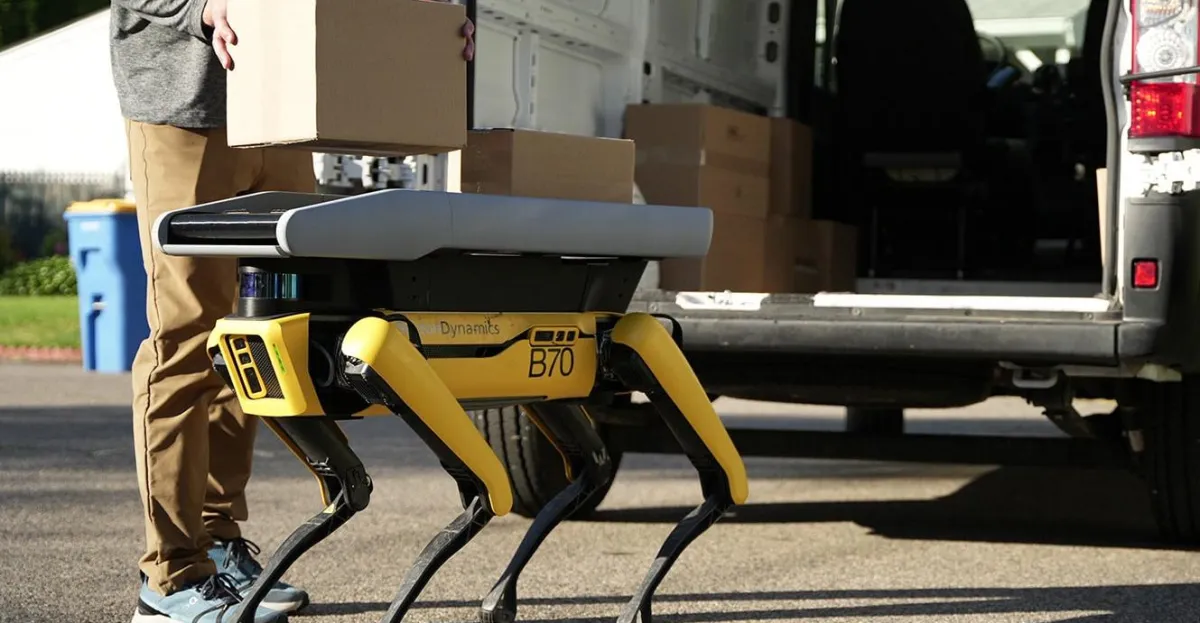
Boston Dynamics is advancing its entry into the logistics sector by testing its Spot quadruped robot for last-mile delivery applications. The company is currently evaluating a new conveyor belt accessory designed to enable Spot to autonomously transport packages from delivery vehicles to customer doorsteps. This initiative marks a strategic shift for the robotics firm, which has previously utilised the unit for industrial factory inspections, patrolling historical sites such as the ruins of Pompeii, and conducting search-and-rescue operations in rubble.
The primary objective of the trial is to alleviate physical strain on delivery drivers while simultaneously increasing the volume of goods that can be transported per trip. By automating the final leg of the journey, particularly over uneven terrain and cluttered pathways common in suburban neighbourhoods, Boston Dynamics aims to overcome limitations faced by wheeled robots or aerial drones. The company believes Spot’s ability to navigate unstructured environments makes it a viable alternative for complex obstacle navigation where humans currently remain the most efficient method.
Paige Miller, Boston Dynamics’ senior staff product manager for Spot, provided internal estimates regarding the operational efficiency of the system. According to Miller, the robot’s assistance could allow drivers to focus on other tasks, such as preparing subsequent deliveries, while Spot handles the drop-off. The company projects that for every three packages delivered via Spot, an additional package could be added to the van, thereby increasing overall capacity.
Boston Dynamics is currently in talks with major logistics companies to move beyond demonstration phases and establish a full pilot project. While the specific identities of these logistics partners and the timeline for the pilot have not been disclosed, the company is seeking to validate the commercial viability of the technology in real-world suburban settings. The trials aim to demonstrate that the robot can reliably manage the transition from the curb to the front door without human intervention.
The Spot unit is priced at approximately $74,500 to $75,000, a significant investment for logistics providers. While the technology shows promise for navigating difficult terrain, the high cost and the reliance on internal capacity estimates rather than verified operational data present considerations for widespread adoption. As the company moves toward pilot testing, the market will be watching to see if the efficiency gains justify the capital expenditure in a competitive delivery landscape.