Blue Origin New Glenn failure halts US heavy-lift market and jeopardises Artemis timeline
With the United Launch Alliance Vulcan also offline, the US medium- and heavy-lift launch capacity is now entirely dependent on SpaceX.
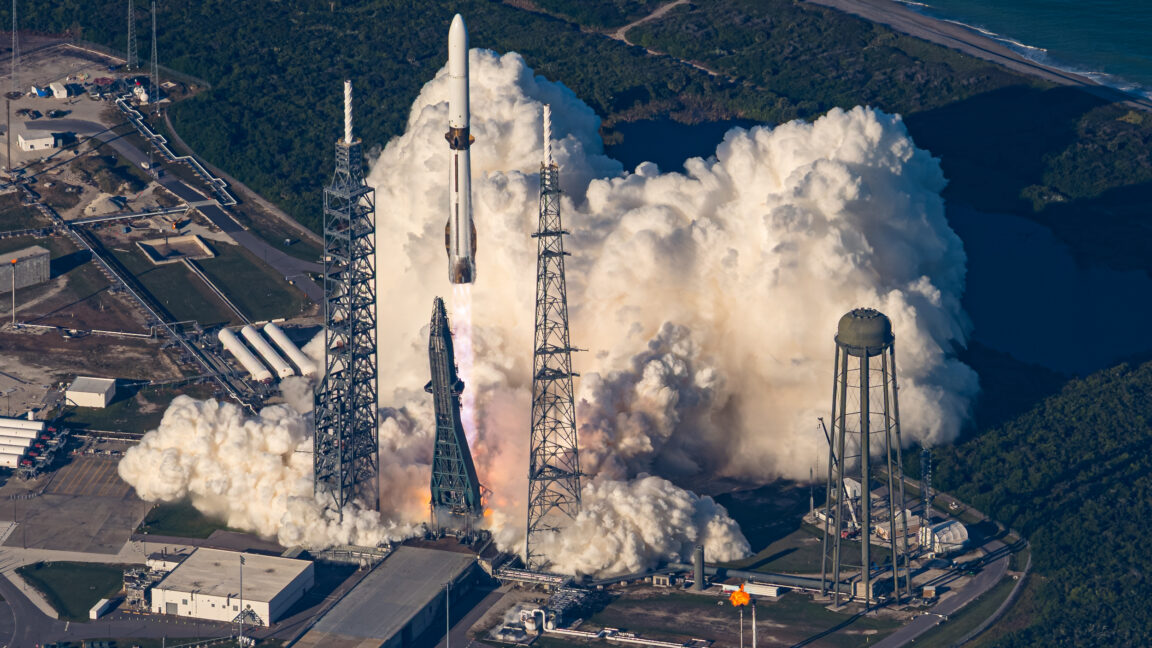
Blue Origin’s New Glenn rocket detonated during a static-fire test at Launch Complex 36A in Florida on Thursday night, 28 May 2026, causing catastrophic damage to the launch infrastructure. The explosion, which originated in the central engine of the booster with early indications pointing to issues with the BE-4 engine, sent debris across the coastal scrubland and into the sea. Teams from Blue Origin, the US Space Force, and NASA are currently assessing the damage and recovering debris, with major damage confirmed to the lightning towers and pad structures.
The incident has halted Blue Origin’s plans for near-monthly launches scheduled for the second half of 2026, which were intended to serve customers including NASA, Amazon, and AST SpaceMobile. Rebuilding LC-36A or completing preliminary work on the nearby LC-36B is estimated to take at least 15 months, even with significant resource allocation. Blue Origin has begun preliminary work on LC-36B and plans to develop a site at Vandenberg Space Force Base in California, but these projects are only in their early stages.
The failure leaves the US medium- and heavy-lift launch market entirely dependent on SpaceX, as United Launch Alliance’s Vulcan rocket is also currently offline due to an anomaly. Blue Origin had reached the point where the New Glenn first stage, a mature design that had performed nearly flawlessly during its first three flights, was poised for regular operations. The loss of both New Glenn and Vulcan consolidates all US heavy-lift capacity in the hands of SpaceX, relying on its Falcon 9 and Falcon Heavy rockets.
NASA’s Artemis programme faces significant disruption, particularly the Moon Base I mission, which is scheduled to fly on the Blue Moon Mark 1 lander. The lander requires propellant backfilling from the New Glenn upper stage, which uses liquid hydrogen, a capability that alternative rockets like Falcon Heavy, which uses kerosene, cannot provide. Additionally, the award of $280.4 million for two lunar rovers in 2028 is now jeopardised, as only the Mark 1 lander and SpaceX’s Starship have the capacity to deliver the one-tonne rovers.
NASA’s Artemis III mission, planned for 2027, is now unlikely to include a Blue Moon lander, as a crew-rated lander is not expected to be ready by 2028. NASA must now decide whether to delay Artemis III or proceed with a sole reliance on SpaceX’s Starship. The failure also complicates Artemis IV, with senior NASA officials having viewed a slimmed-down version of the Mark 2 lander as the prime option. With test missions on hold indefinitely, NASA finds itself highly dependent on SpaceX’s ability to deliver with Starship.
