Blue Origin explosion delays NASA lunar lander and Amazon Leo constellation
The catastrophic hot-fire test failure at LC-36A has jeopardised NASA’s autumn 2026 lunar lander delivery and forced Amazon to seek alternative launch providers for its satellite internet network.
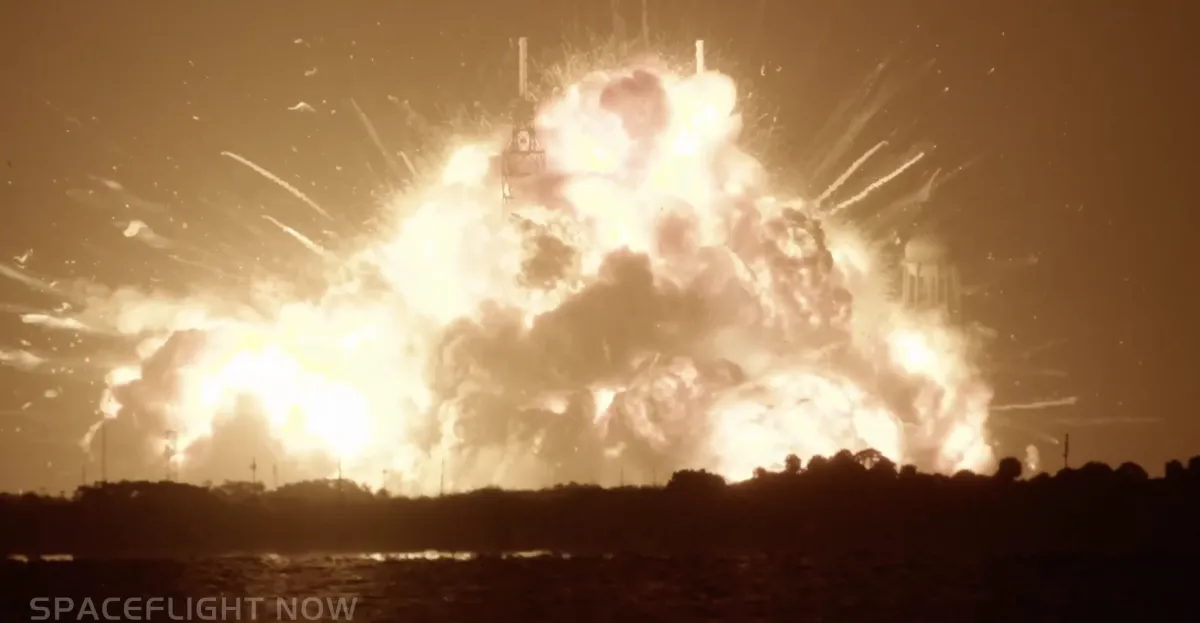
A catastrophic explosion during a hot-fire test of Blue Origin’s New Glenn rocket at Launch Complex 36A in Florida on 28 May 2026 has severely damaged the facility’s infrastructure, likely delaying NASA’s lunar lander plans and Amazon’s satellite launch schedule. The incident occurred at approximately 9pm local time while the 322-foot-tall rocket was being prepared to carry 48 Amazon Leo satellites, though the payloads were not onboard at the time.
The blast obliterated the vehicle and caused significant damage to the transporter-erector and a lightning tower. According to sources speaking to Ars Technica, these critical components may not be salvageable, requiring extensive reconstruction. Blue Origin CEO Jeff Bezos described the event as a "very rough day" on X, stating it was too early to determine the root cause but vowing to rebuild the facility and resume operations.
The setback has immediate implications for NASA, which announced on 28 May 2026 that New Glenn would deliver a robotic lunar lander as soon as autumn 2026. The agency is also scheduled to participate in the Artemis III mission in 2027, involving astronauts docking with lunar landers developed by Blue Origin and SpaceX. NASA Administrator Jared Isaacman confirmed the agency is assessing mission impacts, noting that developing new heavy-lift launch capability is "extraordinarily difficult."
Amazon faces similar disruptions to its Leo internet constellation, which aims to compete with SpaceX’s Starlink. The Federal Communications Commission requires the deployment of 1,618 satellites by 30 July 2026, with Amazon having launched just over 300 to date. With New Glenn grounded, Amazon must rely on secondary providers such as United Launch Alliance, Arianespace, and its rival SpaceX to accelerate its launch schedule.
Industry analysis suggests the recovery timeline will be lengthy. Eric Berger, senior space editor at Ars Technica, wrote that a New Glenn launch in 2026 is "almost certainly" not happening, and a return in the first half of 2027 would be "heroic" given the extent of the launch site damage. This incident follows a separate failure last month where the rocket failed to deliver a communications satellite into the correct orbit, compounding concerns regarding the vehicle’s reliability.