BlackRock's Larry Fink Rejects AI Bubble Theory Amid Calls for Faster Infrastructure Build
While Fink insists the sector is the opposite of a bubble, critics highlight a widening gap between hyperscalers' capital expenditure plans and current revenue streams.
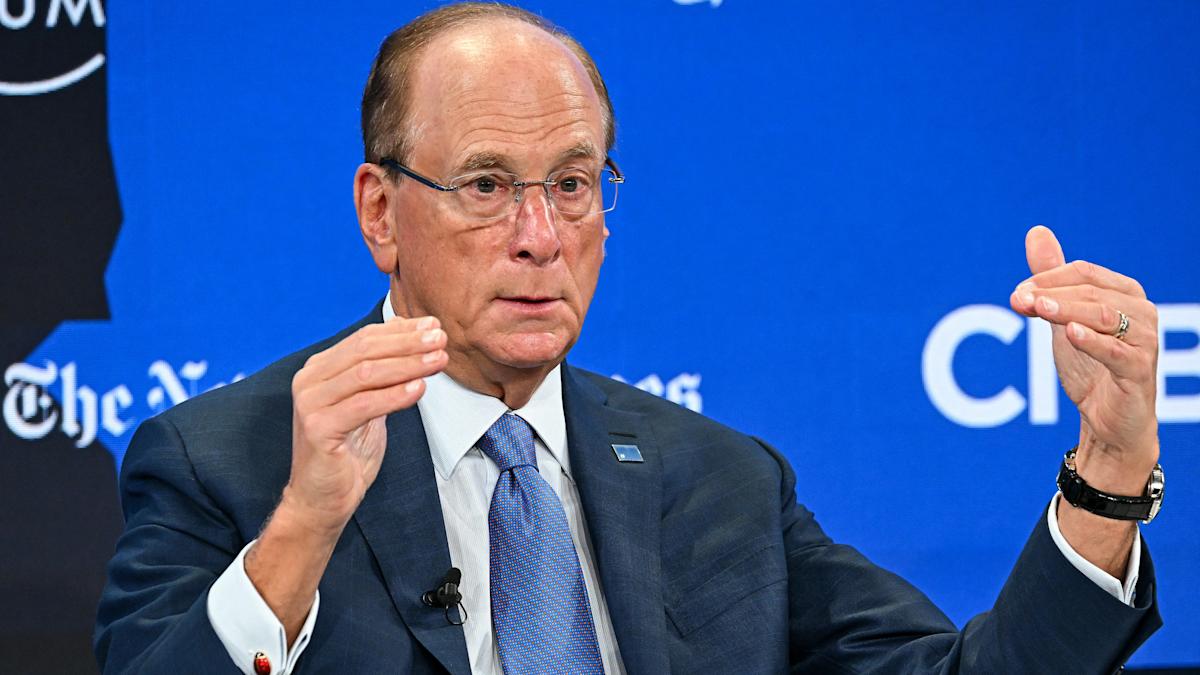
Larry Fink, chief executive of BlackRock, stated at the Milken Institute Global Conference on 5 May that the world is not advancing quickly enough on artificial intelligence infrastructure. Speaking to an audience of investors and policymakers, the asset management giant's leader explicitly rejected the notion of an AI bubble, asserting instead that the current situation represents the opposite of such a phenomenon.
Fink emphasised that the global pace of development in this critical sector is insufficient to meet future demands. To address this shortfall, BlackRock has announced plans to partner with an unnamed hyperscaler to expand its footprint in data centre construction and energy investments. The firm intends to accelerate these efforts to ensure the necessary physical infrastructure supports the rapid growth of AI applications.
The announcement builds upon BlackRock's existing strategy in the sector, which includes the $12.5 billion acquisition of Global Infrastructure Partners in 2024. In March 2025, the asset manager and its partner joined forces with Microsoft, Nvidia, and xAI to invest further in data centres, reinforcing its commitment to the space. Microsoft CEO Satya Nadella confirmed the new partnership in a press release, emphasising the critical role of AI infrastructure in driving global economic growth across every industry and region.
Despite Fink's optimism, some experts warn of a potential bubble due to a significant disparity between tech giants' planned spending and their current revenue. Four major hyperscalers—Alphabet, Amazon, Meta, and Microsoft—plan to spend more than $650 billion on AI in 2026. In contrast, OpenAI reports annualised revenue of $25 billion, while Anthropic claims a run rate of over $30 billion.
Critics, including Ganesh Sitaraman and Asad Ramzanali of the Vanderbilt Policy Accelerator, argue that this spending gap suggests an inevitable bubble. They note that retail investors are indirectly exposed to this risk through financial systems such as 401(k)s, pension plans, and bank deposits, which provide much of the capital for these massive investments.
Conversely, proponents of the sector point to practical applications that demonstrate immediate value, such as FDA-approved AI for ultrasound delivery predictions and ultraviolet robots for hospital disinfection. While the debate continues over the valuation of the sector, BlackRock remains focused on building the foundational infrastructure required for the technology to scale globally.