Bitcoin posts longest losing streak since August as corporate sales and ETF outflows weigh on market
Strategy Inc’s rare token sale and a decoupling from technology stocks signal a shift in investor sentiment as capital rotates toward AI equities and initial public offerings.
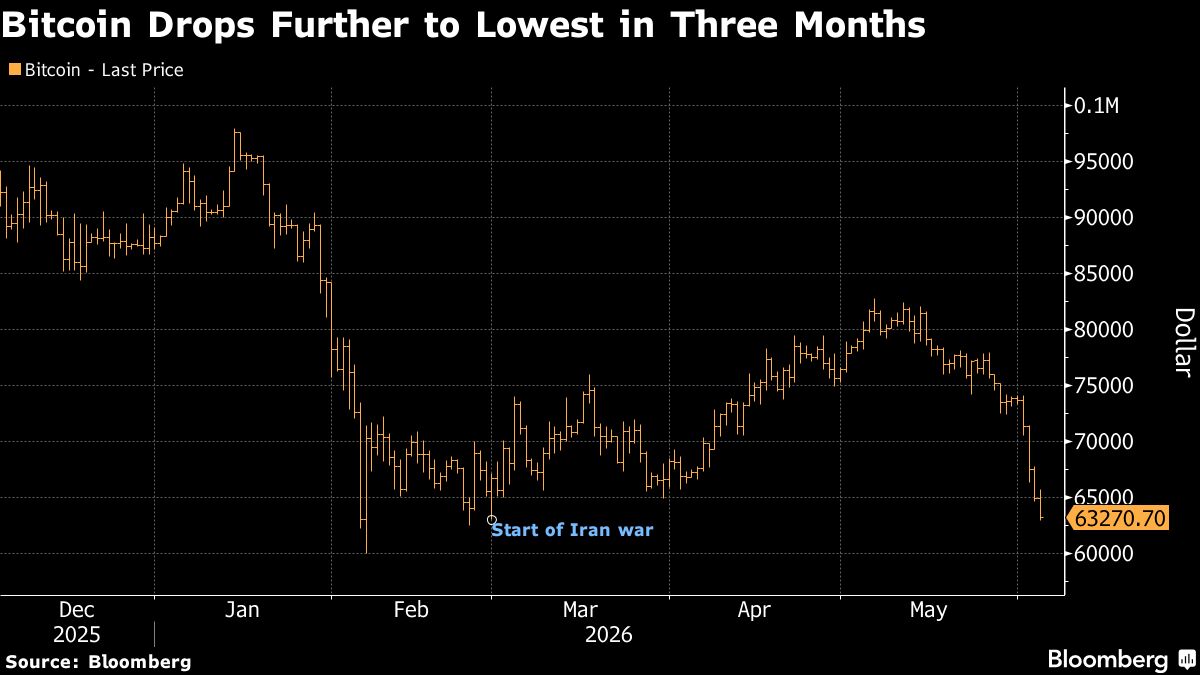
Bitcoin has recorded its longest consecutive losing streak since August last year, falling to a four-month low near $61,322 before recovering slightly. The decline was driven by the liquidation of nearly $4 billion in bullish bets, record outflows of almost $4.4 billion from US-listed Bitcoin exchange-traded funds over 13 sessions, and a rare sale of tokens by Strategy Inc, the dominant corporate holder. The cryptocurrency has lost approximately half its value since reaching an all-time high above $126,000 in October 2025. Ether also fell to its lowest level since April 2025. Analysts noted a significant decoupling from technology stocks, which continued to hit record highs, and suggested retail investor capital may be shifting towards artificial intelligence stocks and upcoming initial public offerings.
The original cryptocurrency fell for five consecutive days, tumbling to $61,322 on Thursday before recouping some losses. This price point places the asset close to testing the market bottom of around $60,000 seen in early February. A week marked by Strategy Inc’s first sale of Bitcoin since 2022, unprecedented ETF outflows and a further decoupling from record-breaking tech stocks has sapped confidence throughout the sector.
Geoffrey Kendrick, Standard Chartered Plc’s head of digital asset research, described the week as painful for the industry. Traders wrong-footed by the steep selloff have been left nursing large losses. Almost $4 billion of bullish bets have been wiped out since the start of the week, data from CoinGlass show, with Bitcoin leading the way. While Bitcoin went through a six-day stretch of daily losses through August last year, the declines have been far steeper this week.
Bitcoin exchange-traded funds, a major source of buying since they launched in early 2024, have turned into a drag on the market. Investors have pulled nearly $4.4 billion from US-listed Bitcoin ETFs over the past 13 sessions in a record-long streak of outflows, according to data compiled by Bloomberg. The market swoon isn’t confined to Bitcoin. Runner-up token Ether has fallen to its lowest since April 2025, trading around $1,780 at 8:40 a.m. on Thursday. Bitcoin was at around $63,500.
Of critical importance now, according to Kendrick, is what Michael Saylor’s mega-accumulator Strategy does on Monday, when it typically announces Bitcoin purchases. Strategy’s sale of 32 Bitcoin this week was minuscule compared to its $53 billion reserve, but the bearish environment in which it landed dealt a huge blow to confidence. Kendrick noted that days after its previous sale of Bitcoin in December 2022, Strategy bought more tokens than it had sold. This time I suspect the buying following the selling will be more aggressive, or as much as 100 times the number of tokens Strategy divested, Kendrick wrote.
This week’s selloff underscored Bitcoin’s divergence from technology stocks, which hit records even as the token retreated. Bitcoin has lost about half its value since hitting an all-time high above $126,000 last October. Artificial-intelligence stocks have become the market’s dominant growth trade, retail investors are pouring money into short-dated options and prediction markets, and even within digital assets, stablecoins and so-called perpetual futures are attracting attention that might previously have accrued to Bitcoin.
Many retail traders expecting to buy the SpaceX IPO or subsequent AI IPOs or financings are similar profiles to BTC holders, said Stephane Ouellette, chief executive officer and co-founder of FRNT Financial Inc. I’d speculate that some of the more extreme weakness today in BTC was pushed by investors trying to raise cash to finance their purchases of, particularly, the SpaceX IPO next week.