Big 12 scheduling clash: Texas Tech chairman's defence of Friday night lights dismissed as self-interest
The Houston Chronicle's Michael Shapiro argues the Chairman of the Board of Regents for the Texas Tech University System disguised personal scheduling concerns as a public interest act.
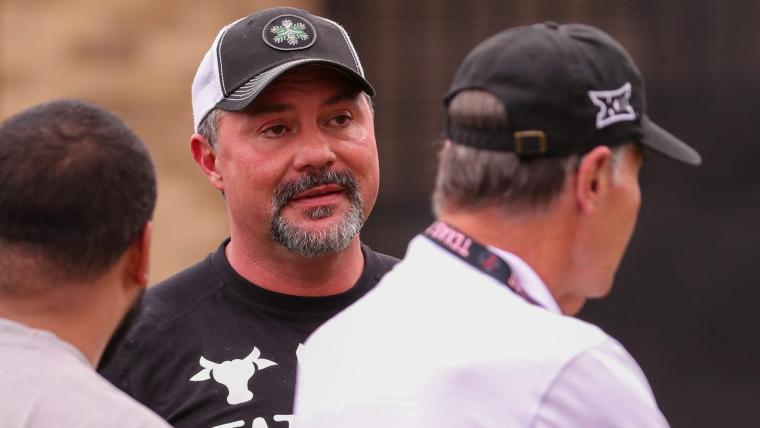
Following the announcement of a Friday night Big 12 opener between the Texas Tech Red Raiders and the Houston Cougars in Lubbock on 18 September, Cody Campbell, Chairman of the Board of Regents for the Texas Tech University System, publicly urged the conference to prioritise local high school football traditions over television ratings. Campbell argued that the league should protect the sanctity of Friday night games in Texas rather than chasing ratings, framing his intervention as a defence of the region's sporting culture.
However, the Houston Chronicle's Michael Shapiro has characterised Campbell's stance as a self-serving attempt to secure a longer week for the university team, disguised as a public interest act. Shapiro notes that while Campbell is well within his right to protest, the Big 12 is equally within its rights to deny the protest, reasserting its position as the dominant power in the region. The criticism suggests the Chairman used the sacred nature of Friday night lights as a cover for his own competitive advantage.
Shapiro argues that a single Friday night contest is not an indignity to the university team, particularly given that Texas Tech has 12 regular-season games on its 2026 schedule. Despite Campbell's claims that the short week caused by the Texas game was a primary concern, the Chronicle suggests the scheduling conflict arises because the Friday night opener in Lubbock potentially splits the attention of local fans between the Red Raiders and local high school games.
The debate highlights the tension between institutional scheduling authority and local community sentiment, with Friday night high school football considered sacred in West Texas. While Campbell claims the conference should protect these traditions, Shapiro points out that the Big 12 has the authority to schedule games as it sees fit, balancing conference interests with local traditions without yielding to external pressure.
Context regarding Campbell's personal connection to the sport complicates the narrative of pure altruism. He was a star player at Canyon High School and has a son currently playing high school football, yet Shapiro suggests these ties do not necessarily validate the public interest claim. The Chairman recently travelled to Corvallis, Oregon, to play against the Beavers, a fact Shapiro uses to question the consistency of his concern over a short week caused by the Texas game.
Ultimately, the conflict underscores the subjective nature of interpreting Campbell's motivations, with uncertainty remaining regarding the extent to which his personal feelings are intertwined with genuine concern for high school traditions. While the specific impact of the Friday night game on local high school attendance or community sentiment has not been quantified, the criticism from the Houston Chronicle frames the Chairman's plea as a strategic move by one of the most powerful men in college football.