Bezos calls for zero federal tax for lower earners, citing spending problem over revenue
In a CNBC interview, Jeff Bezos proposed eliminating federal income tax for the bottom half of earners, asserting that the nation’s fiscal challenges stem from expenditure rather than a lack of revenue.
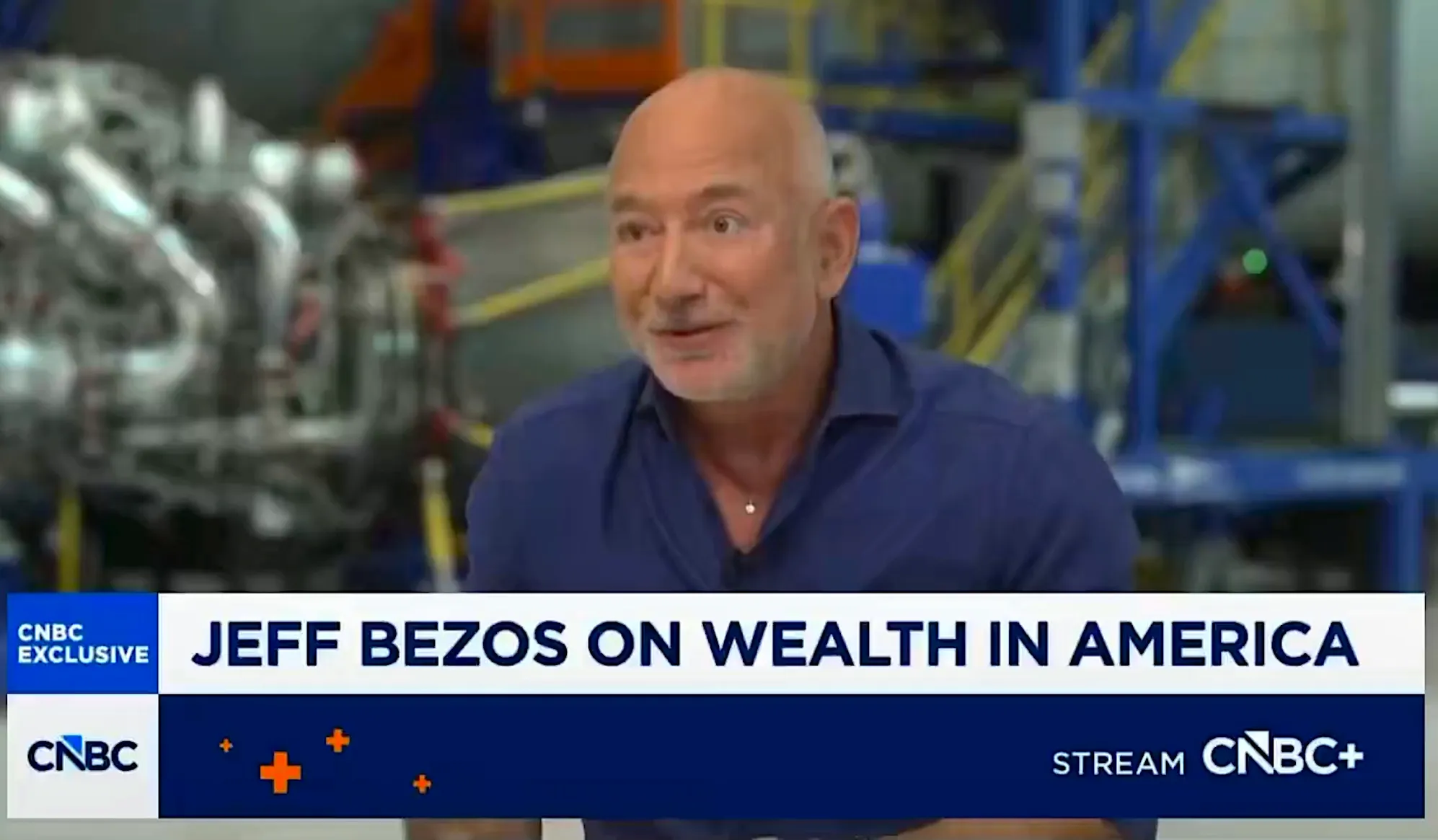
Jeff Bezos argued on Wednesday that Americans in the bottom half of the income distribution should pay zero federal income tax, describing the current burden on lower-earners as absurd. Speaking to CNBC, the Amazon founder highlighted the case of a nurse in Queens earning $75,000 annually who pays more than $1,000 a month in taxes. Bezos suggested that rather than demanding this money, the government should issue an apology to such workers, noting that the funds could otherwise assist with essentials like rent or groceries.
Bezos maintained that the United States faces a structural spending problem rather than a revenue shortfall. He pointed to data indicating that the top 1% of taxpayers contribute 40% of all federal tax revenue, while the bottom half contributes only 3%. According to his estimation, lower-income earners devote approximately 16% of their salary to taxes, a figure he argued barely impacts the national budget while causing significant financial strain for individuals.
The interview drew sharp questions from CNBC reporter Andrew Ross Sorkin, who challenged Bezos’ position by referencing repeated critiques from Senator Elizabeth Warren. Sorkin noted that ultra-wealthy individuals often pay a lower effective tax rate than middle-class workers, despite paying enormous absolute sums. Warren has previously highlighted how the wealthy utilise strategies such as borrowing against unrealised capital gains to avoid income tax, a practice that allows them to accumulate wealth without triggering taxable events.
Bezos defended his stance by reiterating that the US already possesses the most progressive tax system in the world. He dismissed the notion that increasing taxes on the wealthy would directly assist lower-income earners, stating that even doubling his own tax bill would not help a teacher or nurse in Queens. He added that if people desire higher contributions from billionaires, the debate should focus on whether that money is being utilised effectively rather than dissolving in administrative bureaucracy.
Historical records show that Bezos has benefited significantly from the current tax framework. A ProPublica investigation revealed that between 2006 and 2018, his wealth increased by $127 billion while he reported $6.5 billion in income, resulting in an effective tax rate of approximately 1%. Bezos paid little to no income tax in 2007 and 2011, and recently paid taxes on Amazon stock sold to fund Blue Origin, his space exploration company. He acknowledged that Americans are not taxed on unrealised capital gains, a rule that allows the ultra-wealthy to live off debt secured by their stock holdings rather than realised income.
Despite the $7.4 trillion federal budget, Bezos argued that the focus should remain on expenditure control. He suggested that the current system extracts too much from those who can least afford it, while the ultra-wealthy pay disproportionately low rates relative to their wealth accumulation. His comments come amid broader political debate regarding wealth inequality and the role of capital gains in the federal revenue structure.
