Bezos Backs $500 Million Neuro-AI Venture to Decode Brain’s ‘Core Algorithm’
Co-founded by former Amazon executive Rob Williams and neuroscientist Thomas Reardon, the New York-based firm has secured significant backing to develop Cortex AI, a system designed for continuous learning and low power consumption.
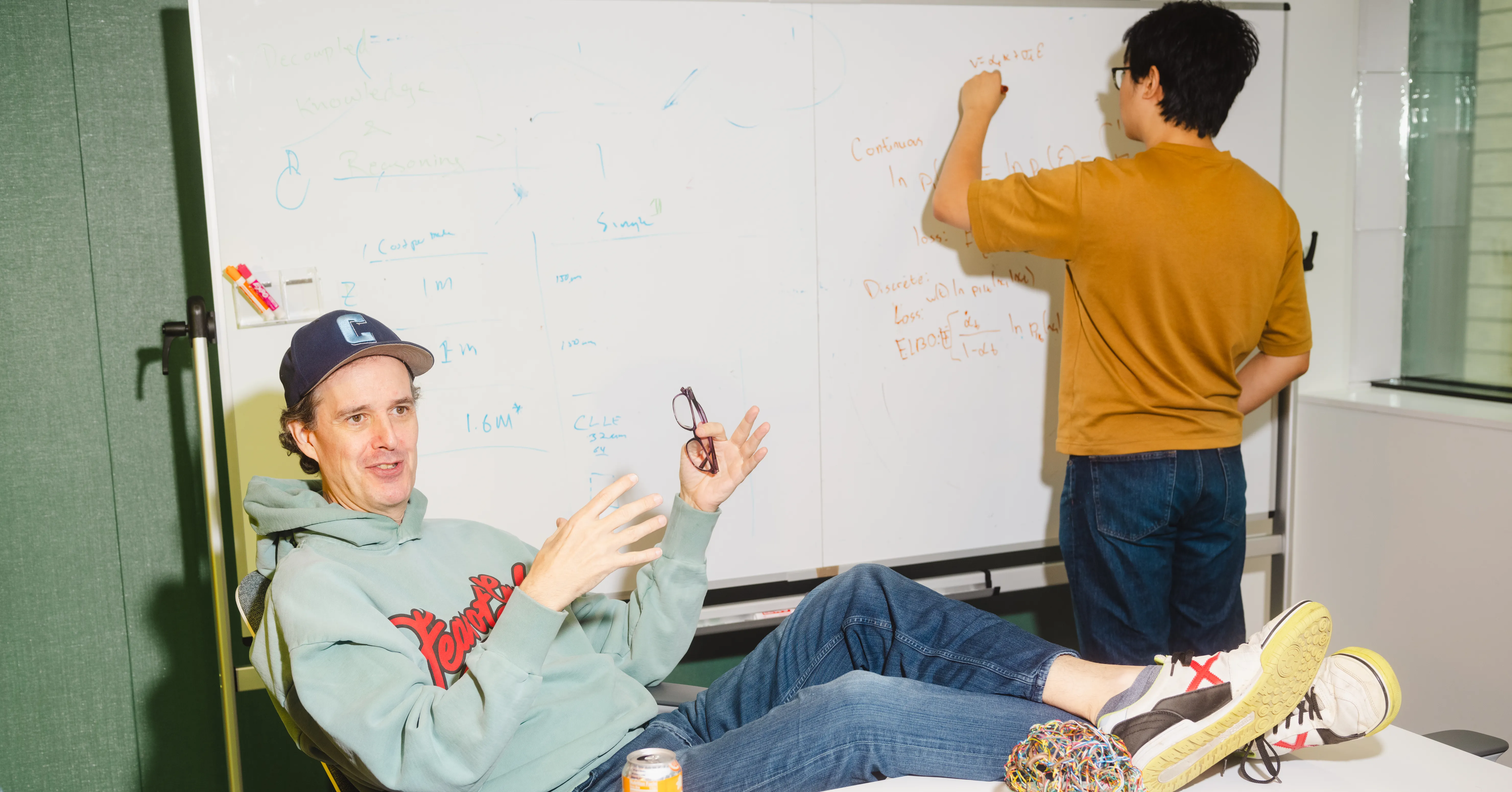
Jeff Bezos has committed $500 million to Flourish, a neuro-AI startup co-founded by Rob Williams and Thomas Reardon, valuing the company at approximately $2.5 billion. The investment follows an initial $50 million stake after Williams, a former Amazon executive, pitched the concept to Bezos in December 2025 using a press release format to outline the firm’s ambitions. The capital injection positions Flourish to pursue the development of Cortex AI, a synthetic intelligence system designed to match the computational efficiency and continuous learning capabilities of the human brain while consuming significantly less power than current large language models.
The venture addresses what co-founder Thomas Reardon describes as a critical bottleneck in artificial intelligence: energy consumption and static learning. Reardon notes that while large language models are powerful, they require vast amounts of compute and data, with a single training chip using more than 30 times the energy of a human brain. The goal for Flourish is to create a synthetic brain that operates on 50 watts or less, capable of adapting to new conditions without the extensive retraining required by existing frontier models.
To achieve this, Flourish has assembled a team of approximately two dozen neuroscientists and AI researchers. The group includes Greg Wayne, a former DeepMind researcher who splits his time between the startup and Google’s Project Astra. The scientific approach centres on identifying the brain’s core algorithms through advanced wet lab experiments and electron microscopy. The team is focusing on cortical columns, which they view as the canonical computational unit of the brain, and plans to collect data across nano, micro, and meso scales to understand neural architecture.
Flourish is not waiting for the full realisation of Cortex AI to generate value. The company is developing near-term products that leverage recent biological insights, including a hippocampus-inspired memory handling system designed to allow models to learn continuously. These capabilities are being adapted for portable devices, with negotiations currently underway to integrate the continuous learning model onto silicon with a major chip manufacturer. The firm recently moved into a 10-story office space in New York City’s West SoHo area, which includes a built-in data centre, although heavy lab equipment had not yet arrived at the time of reporting.
The investment round includes participation from Lux Capital, Google Ventures, and Jacob Vogelstein, who also serves as an investor and adviser. Vogelstein’s background in the Open Connectome Project, which focuses on mapping brain circuits, aligns with Flourish’s data-driven approach. While the long-term bet on neuromorphic computing carries significant risk, with some industry observers questioning the timeline, the backing from Bezos signals a serious commitment to reinventing AI through biological inspiration rather than incremental scaling of existing transformer architectures.
