Best CD rates hit 4% APY as online lenders lead the market in May 2026
Digital banks leverage lower overhead costs to offer competitive fixed deposits, while national averages remain significantly behind top-tier offers.
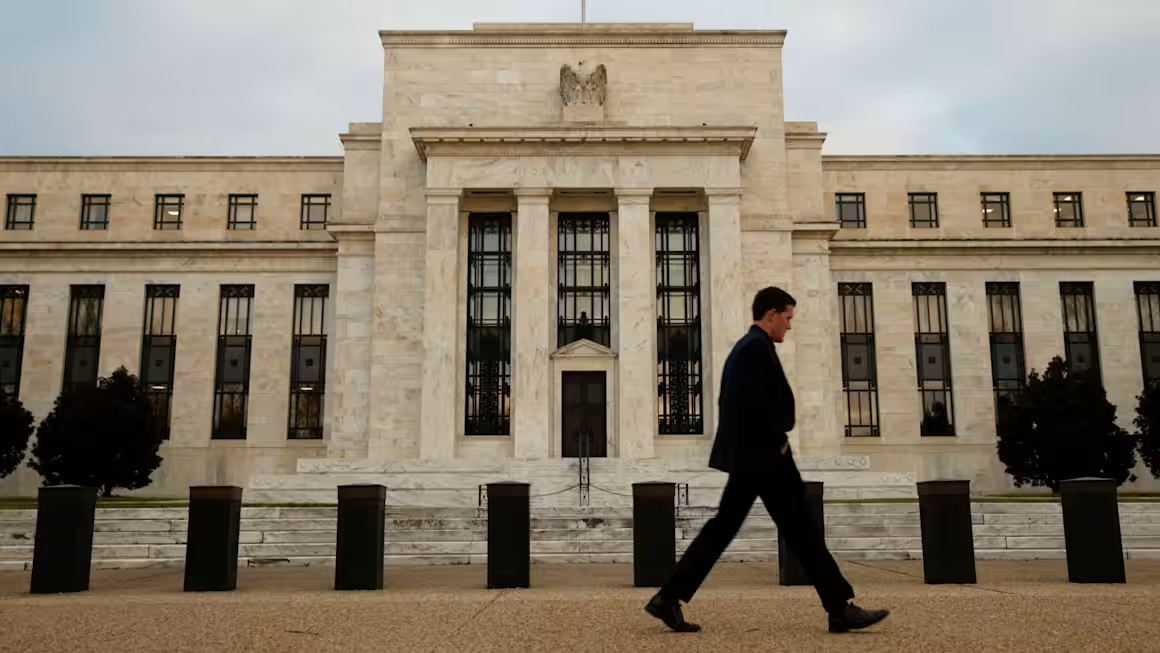
On 8 May 2026, the landscape for fixed-term savings shifted as the highest available certificate of deposit rates reached 4% annual percentage yield. This figure, offered by Marcus by Goldman Sachs on a nine-month term, represents the most competitive rate seen in more than a decade. The move comes at a time when broader market expectations have been tempered by Federal Reserve benchmark cuts implemented in late 2024 and 2025.
Despite the Federal Reserve leaving benchmark rates unchanged throughout 2026, a divergence has emerged between top-tier digital lenders and the broader banking sector. While the national average for CD rates as of April 2026 remains significantly lower, online banks and neobanks are capitalising on their reduced operational overhead to pass savings directly to depositors. This structural advantage allows institutions like Marcus to offer yields that traditional brick-and-mortar banks struggle to match.
Certificates of deposit continue to be viewed as a secure and stable vehicle for savers, backed by federal insurance and guaranteeing a fixed return. However, the product carries specific constraints that investors must weigh against their financial goals. Funds are locked for the duration of the term, and accessing capital before maturity typically incurs an early withdrawal penalty. Consequently, these accounts are often less suitable for long-term objectives such as retirement compared to market-based investments that offer higher growth potential.
The current environment highlights the importance of shopping around for the best available terms. While the 4% APY figure is specific to the nine-month offering from Marcus, other terms ranging from six months to two years may carry different rates. Savers are advised to compare these specific offers against the national average to ensure they are securing the most favourable conditions for their capital.
As the year progresses, the sustainability of these elevated rates will depend heavily on the Federal Reserve's monetary policy decisions in the remainder of 2026. For now, the data suggests that digital-first institutions remain the primary source of high-yield fixed deposits, offering a rare opportunity for savers to lock in guaranteed returns above historical norms.