Beluga whales demonstrate self-awareness in archival mirror test study
Re-examination of footage from a New York aquarium places belugas among a rare group of species exhibiting mirror self-recognition, though experts caution on the test’s limitations.
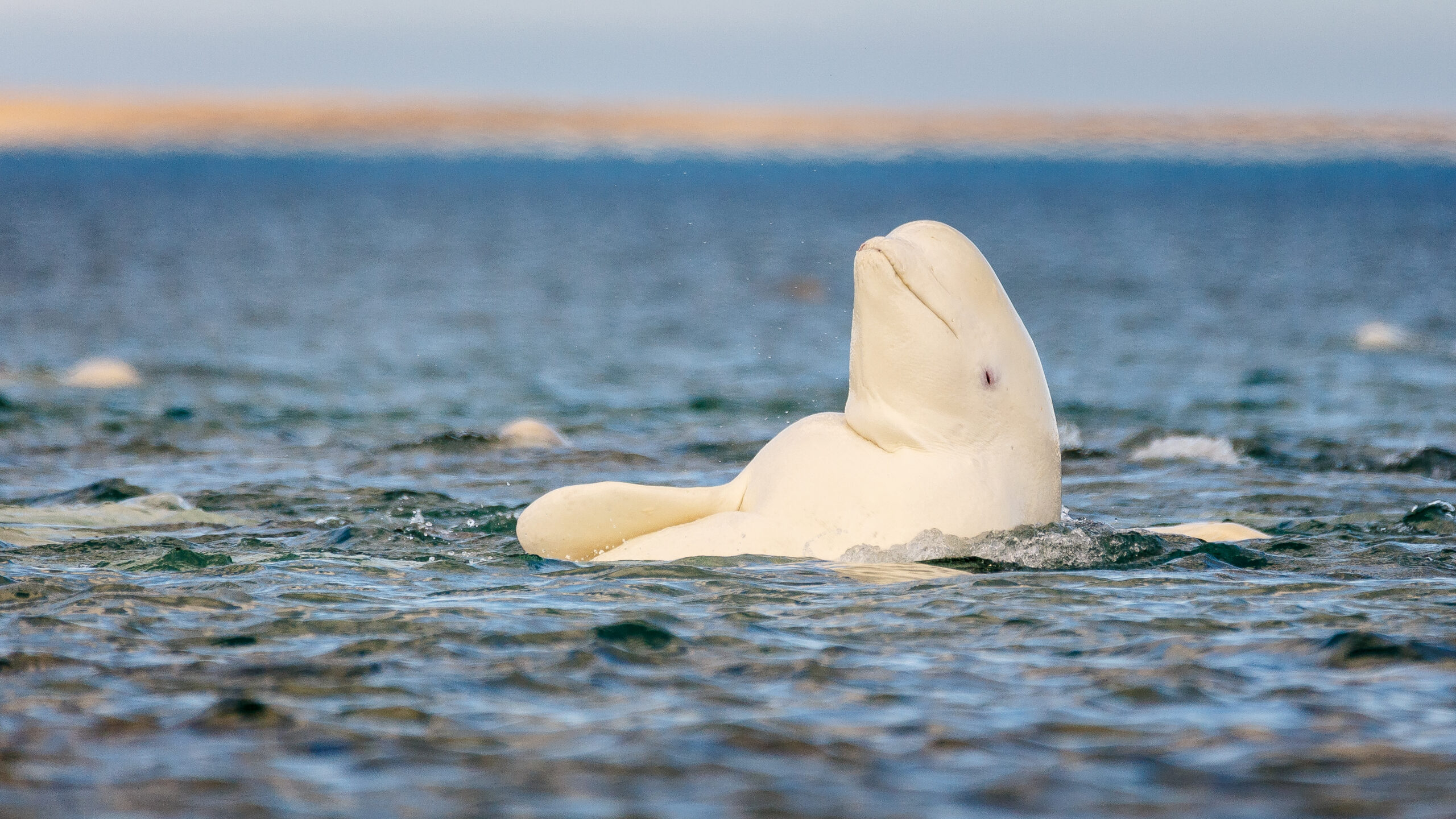
A study published in PLOS One has confirmed that two beluga whales, Natasha and Maris, housed at a New York aquarium, demonstrated mirror self-recognition. The research, led by first author Alexander Mildener and senior author Diana Reiss, involved a rigorous re-analysis of archival footage recorded more than two decades ago. The findings place belugas in a short list of species, including great apes, elephants, and dolphins, that have exhibited behavioural hallmarks of self-awareness.
The original experiment involved four belugas exposed to a mirror in their social housing. Only Natasha and Maris showed sustained interest, advancing them to the experimental phase. During feeding sessions, researchers applied waterproof lipstick marks to the whales, using sham-mark controls without pigment to rule out random behaviour. Natasha exhibited mark-directed behaviour by orienting the marked area behind her right ear toward the mirror, a significant indicator as she lacked arms to touch the mark directly.
The decision to revisit the data was prompted by the degradation of original tapes and the loss of some data. Senior author Diana Reiss noted that while initial plans for further studies with additional belugas were not possible, the team was inspired by recent cognitive research to digitise and analyse the remaining footage. The study highlights that the whales did not exhibit self-directed behaviours in the absence of the mirror or during control conditions.
Despite the positive results, the sample size is small, and the interpretation of the mirror test remains contested. Gordon Gallup, who invented the test in 1970, maintains that clear self-directed behaviour is required for a pass. While Natasha’s actions meet this criterion, some behaviours observed, such as barrel rolls, are documented forms of solo play that occur without mirrors, suggesting the reflective surface may have acted as a novel source of stimulation.
Experts caution that the mirror test may not be a universal measure of consciousness. Neuroscientist Anil Seth argues that failure to pass the test does not indicate a lack of selfhood, as the task is motivated by human visual perception. Similarly, evolutionary biologist Alex Jordan suggests that passing the test does not necessarily equate to self-awareness, highlighting the need for complementary tests that account for an animal’s specific perceptual world.